


Research on science communication has largely focused on teaching scientists how to describe their studies in ways that interest the public while deepening their understanding of scientific exploration. However, there is another, often overlooked side to science communication—how scientists respond when questions arise about the integrity of their research. Often, the tendency has been to stay silent and wait for any controversy to pass or be resolved in professional forums. But in an age of growing, intense attacks on science, silence can be detrimental to both public trust and the careers of scientists who are under scrutiny. For better or worse, journalists, social media professionals, and the public may take a response of “no comment” as a concession that the critics are correct, so forthright communication about research questions is more urgent than ever.
Scholarly Communication Is a Research Problem. This Means You.
Scholarly Communication Is a Research Problem.

Science Communication as a Collective Intelligence Endeavor: A Manifesto and Examples for Implementation
Effective science communication is challenging when scientific messages are informed by a continually updating evidence base and must often compete against misinformation. We argue that we need a new program of science communication as collective intelligence—a collaborative approach, supported by technology. This would have four key advantages over the typical model where scientists communicate as individuals: scientific messages would be informed by (a) a wider base of aggregated knowledge, (b) contributions from a diverse scientific community, (c) participatory input from stakeholders, and (d) better responsiveness to ongoing changes in the state of knowledge.

How can citizen science reduce psychological distance to science? Insights from three projects in contested environmental contexts
Citizen science (CS) is a participatory mode of knowledge production, enabling non-scientific actors to contribute to and sometimes contest scientific agendas and interpretations, making it a way to bridge science and society. This paper examines how that potential unfolds by analysing the individual perspectives of citizen scientists through the lens of Psychological Distance to Science (PSYDISC). Drawing on three case studies of contested environmental CS, we identify which contextual aspects of CS shape citizen scientists' experiences of social, spatial, temporal, or hypothetical distance to relevant science, and how these experiences may relate to trust. Our findings underscore the role of science communication as both a channel for dissemination, and as a constitutive element of participatory research; crucial for reducing psychological distance and enabling socially robust knowledge production, especially in contested, policy-relevant science settings.
Guest Post — Restoring Trust in Science: What Would Make a Difference? - The Scholarly Kitchen
Today's guest post asserts that trust won’t be restored by "better messaging" alone, but via better incentives, more disciplined public communication, and really listening to the people who have walked away from us.
Dark-Moneyed Denialists Are Running 'Fixing Science' Symposium of Doubt
The “Fixing Science” symposium, which is hosted by the National Association of Scholars and kicks off today in Oakland, California, includes credible speakers who want to improve some areas of science hurt by the use of poor statistical methods or making irreproducible claims. Unfortunately, they are outnumbered by people who have often cast doubt on mainstream climate, environmental, and health sciences. For […]
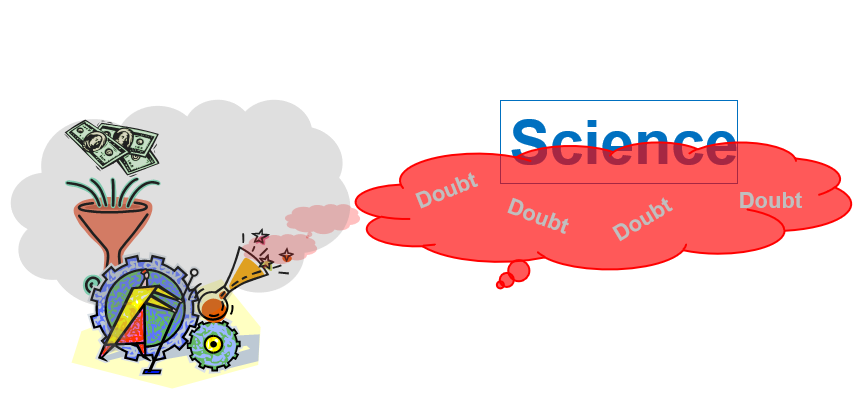
The Problem With Promoting ‘Gold Standard Science’
Opinion | Branding scientific research with a simplified label risks misleading the public and harming scientific literacy.
Why we don’t really know what the public thinks about science
Measuring trust isn’t enough. Furthering knowledge about the institutions and norms of science is the best way to build credibility.
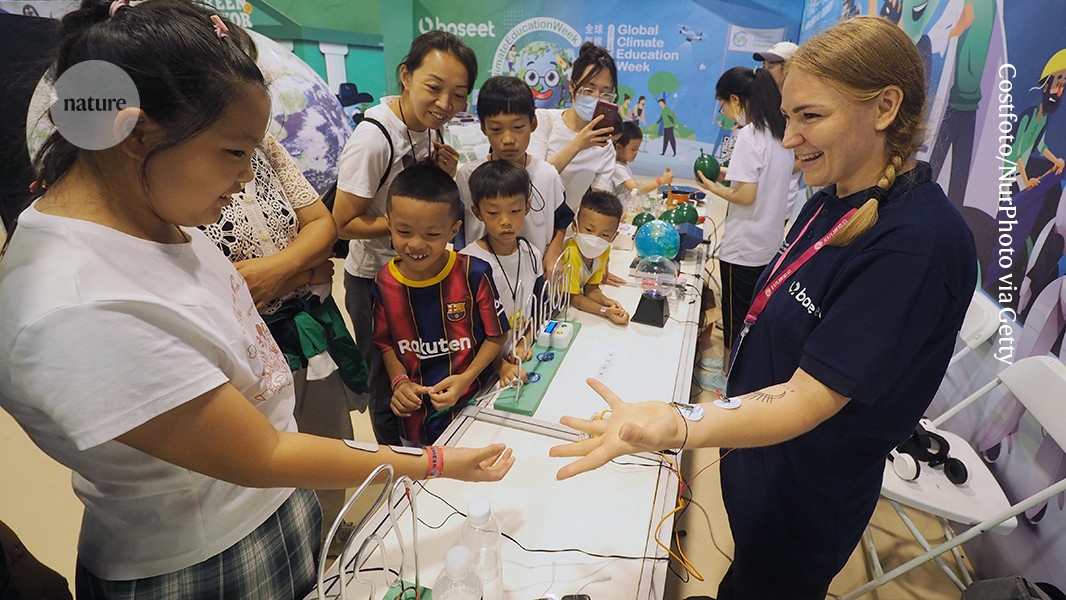
The one science reform we can all agree on, but we're too cowardly to do
OR: the long overdue forest fire
Have people stopped trusting science? The data tell a surprising story
Some say there’s a global crisis of trust — but research reveals where the real problems lie.
Guest post: If you’re going to critique science, be scientific about it
Loren K. Mell Editor’s note: This post responds to a Feb. 13 article in The Atlantic, “The Scientific Literature Can’t Save Us Now,” written by Retraction Watch cofounders Adam Marcus and Ivan Oran…
Science Must Decentralize
Knowledge production doesn’t happen in a vacuum. Every great scientific breakthrough is built on prior work, and an ongoing exchange with peers in the field. That’s why we need to address the threat
Coordinating Research Assessment And Publishing Reform: Action Groups – ASAPbio
Connect with focused ASAPbio groups working on specific aspects of scientific communication, from preprint review to community engagement.

Why Science Can't Settle Political Disputes
Attempts to scientifically “rationalize” policy, based on the belief that science is purified of politics, may be damaging democracy
The Drain of Scientific Publishing
The domination of scientific publishing in the Global North by major commercial publishers is harmful to science. We need the most powerful members of the research community, funders, governments and Universities, to lead the drive to re-communalise publishing to serve science not the market.

"We should be able to have an open discussion about what's good science and freely critique bad research. No not you! You shouldn't be having an open discussion about what's good metascience or freely critique bad metaresearch. That's censorship." Idk about you folks but I'm tired of the bullshit.
Frontiers In Research webinar on changes in science communication, the role of social media, and new infrastructure/tools - tomorrow (7/18) at 2 pm ET Looking forward to chatting with @ronentk.me & @joelchan86.bsky.social luma.com/7l18yyg4

Frontiers In Research: Open Science · Zoom · Luma
luma.com
