


Top predators drive changes in ecosystem structure. For the last ~370 million years, large-sized vertebrates have dominated the apex of the marine food chain, while invertebrates have served as smaller prey. Here we describe invertebrate top predators ...
Octopus | Built for Researchers
Get started with Octopus, an open access platform where researchers can read, review and publish findings at all stages of the scientific process.

The Octopus: An Alien Among Us
Self-replicating, bacterial life first appeared on Earth about 4 billion years ago. For most of Earth’s history, life remained at the single-celled level, and nothing like a nervous system existed …

Octosphere, an experiment in decentralised science with ATProto – Andreas Varotsis
Bridging Octopus and the Atmosphere with lots of vibes

Ukraine Orders 8,000 Octopus Interceptor Drones to Counter Shahed Attacks | Defense Express
Ukraine is scaling production of Octopus interceptor drones, a combat-proven system designed to destroy Shahed-type aerial threats
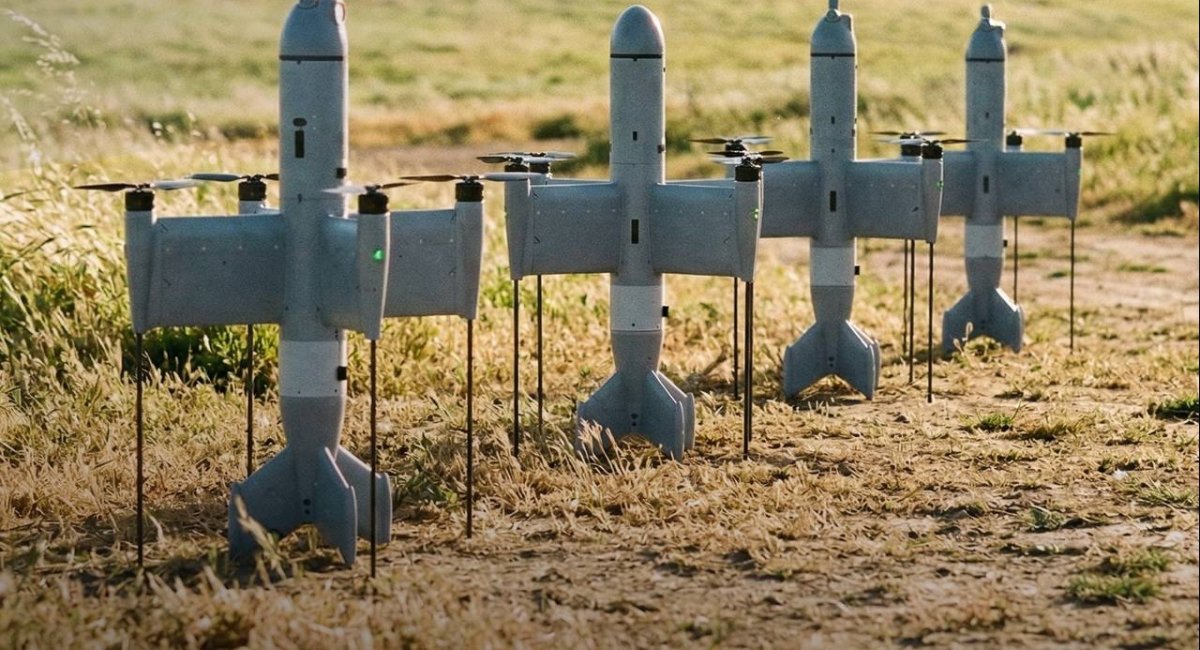
Pacific kelp forests are far older than we thought - Berkeley News
The unique underwater kelp forests that line the Pacific Coast support a varied ecosystem that was thought to have evolved along with the kelp over the past 14 million years. But a new study shows that kelp flourished off the Northwest Coast more than 32 million years ago, long before the appearance of modern groups […]
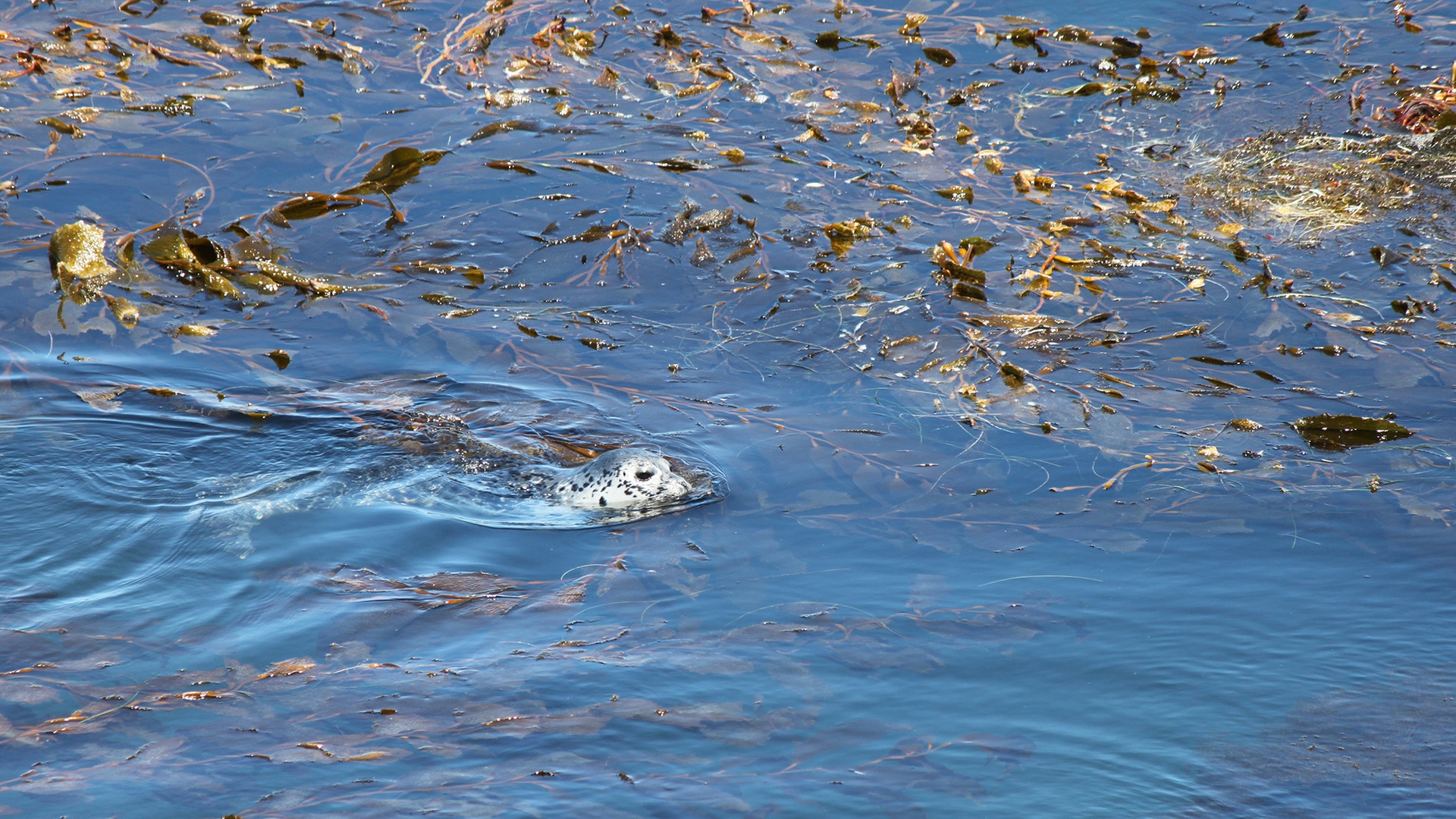
The Seamstress Who Solved the Ancient Mystery of the Argonaut, Pioneered the Aquarium, and Laid the Groundwork for the Study of Octopus Intelligence
“I armed myself with patience and courage, and only after several months managed to dissolve my doubts and see my research crowned with happy confirmation.”
Ecdysis
Ecdysis is the moulting of the cuticle in many invertebrates of the clade Ecdysozoa. Since the cuticle of these animals typically forms a largely inelastic exoskeleton, it is shed during growth and a new, larger covering is formed. The remnants of the old, empty exoskeleton are called exuviae.

Richard McElreath Director Department of Human Behavior, Ecology, and Culture [link] Max Planck Institute for Evolutionary Anthropology [link]
Principles of Minimal Cognition: Casting Cognition as Sensorimotor Coordination
Within the cognitive sciences, cognition tends to be interpreted from an anthropocentric perspective, involving a stringent set of human capabilities. Instead, we suggest that cognition is better explicated as a much more general biological phenomenon, allowing the lower bound of cognition to extend much further down the phylogenetic scale. We argue that elementary forms of cognition can already be witnessed in prokaryotes possessing a functional sensorimotor analogue of the nervous system. Building on a case-study of the Escherichia coli bacterium and its sensorimotor system, the TCST-system, we home in on the characteristics of minimal cognition, and distinguish it from more basic forms of ontogenetic adaptation. In our view, minimal cognition requires an embodiment consisting of a sensorimotor coupling mechanism that subsumes an autopoietic organization; this forms the basis of the growing consensus that the core of cognition revolves around sensorimotor coupling. We discuss the relevance of our interpretation of minimal cognition for the study of cognition in general

Near-blind shark is world’s longest-lived vertebrate
Greenland shark found to be at least 272 years old.

New perspectives on body size and shape evolution in dinosaurs
ABSTRACT Diversity in the body shapes and sizes of dinosaurs was foundational to their widespread success during the Mesozoic era. The ability to quantify body size and form reliably is therefore critical to the study of dinosaur biology and evolution. Body mass estimates for any given fossil animal are, in theory, most informative when derived from volumetric models that account for the three‐dimensional shapes of the entire body. In addition to providing estimates of total body mass, volumetric approaches can be used to determine the inertial properties of specific body segments and the overall distribution of mass throughout the body, each of which are essential for the modelling and interpretation of form–function relationships and their associations with ecology. However, the determination of body volumes in fossil taxa is often subjective, and may be sensitive to varied artistic inference. This highlights the need for an approach to body mass estimation in which body segment volumes are systematically constrained by quantitative scaling relationships between the hard tissues that fossilise and the soft tissues only observable in extant taxa. To this end, we used recently published skeletal to soft tissue volumetric scaling factors derived from CT data of extant sauropsids to estimate body segment mass properties from skeletal models of 52 non‐avian dinosaurs representing the majority of major clades and body plans. The body masses estimated by this study range from less than 200 g in the tiny avialan Yixianornis to over 60 tonnes in the giant sauropod Patagotitan , which is currently the largest dinosaur known from mostly complete skeletal remains. From our models, we infer that many previous reconstructions of soft tissue envelopes may be too small, and that many dinosaurs were therefore heavier than previous estimates. Our models generally overlap with the range of body mass estimates derived from limb bone shaft dimensions, but with considerable quantitative variability among major clades. This suggests that different taxa either differed in skeletal to soft tissue volume ratios, or that their limb bone dimensions varied relative to body mass, perhaps related to differences in locomotor dynamics and postural evolution. Our models also allowed us to investigate variation in mass distribution and body proportions across different dinosaurs from a perspective grounded in extant anatomical data, framing long‐standing hypotheses about their form, function, and behaviour in a quantitative context. For example, reconstructed disparity in whole‐body centres of mass reflects a broad array of postures in different dinosaur clades, while the lack of strong positive allometry in the dimensions of the weight‐bearing limb segments relative to total body mass corroborates previous studies suggesting an overall decrease in dinosaur locomotor performance as body size increased.

Siphonophore
Siphonophores are cnidarian animals of the hydrozoan order Siphonophorae. According to the World Register of Marine Species, the order contains 194 species described thus far.

Lectures on Perception: An Ecological Perspective
Lectures on Perception: An Ecological Perspective addresses the generic principles by which each and every kind of life form—from single celled organisms (e.g., difflugia) to multi-celled organisms (e.g., primates)—perceives the circumstances of their living so that they can behave adaptively. It focuses on the fundamental ability that relates each and every organism to its surroundings, namely, the ability to perceive things in the sense of how to get about among them and what to do, or not

Birds of a Feather Eat Plastic Together: High Levels of Plastic Ingestion in Great Shearwater Adults and Juveniles Across Their Annual Migratory Cycle
Limited work to date has examined plastic ingestion in highly migratory seabirds like Great Shearwaters (Ardenna gravis) across their entire migratory range. We examined 217 Great Shearwaters obtained from 2008–2019 at multiple locations spanning their yearly migration cycle across the Northwest and South Atlantic to assess accumulation of ingested plastic as well as trends over time and between locations. A total of 2328 plastic fragments were documented in the ventriculus portion of the gastrointestinal tract, with an average of 9 plastic fragments per bird. The mass, count, and frequency of plastic occurrence (FO) varied by location, with higher plastic burdens but lower FO in South Atlantic adults and chicks from the breeding colonies. No fragments of the same size or morphology were found in the primary forage fish prey, the Sand Lance (Ammodytes spp., n = 202) that supports Great Shearwaters in Massachusetts Bay, USA, suggesting the birds directly ingest the bulk of their plastic loads rather than accumulating via trophic transfer. Fourier-transform infrared spectroscopy indicated that low- and high-density polyethylene were the most common polymers ingested, within all years and locations. Individuals from the South Atlantic contained a higher proportion of larger plastic items and fragments compared to analogous life stages in the NW Atlantic, possibly due to increased use of remote, pelagic areas subject to reduced inputs of smaller, more diverse, and potentially less buoyant plastics found adjacent to coastal margins. Different signatures of polymer type, size, and category between similar life stages at different locations suggests rapid turnover of ingested plastics commensurate with migratory stage and location, though more empirical evidence is needed to ground truth this hypothesis. This work is the first to comprehensively measure the accumulation of ingested plastics by Great Shearwaters over the last decade and across multiple locations spanning their yearly trans-equatorial migration cycle and underscores their utility as sentinels of plastic pollution in Atlantic ecosystems.

The Corals That Shouldn’t Exist - bioGraphic
Beneath Miami’s skyscrapers, a colony of corals defies expectations—and offers insight into other undersea urban ecosystems.
