


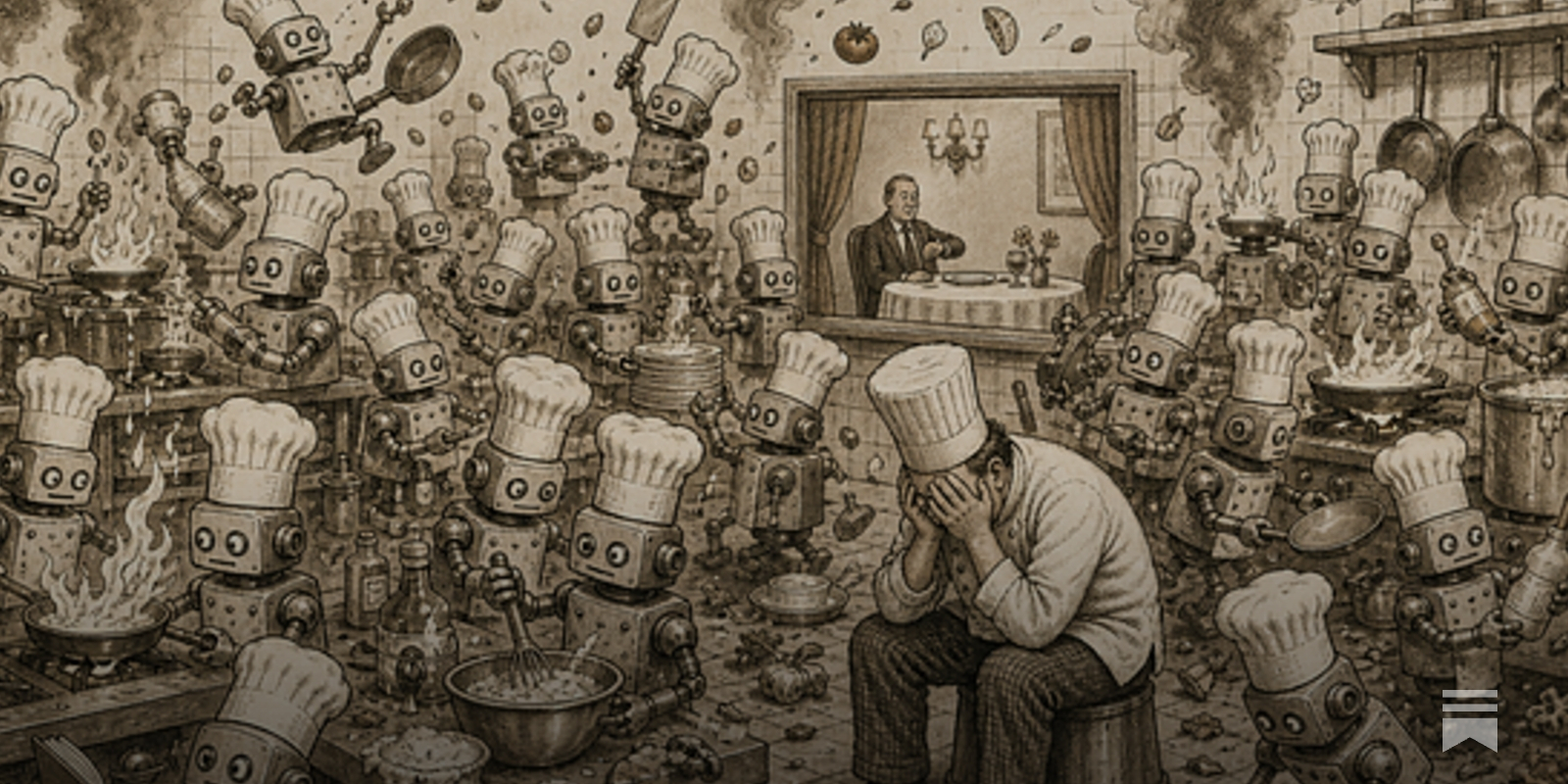
In the United States, spending on AI infrastructure now dwarfs investment in the Internet and railroads combined, but spending on the institutions that would let societies absorb that technology is, by comparison, negligible. This asymmetry creates a paradox. Models post striking benchmark scores while aggregate economic output barely moves: Economist Daron Acemoglu projects a total factor productivity gain of well under one percent over a decade, and firm-level studies find that task-level gains do not necessarily add up at the firm or economy level. This paradox follows from an institutional mismatch that can be addressed by reverse alignment, the deliberate redesign of institutions, norms, and skills, rather than of models, so that societies can absorb new forms of machine cognition.
Thousands of CEOs admit AI had no impact on employment or productivity—and it has economists resurrecting a paradox from 40 years ago | Fortune
In the 1980s, economist Robert Solow made an observation that reminded economists of today’s AI boom: “You can see the computer age everywhere but in the productivity statistics.”

Thousands of CEOs just admitted AI had no impact on employment or productivity—and it has economists resurrecting a paradox from 40 years ago | Fortune
In the 1980s, economist Robert Solow made an observation that reminded economists of today’s AI boom: “You can see the computer age everywhere but in the productivity statistics.”
The Era of Judgment
Evidence from the frontier labs of how AI will extend human productivity

How AI can become pro-worker
The automation of blue-collar and office jobs using digital technologies has been an important driver of the rise in inequality since the 1980s. A new CEPR Policy Insight argues that a ‘human-complementary’ path for artificial intelligence could contribute more to productivity growth and help reduce economic inequality. The authors suggest five potential elements for policy attention to help move the US, Europe, and other economies onto this human-complementary path.

Bridging the gap: inequalities that divide those who can and cannot create sustainable outcomes with AI
The widespread use of AI technologies impacts individuals, organisations, and societies in ways that warrant more comprehensive investigation. Inequalities in benefiting from AI advancements may le...

The ‘productivity paradox’ of AI adoption in manufacturing firms | MIT Sloan
Companies that adopt industrial artificial intelligence see productivity losses before longer-term gains, according to new research.
Andrej Karpathy on Twitter / X
Sharing an interesting recent conversation on AI's impact on the economy.AI has been compared to various historical precedents: electricity, industrial revolution, etc., I think the strongest analogy is that of AI as a new computing paradigm (Software 2.0) because both are…— Andrej Karpathy (@karpathy) November 16, 2025
The AI spending boom could have real consequences for the U.S. economy
As revisions to U.S. jobs numbers call into question economic growth, Big Tech is becoming an even more important part of American prosperity.

Separating AI’s Technological Problems From its Capitalism Problems
Nathan E. Sanders and Bruce Schneier say integrating a technology as disruptive as AI responsibly requires deep structural reforms.
3: Consulting the Record: AI Consistently Fails the Public - AI Now Institute
Amid the excitement over AI’s (speculative, hypothetical) potential, we have lost sight of the sobering reality of its present and recent past. AI is already intermediating critical social infrastructures, materially reshaping our institutions in ways that ratchet up inequality and concentrate power in the hands of the already powerful. It is consistently deployed in ways […]

The Productivity Is Real. The Scaling Isn't.
What running an AI agent team taught me about why organizations can't do what one person can.

The Simple Macroeconomics of AI
This paper evaluates claims about large macroeconomic implications of new advances in AI. It starts from a task-based model of AI’s effects, working through aut

Import AI 452: Scaling laws for cyberwar; rising tides of AI automation; and a puzzle over gDP forecasting
How much could AI revolutionize the economy?


AI Adoption and Inequality
There are competing narratives about artificial intelligence’s impact on inequality. Some argue AI will exacerbate economic disparities, while others suggest it could reduce inequality by primarily disrupting high-income jobs. Using household microdata and a calibrated task-based model, we show these narratives reflect different channels through which AI affects the economy. Unlike previous waves of automation that increased both wage and wealth inequality, AI could reduce wage inequality through the displacement of high-income workers. However, two factors may counter this effect: these workers’ tasks appear highly complementary with AI, potentially increasing their productivity, and they are better positioned to benefit from higher capital returns. When firms can choose how much AI to adopt, the wealth inequality effect is particularly pronounced, as the potential cost savings from automating high-wage tasks drive significantly higher adoption rates. Models that ignore this adoption decision risk understating the trade-off policymakers face between inequality and efficiency.