
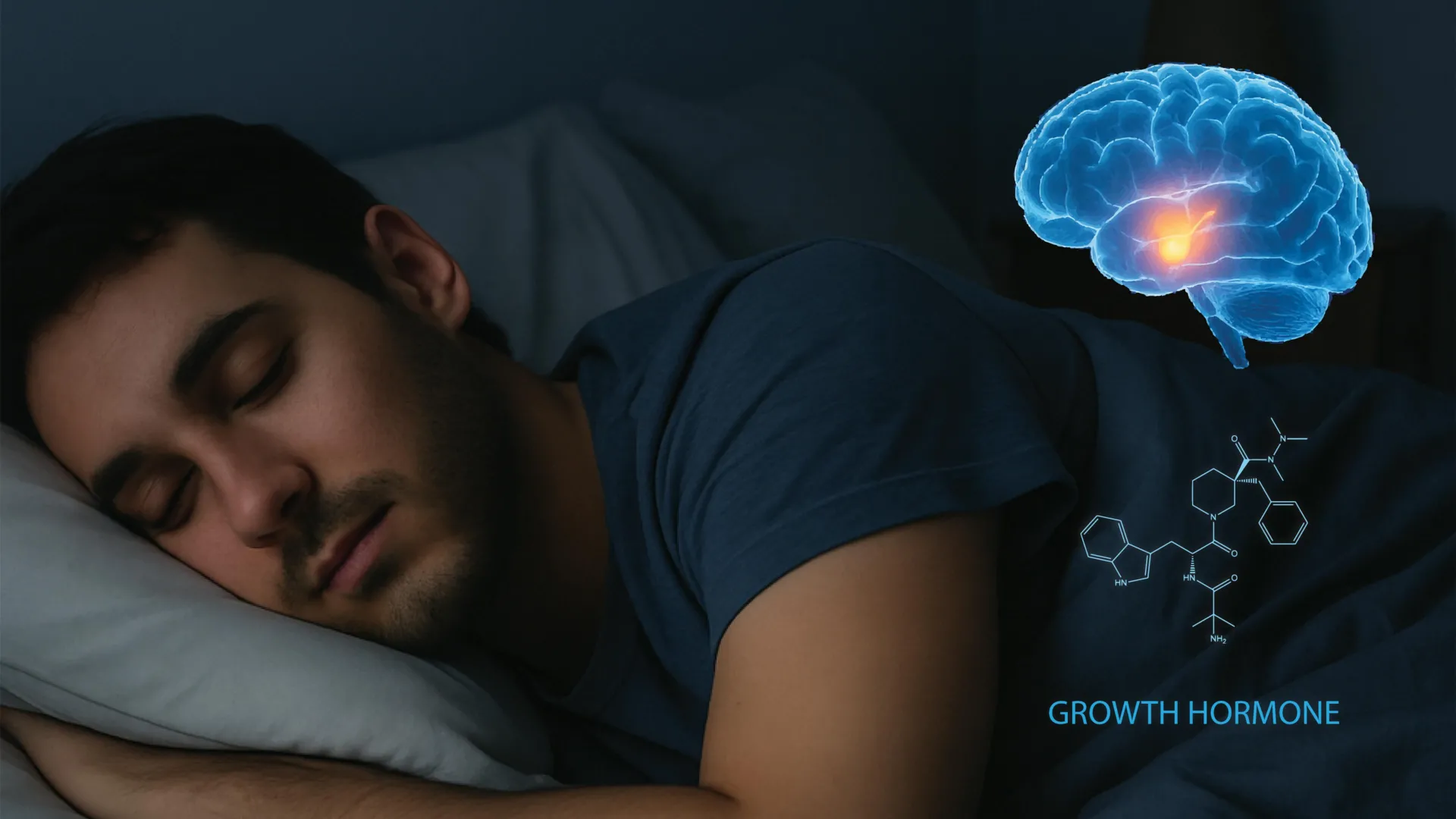
UC Berkeley researchers mapped the brain circuits that control growth hormone during sleep, uncovering a feedback system where sleep fuels hormone release, and the hormone regulates wakefulness. The discovery helps explain links between poor sleep, obesity, diabetes, and cognitive decline, while opening new paths for treating sleep and metabolic disorders.
Scientists discover how deep sleep builds muscle, burns fat, and boosts the brain
Scientists have discovered a surprising two-way relationship between sleep and growth hormone, revealing how the brain carefully balances physical recovery with wakefulness. The findings could help explain why poor sleep harms metabolism and brain health, potentially opening the door to new treatments for sleep and neurological disorders.
How the Brain Uses Glucose to Fuel Self-Control
The brain requires tons of energy—and new experiments show how low glucose levels and self-control issues are connected.

I couldn’t sleep, then I tried cognitive shuffling | Psyche Notes to Self
The usual advice didn’t help my sleep problems, but then I tried an exercise that kickstarts the sleep-onset control system


Sleep: Educational Impact and Habit Formation
In a field experiment among US university students, incentives for sleep increase both sleep and academic performance. Our primary intervention pairs bedtime reminders with morning feedback and immediate rewards for sleeping at least 7 hours on weeknights. The intervention raises the share of weeknights with 7+ hours of sleep by 26% and average sleep by 19 minutes during a 4-week treatment period, with posttreatment effects of 8 minutes. Immediate incentives outperform both delayed incentives and reminders/feedback alone during treatment but have no distinguishable impacts posttreatment. The primary intervention improves average semester course performance by 0.075–0.089 grade points, a 0.10–0.11 standard deviation increase. Our results demonstrate that incentives targeting sleep can be a cost-effective approach to improve educational outcomes.
Why We Sleep, and Why We Often Can’t
Does our contemporary obsession with sleep obscure what makes it special in the first place?

Why Am I So Damn Tired All the Time?
What science says about your perpetual sleepiness—and what you can do to fix it.

How fasting can improve overall health
Researchers found evidence that fasting affects circadian clocks in the liver and skeletal muscle, causing them to rewire their metabolism, which can ultimately lead to improved health and protection against aging-associated diseases.

Sleep Is the New Status Symbol (Published 2017)
Once we would brag of not needing very much of it. Now deep slumber is a coveted state achieved with gadgets, apps, gizmos and classes.

I Train CEOs—This 16-Minute Morning Habit Builds Muscle and Boosts Productivity
The neuroscience-backed session builds muscle while increasing your focus and executive function.

Depression linked to internal jet lag study finds
Circadian rhythms controlling sleep were out of sync in a quarter of young people with depression in this Sydney-based study. Read more

Sleep as a Competitive Advantage
Too many of us live by the myth that one less hour of sleep gives us one more hour of productivity, Tony Schwartz writes in the Life@Work column. In reality, lost sleep not only leaves us more fatigued, but also takes a toll on our cognitive capacity.

OpenAstrocytes – Forecast Research
Astrocytes make up about a third of the cells in your brain, and form a second, distinct brain network from the more-studied neuronal network. As neuroscience has discovered in only the last few years, the astrocyte network carries out extremely important computations, integrating information from across different brain networks, and using this information to drive feedback to neurons that controls physiological state and maintains long-term homeostasis.
Nicolas Mattia – Keep your Mac awake with caffeinate
This explains how to keep a Mac from going to sleep using a simple command

What Did Ancient Humans Do at Night?
What stress does to the brain - Neuroscience News
A new study sheds light on how the brain changes as a result of chronic stress. Selective noradrenaline release rewires connectivity patterns between different brain regions. Activity in the amygdala and networks that process sensory stimuli increased.