

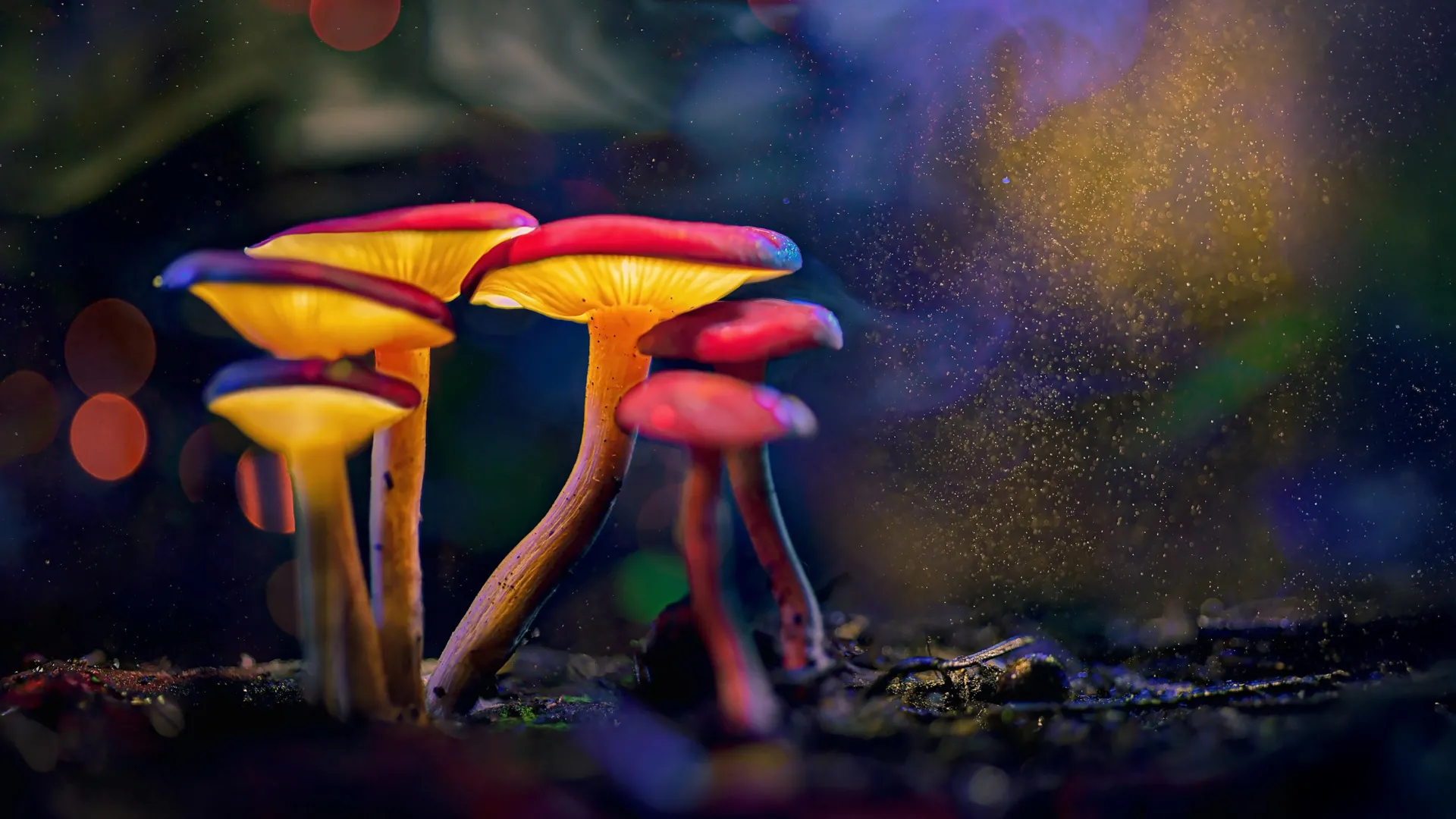
Researchers found that magic mushrooms and fiber caps independently evolved different biochemical pathways to create psilocybin. This convergence shows nature’s ingenuity, but the reason why remains unknown—possibly predator deterrence. Beyond evolutionary mystery, the discovery provides new enzyme tools for biotech, with promising applications for producing psilocybin-based medicines.
A Dose of a Hallucinogen From a ‘Magic Mushroom,’ and Then Lasting Peace (Published 2016)
Two studies used psilocybin to see if the drug could reduce depression and anxiety in cancer patients. The results were striking.

What Are Psychedelic Entities?
The beings people often meet while using psychedelics resist tidy explanations.
Wild About Mushrooms: Contents
Copyright © 1987, 2000 by Louise Freedman and the Mycological Society of San Francisco A MykoWeb and MSSF Page
The fungal mind: on the evidence for mushroom intelligence | Psyche Ideas
The evidence for fungal intelligence is in: they can operate as individuals, make decisions, learn, and have short-term memory
Can Psychedelics Make Us More Moral?
With a renaissance going on in psychedelic research, is making us better people included?

PTAB Affirms §101 Rejection of Psilocybin Composition, Post-Appeal Prosecution Results in Granted Patent
PTAB Finds that Psilocybin Formulation Is Not a Product of Nature, Further Prosecution Leads to Issued Patent

Jonathan Pageau's Psychedelic Warning
What Happens When Clergy Take Psilocybin
The results of a controversial 10-year-old study of more than a dozen clergy who took psilocybin on guided trips only recently came to light.

The 7 Safest Edible Mushrooms to Forage and Eat
A list of the most delicious and safest edible mushrooms for beginner foragers, including chanterelles, oyster, and hen of the woods.
Biohub releases a world model of protein biology
Open AI models used for a wide range of scientific applications, including accelerating the design of therapeutic molecules.
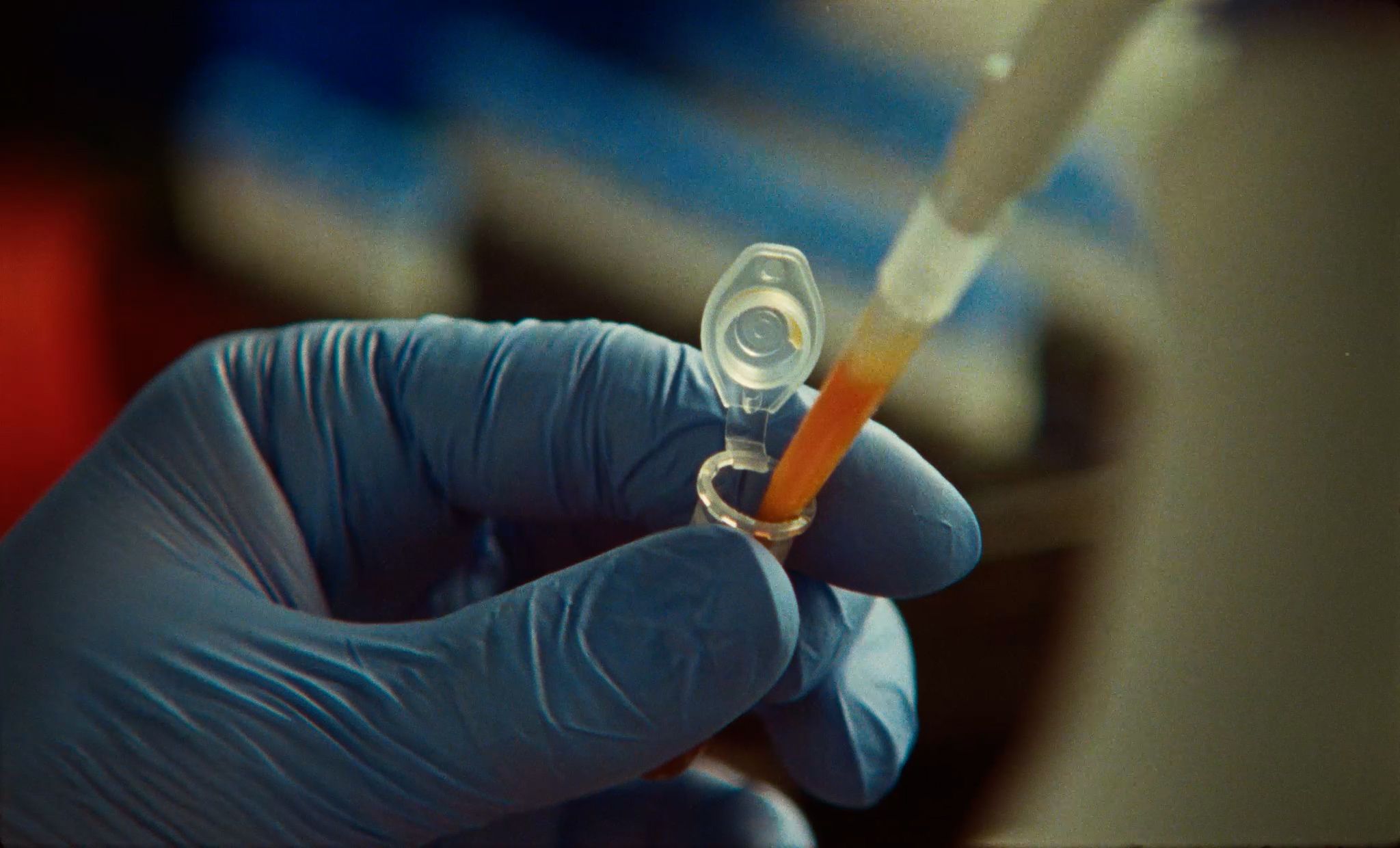
Claude discovers a novel enzyme system
In early results from our new life sciences research lab, Claude agents found an enzyme system whose function is still unknown.
Invisible Designers: Brain Evolution Through the Lens of Parasite Manipulation
AbstractThe ability of parasites to manipulate host behavior to their advantage has been studied extensively, but the impact of parasite manipulation on the evolution of neural and endocrine mechanisms has remained virtually unexplored. If selection for countermeasures has shaped the evolution of nervous systems, many aspects of neural functioning are likely to remain poorly understood until parasites—the brain’s invisible designers—are included in the picture. This article offers the first systematic discussion of brain evolution in light of parasite manipulation. After reviewing the strategies and mechanisms employed by parasites, the paper presents a taxonomy of host countermeasures with four main categories, namely: restrict access to the brain; increase the costs of manipulation; increase the complexity of signals; and increase robustness. For each category, possible examples of countermeasures are explored, and the likely evolutionary responses by parasites are considered. The article then discusses the metabolic, computational, and ecological constraints that limit the evolution of countermeasures. The final sections offer suggestions for future research and consider some implications for basic neuroscience and psychopharmacology. The paper aims to present a novel perspective on brain evolution, chart a provisional way forward, and stimulate research across the relevant disciplines.

Reefer Madness or Pot Paradise? The Surprising Legacy of the Place Where Legal Weed Began (Published 2019)
Colorado’s first-in-the-nation experiment with legalized marijuana has infused the drug into almost every corner of life.

The sky is psychedelic: why so many people see strange lights in the sky
Your brain evolved to see deep meaning in the sky. And UFOs.

DISCO: Inventing Enzymes for Chemistry | FutureHouse
DISCO is a new multimodal generative model that co-designs protein sequence and 3D structure from scratch.
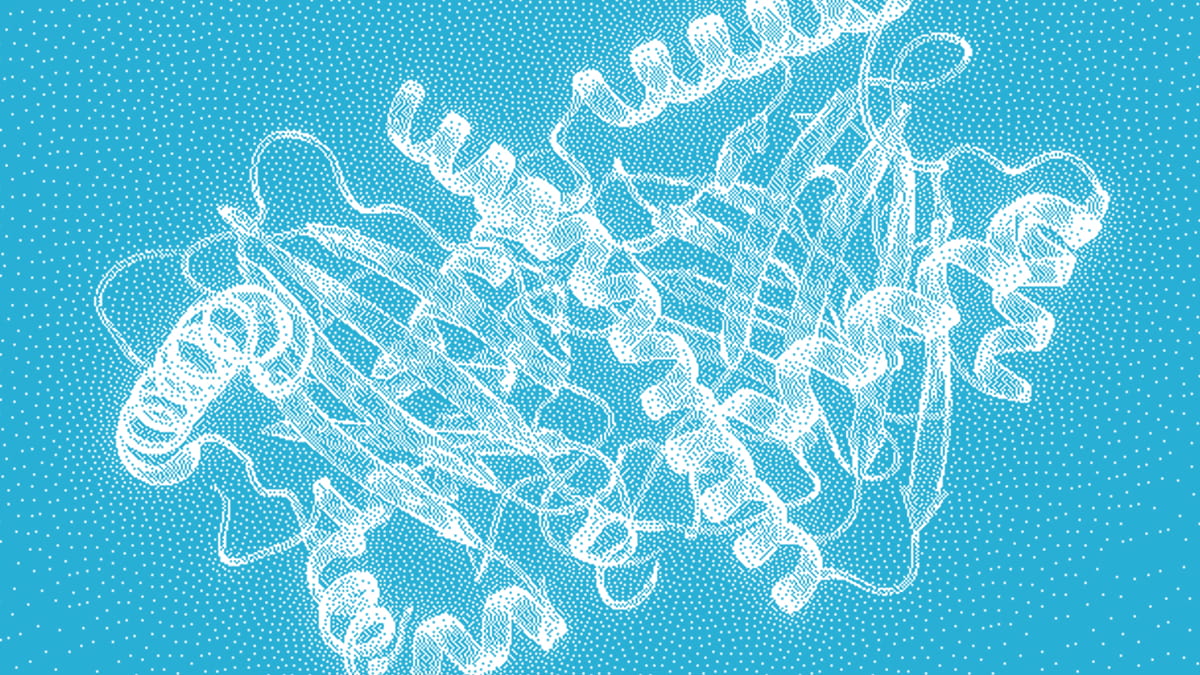
Olduvai domains: humanity’s lucky brake
Neoteny—a developmental slowdown that results in the retention of juvenile traits into adulthood—has long been viewed as central to human brain expansion. Olduvai domains are proposed here to function as a dosage-dependent metabolic ‘brake’ that slows development via mitochondrial downregulation. Their human-specific hyperamplification, paired with NOTCH2NL accelerators and new metabolic insights, may solve a century-old evolutionary puzzle.
