


Scientists in Germany have demonstrated a startling new form of surveillance: identifying people using nothing more than ordinary WiFi signals. By analyzing how radio waves bounce around a room, researchers can effectively “see” and recognize individuals — even if they are not carrying a device and even if their phone is turned off.
How to Track the People Tracking YOU
7 Useful Tips for Anyone Connecting to Public Wi-Fi
Our public spaces are now awash with wireless internet. Make sure you’re getting the most out of every connection.

Opinion | The Internet of Way Too Many Things (Published 2015)
You may be able to get your phone to project bright colors if your window sensor detects a burglar, but what is protecting you from your phone?

Wi-Fi Aware | Apple Developer Documentation
Securely pair and connect to external devices over peer-to-peer Wi-Fi.

How to protect your phone and data privacy at the US border
With reports of people being turned away at airports over messages found on devices, here’s what to do to minimize risks

Gazing Back at the Surveillance Cameras That Watch Us (Published 2018)
These photographers explored the implications of a culture of pervasive monitoring.

Quiet, and Sometimes Silent
Quiet, and Sometimes Silent is an on-going project that explores proximity, intimacy, and subtle communication. Two DIY wearable pieces talk to each other through LoRa, a wireless protocol that enables small data-packet transmissions using a free, hobbyist radio frequency. As two people approach each other, their headpieces morph into different shapes – flapping, shrinking, producing buzzing sensations and movements. Together, they turn into mutating sculptures, communicating with nonverbal subtlety. This project draws correlation between protocols outside of heavily surveilled mass superstructures and the state of acquainted human relationships, exploring the idea that small movements and sporadic data exchange can resemble our loose social connections with the people around us.
Japan police panel urges remote phone analysis to fight anonymous crime groups
TOKYO -- A Japan police advisory panel has proposed the early introduction of remote analysis of smartphones used by anonymous, fluid crime groups, de

How does Apple (privately) find your offline devices?
At Monday’s WWDC conference, Apple announced a cool new feature called “Find My”. Unlike Apple’s “Find my iPhone”, which uses cellular communication and the lost…

We Are Hopelessly Hooked
We check our phones 221 times a day—an average of every 4.3 minutes—according to a UK study. This number actually may be too low, since people tend to underestimate their own mobile usage. In a 2015 Gallup survey, 61 percent of people said they checked their phones less frequently than others they knew. Our transformation into device people has happened with unprecedented suddenness.

The Surveillance Empire That Tracked World Leaders, a Vatican Enemy, and Maybe You
Inside the hidden world of First Wap, whose untraceable tech has targeted politicians, journalists, celebrities, and activists around the globe.

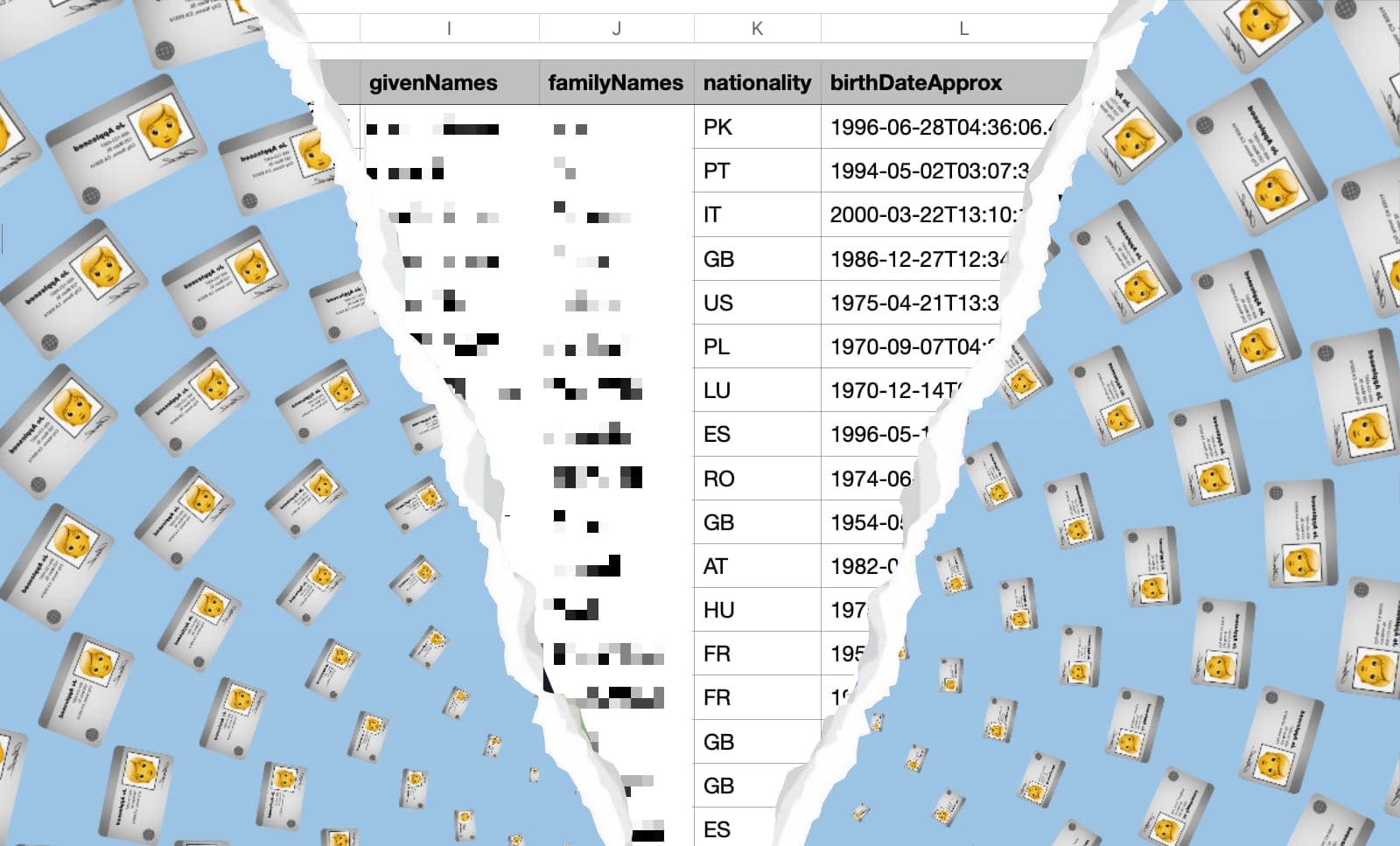
Public by Design: How W Social Makes Their Verified Users’ Personal Details Visible on the Open Web
A blog post explaining how the social network W Social is publishing as a record on the open social web the full names, nationalities and approximate birthdays of their verified users - who may be unaware this information is available for all to see, outside of the social network.
An exploration of Wi-Fi Aware for Bitchat (and other ad-hoc networks) - HackMD
Bitchat is an open source peer-to-peer mesh communication network started in the summer of 2025 by Jack Dorsey. It's available on iOS, Android, and MacOS. Others have explored beyond this, with a terminal client and a self-powered ESP32-based mesh relay node. In theory, Bitchat enables cross-platform peer-to-peer messaging even when there's no cellular or Wi-Fi network available. In practice, it's not proven to be reliable in an offline environment. However, I believe it could be, and it's clear that the team agrees and is actively working toward that end.
Signal Messenger: Speak Freely
Say "hello" to a different messaging experience. An unexpected focus on privacy, combined with all of the features you expect.

We Hunted Hidden Secret Police Signals at the DNC in Chicago
The US is a secret police state. Using special software, WIRED collected signals from nearly 300,000 devices, revealing vulnerabilities for both law enforcement and everyday citizens alike.

7/ Check out the details, including a deeper discussion of challenges, a prototype of Bitchat over Wi-Fi Aware, and general notes on cross-platform Wi-Fi Aware implementation 👉 grjte.sh/bitchat-wifi-aware
