

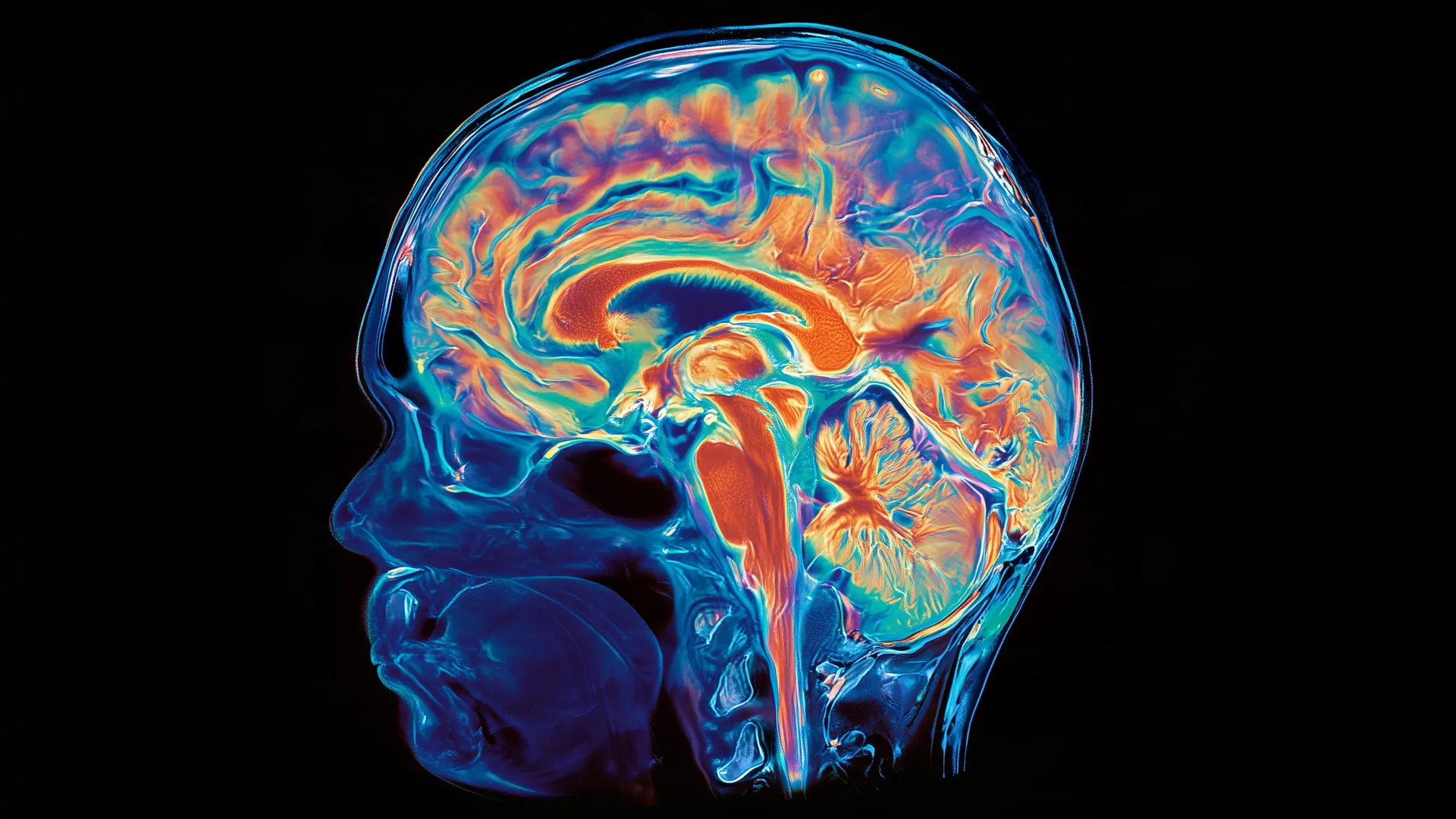
Scientists have found that the human brain develops from two distinct cellular systems, suggesting that evolution fused together two ancient nervous systems with very different jobs. The discovery also allowed researchers to grow human hindbrain neurons in the lab, opening new possibilities for studying ALS, spinal muscular atrophy, and other brainstem diseases.
Open-source software reveals complete 3D architecture of brain cells
The neurons in our brain that underlie thought connect to each other using tiny branch-like structures on their surfaces known as dendritic spines. Now scientists at Columbia's Zuckerman Institute and ...

Inventing the future: A neuroscience research roadmap
The past decade of transformative advances in neurotechnology portends an exciting future for neuroscience. This NeuroView charts a strategic path to accelerate and integrate research discovery and speed the development of new cures for human brain disorders.

Partner with Neuroscience
Partner with J&J Neuroscience to collaborate on licensing, academia, venture deals and shared innovation across Alzheimer’s, Parkinson’s and more.
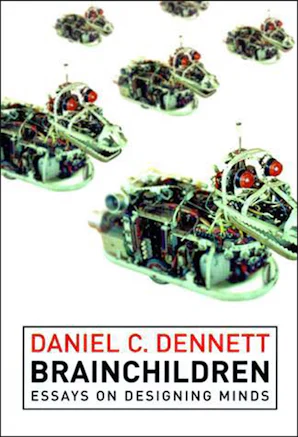
Brainchildren
Minds are complex artifacts, partly biological and partly social; only a unified, multidisciplinary approach will yield a realistic theory of how they came i...
BrainMind
At this important juncture in neuroscience, the BrainMind ecosystem is combining the most talented of these groups in novel ways to collectively shepherd, support, and fund ideas that can be translated from labs into interventions that will benefit humanity.

Links between the discovery of primates and anatomical comparisons with humans, the chain of being, our place in nature, and racism
- For more than a millennium humans knew more about the internal anatomy of a single monkey species than about that of their own bodies, because Galen used monkeys to infer human anatomy, in line wit...

Introducing TRIBE v2: A Predictive Foundation Model Trained to Understand How the Human Brain Processes Complex Stimuli
Understanding how the human brain processes the world around us is one of the greatest open challenges in neuroscience. Breakthroughs here could transform how we understand and treat neurological conditions affecting hundreds of millions of people — and improve AI systems by directly guiding their development from neuroscientific principles.

Learning Outside the Brain: Integrating Cognitive Science and Systems Biology
Learning is commonplace in organisms such as ourselves and even in organisms as far distant as the bee and the octopus. Such learning is implemented by brains, or neuronal networks, and has been extensively studied within ethology, psychology, cognitive science, and neuroscience. Whether learning also takes place in nonneuronal settings has remained a matter of sustained controversy, too often dominated by ideological views. In this survey, I will explain how learning can be rigorously interpreted as a form of information processing and then explore the evidence for whether learning also takes place in organismal contexts outside the brain, such as physiology, development, and individual cells. I will try to explain why it is important to build bridges in this way between cognitive science and systems biology, why concepts and methods from various branches of engineering may be helpful in this task, and what the eventual impact may be on how we think about the organism.
The brain in the machine: How AI could help explain how we think | IBM
Scientists are using large AI models to predict patterns of brain activity at scale, a development that researchers say is pushing neuroscience toward a new kind of digital imaging.

Joshua Park on Twitter / X
It’s hard to categorize or evaluate second-brain systems because there’s no single right answer.But I found one useful lens every second brain should be evaluated through: the lifecycle of your data.Collect -> Organize -> Evolve -> Use -> GovernSo I made a curated… pic.twitter.com/GrmBFLwvEW— Joshua Park (@JoshuaIPark) May 31, 2026

Ramin Saadat, Reasoning: From Biological Foundations to the Hidden Thread of Shared Understanding - PhilArchive
This paper investigates the nature and origins of human reasoning by synthesizing insights from classical philosophy, evolutionary biology, and contemporary neuroscience. Moving beyond the Aristotelian definition of zoon logon echon, which ...

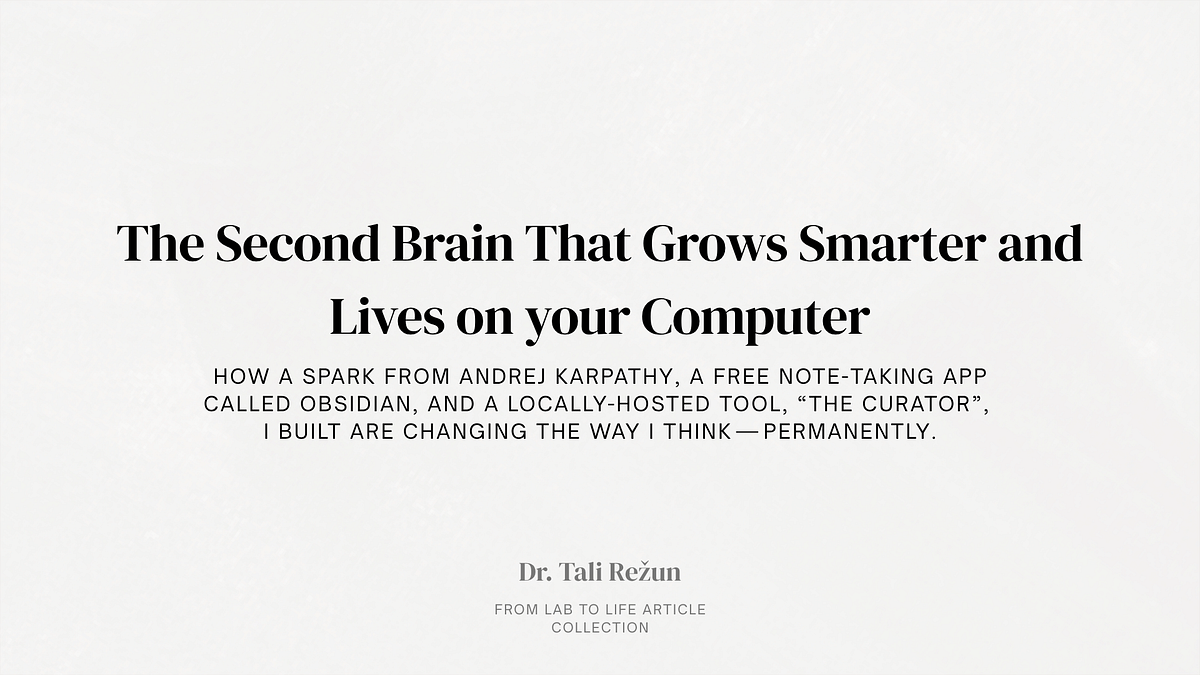
The Second Brain That Grows Smarter and Lives on your Computer
How a spark from Andrej Karpathy, app called Obsidian, and “The Curator”, the app I built are changing the way I think.
OpenAstrocytes – Forecast Research
Astrocytes make up about a third of the cells in your brain, and form a second, distinct brain network from the more-studied neuronal network. As neuroscience has discovered in only the last few years, the astrocyte network carries out extremely important computations, integrating information from across different brain networks, and using this information to drive feedback to neurons that controls physiological state and maintains long-term homeostasis.
NeuroNYC
As the global leader in finance, policy, art, research, and medicine, the region is well-positioned to lead neurotech. We help foster and promote the local neurotech ecosystem: clinics, companies, funders, labs, and users.

1. New preprint resolving a conundrum in systems neuroscience with an AI scientist, and humans Reilly Tilbury, Dabin Kwon, @haydari.bsky.social, @jacobmratliff.bsky.social, @bio-emergent.bsky.social, @carandinilab.net, @kevinjmiller.bsky.social, @neurokim.bsky.social biorxiv.org/content/10.1101/2025.11.12.68…

Characterizing neuronal population geometry with AI equation discovery
www.biorxiv.org