Narrative is a species-typical, reliably developing, complex cognitive process whose design is unlikely to have emerged by chance. Moreover, the folklore record indicates that narrative content is consistent across widely divergent cultures. I have argued elsewhere that a storyteller may use narrative to manipulate an audience's representations of the social and/or physical environment to serve his or her own fitness ends. However, my subsequent research suggests that such manipulation results from a broader selection pressure which narrative effectively alleviates: information acquisition. By substituting verbal representations for potentially costly first-hand experience, narrative enables an individual to safely and efficiently acquire information pertinent to the pursuit of fitness in local habitats. If this hypothesis is true, narrative should be rich with information useful to the pursuit of fitness. One class of information integral to the accomplishment of this task is foraging knowledge. In this paper, then, I present evidence that foraging peoples use narrative to transmit subsistence information: specifically, I demonstrate how various narrative devices (e.g., setting, description, mimicry, anthropomorphism) are used to communicate foraging knowledge.
Misreading as Foraging: How Systems Get Used for Things They Weren't Made For - Astral's Blog
Weaving Narratives into Procedural Worlds
Examining the value, characteristics, and methods of integrating static narratives into otherwise procedurally generated environments.
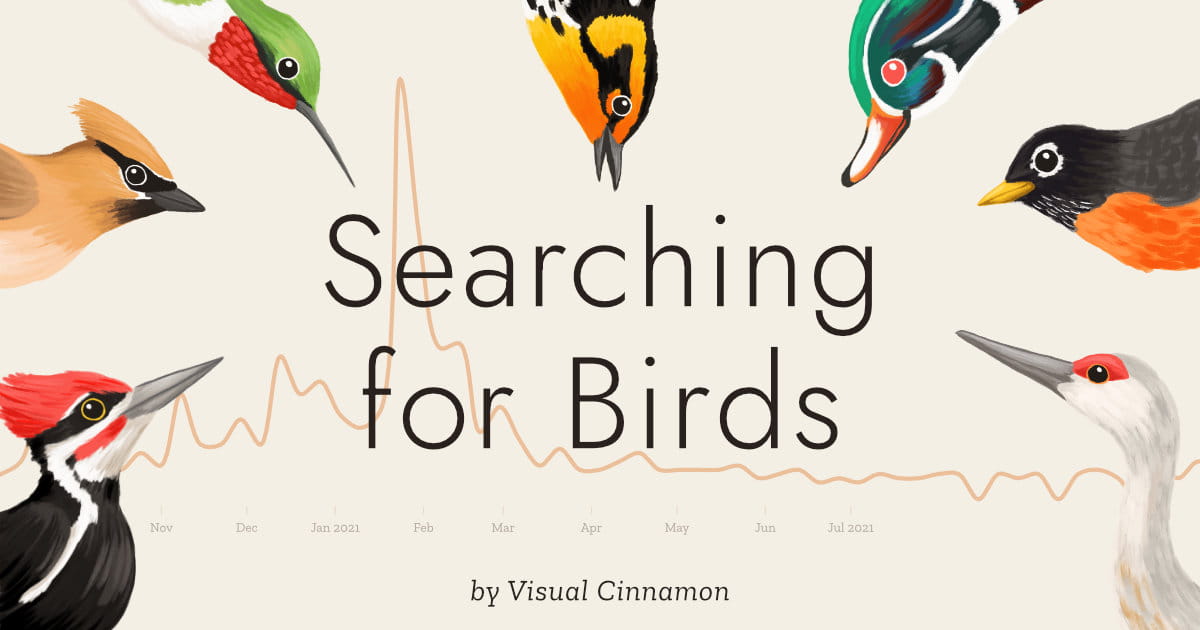
Searching for Birds
An interactive story about the birds that capture our curiosity, told through data, visuals and illustrations
Social learning preserves both useful and useless theories by canalizing learners’ exploration
In many domains, learning from others is crucial for leveraging cumulative cultural knowledge, which encapsulates the efforts of successive generations of innovators. However, anecdotal and experimental evidence suggests that reliance on social information can reduce the exploration of the problem space. Here, we experimentally investigate the extent to which cultural transmission fosters the persistence of arbitrary solutions in a context where participants are incentivized to improve a physical system across multiple trials. Participants were exposed to various theories about the system, ranging from accurate to misleading. Our findings indicate that even under conditions conducive to exploration, the transmission of cultural knowledge canalizes learners’ focus, limiting their consideration of alternative solutions. This effect was observed in both the theories produced and the solutions attempted by participants, irrespective of the accuracy of the provided theories. These results challenge the notion that arbitrary solutions persist only when they are efficient or intuitive and underscore the significant role of cultural transmission in shaping human knowledge and technologies.

Discovering and transmitting abstract knowledge over generations
The complexity of human culture depends on people's ability to discover and transmit abstract knowledge. Studying this ability is crucial to understanding humans' distinctive place among species, but current experimental paradigms focus on the cultural transmission of specific, concrete facts rather than generalizable abstract knowledge. In this paper, we develop a crafting game paradigm to study how people discover abstract knowledge and transmit it via language. We compared individuals playing this game for 40 rounds to chains of four participants playing for 10 rounds each and passing messages to each other sequentially. The individuals performed significantly better over rounds, but the chains did not. Through simulations with language model agents and a follow-up experiment, we find substantial variation in the helpfulness of participants' messages, which may explain the lack of consistent improvement in chains. The ability to learn selectively from the good messages may be essential for improvement over generations.
Information foraging
Information foraging is a theory that applies the ideas from optimal foraging theory to understand how human users search for information. The theory is based on the assumption that, when searching for information, humans use "built-in" foraging mechanisms that evolved to help our animal ancestors find food. Importantly, a better understanding of human search behavior can improve the usability of websites or any other user interface.

How storytelling can help articulate emotions that evolve as the climate changes
Creative works can represent emotions emerging so fast that our brains can’t quite catch up with them.

4-Layers, A Narrative Design Approach
Introduction This blog post will be about a new way to approach narrative design in games - the 4 Layers Approach. It is based on a GDC ...

The Secret of Our Success: How Culture Is Driving Human Evolution, Domesticating Our Species, and Making Us Smarter
How our collective intelligence has helped us to evolve and prosperHumans are a puzzling species. On the one hand, we struggle to survive on our own in the wild, often failing to overcome even basic challenges, like obtaining food, building shelters, or avoiding predators. On the other hand, human groups have produced ingenious technologies, sophisticated languages, and complex institutions that have permitted us to successfully expand into a vast range of diverse environments. What has enabled us to dominate the globe, more than any other species, while remaining virtually helpless as lone individuals? This book shows that the secret of our success lies not in our innate intelligence, but in our collective brains—on the ability of human groups to socially interconnect and learn from one another over generations.Drawing insights from lost European explorers, clever chimpanzees, mobile hunter-gatherers, neuroscientific findings, ancient bones, and the human genome, Joseph Henrich demonstrates how our collective brains have propelled our species' genetic evolution and shaped our biology. Our early capacities for learning from others produced many cultural innovations, such as fire, cooking, water containers, plant knowledge, and projectile weapons, which in turn drove the expansion of our brains and altered our physiology, anatomy, and psychology in crucial ways. Later on, some collective brains generated and recombined powerful concepts, such as the lever, wheel, screw, and writing, while also creating the institutions that continue to alter our motivations and perceptions. Henrich shows how our genetics and biology are inextricably interwoven with cultural evolution, and how culture-gene interactions launched our species on an extraordinary evolutionary trajectory.Tracking clues from our ancient past to the present, The Secret of Our Success explores how the evolution of both our cultural and social natures produce a collective intelligence that explains both our species' immense success and the origins of human uniqueness.
A field guide to Claude Fable 5: Finding your unknowns | Claude | Claude by Anthropic
Practical patterns for agentic coding with Claude Fable: how to find your unknowns before, during, and after implementation, from the team at Anthropic.
The role of transportation in the persuasiveness of public narratives.
Thinking through other minds: A variational approach to cognition and culture
The processes underwriting the acquisition of culture remain unclear. How are shared habits, norms, and expectations learned and maintained with precision and reliability across large-scale sociocultural ensembles? Is there a unifying account of the mechanisms involved in the acquisition of culture? Notions such as “shared expectations,” the “selective patterning of attention and behaviour,” “cultural evolution,” “cultural inheritance,” and “implicit learning” are the main candidates to underpin a unifying account of cognition and the acquisition of culture; however, their interactions require greater specification and clarification. In this article, we integrate these candidates using the variational (free-energy) approach to human cognition and culture in theoretical neuroscience. We describe the construction by humans of social niches that afford epistemic resources called cultural affordances. We argue that human agents learn the shared habits, norms, and expectations of their culture through immersive participation in patterned cultural practices that selectively pattern attention and behaviour. We call this process “thinking through other minds” (TTOM) – in effect, the process of inferring other agents’ expectations about the world and how to behave in social context. We argue that for humans, information from and about other people's expectations constitutes the primary domain of statistical regularities that humans leverage to predict and organize behaviour. The integrative model we offer has implications that can advance theories of cognition, enculturation, adaptation, and psychopathology. Crucially, this formal (variational) treatment seeks to resolve key debates in current cognitive science, such as the distinction between internalist and externalist accounts of theory of mind abilities and the more fundamental distinction between dynamical and representational accounts of enactivism.

Storyteller.fit | Blog your own cycling, running and sport stories. Powered by Strava
Create beautiful stories based on the activities you recorded on Strava. From single activities to entire seasons collect the adventures and achievements of your active life.
A bias for social information in human cultural transmission
Evolutionary theories concerning the origins of human intelligence suggest that cultural transmission might be biased toward social over non‐social information. This was tested by passing social and non‐social information along multiple chains of participants. Experiment 1 found that gossip, defined as information about intense third‐party social relationships, was transmitted with siginificantly greater accuracy and in significantly greater quantity than equivalent non‐social information concerning individual behaviour or the physical environment. Experiment 2 replicated this finding controlling for narrative coherence, and additionally found that information concerning everyday non‐gossip social interactions was transmitted just as well as the intense gossip interactions. It was therefore concluded that human cultural transmission is biased toward information concerning social interactions over equivalent non‐social information.

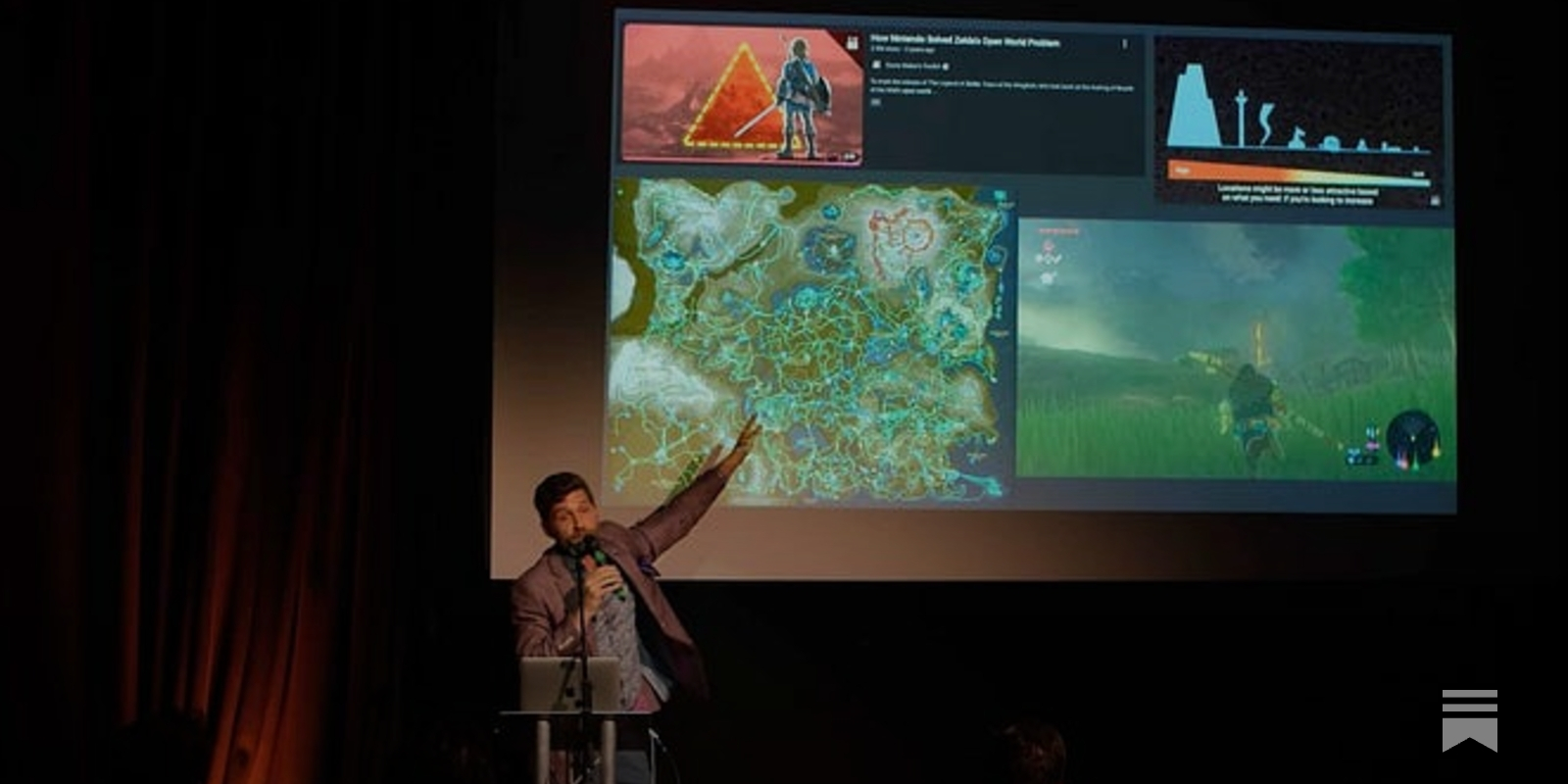
🌿 Foraging in High-Dimensional Data
My talk from the Diverse Intelligences Summer Institute 2025 on how we can draw from thinking in complex systems science and game design to heal our relationship to the Web.