A new investigation shows the oil company understood the science before it became a public issue and spent millions to promote misinformation
Assessing ExxonMobil’s global warming projections
Climate projections by the fossil fuel industry have never been assessed. On the basis of company records, we quantitatively evaluated all available global warming projections documented by—and in many cases modeled by—Exxon and ExxonMobil Corp scientists between 1977 and 2003. We find that most of their projections accurately forecast warming that is consistent with subsequent observations. Their projections were also consistent with, and at least as skillful as, those of independent academic and government models. Exxon and ExxonMobil Corp also correctly rejected the prospect of a coming ice age, accurately predicted when human-caused global warming would first be detected, and reasonably estimated the “carbon budget” for holding warming below 2°C. On each of these points, however, the company’s public statements about climate science contradicted its own scientific data. , Insider knowledge For decades, some members of the fossil fuel industry tried to convince the public that a causative link between fossil fuel use and climate warming could not be made because the models used to project warming were too uncertain. Supran et al . show that one of those fossil fuel companies, ExxonMobil, had their own internal models that projected warming trajectories consistent with those forecast by the independent academic and government models. What they understood about climate models thus contradicted what they led the public to believe. —HJS , ExxonMobil’s own climate models showed that fossil fuel use would cause climate warming. , BACKGROUND In 2015, investigative journalists discovered internal company memos indicating that Exxon oil company has known since the late 1970s that its fossil fuel products could lead to global warming with “dramatic environmental effects before the year 2050.” Additional documents then emerged showing that the US oil and gas industry’s largest trade association had likewise known since at least the 1950s, as had the coal industry since at least the 1960s, and electric utilities, Total oil company, and GM and Ford motor companies since at least the 1970s. Scholars and journalists have analyzed the texts contained in these documents, providing qualitative accounts of fossil fuel interests’ knowledge of climate science and its implications. In 2017, for instance, we demonstrated that Exxon’s internal documents, as well as peer-reviewed studies published by Exxon and ExxonMobil Corp scientists, overwhelmingly acknowledged that climate change is real and human-caused. By contrast, the majority of Mobil and ExxonMobil Corp’s public communications promoted doubt on the matter. ADVANCES Many of the uncovered fossil fuel industry documents include explicit projections of the amount of warming expected to occur over time in response to rising atmospheric greenhouse gas concentrations. Yet, these numerical and graphical data have received little attention. Indeed, no one has systematically reviewed climate modeling projections by any fossil fuel interest. What exactly did oil and gas companies know, and how accurate did their knowledge prove to be? Here, we address these questions by reporting and analyzing all known global warming projections documented by—and in many cases modeled by—Exxon and ExxonMobil Corp scientists between 1977 and 2003. Our results show that in private and academic circles since the late 1970s and early 1980s, ExxonMobil predicted global warming correctly and skillfully. Using established statistical techniques, we find that 63 to 83% of the climate projections reported by ExxonMobil scientists were accurate in predicting subsequent global warming. ExxonMobil’s average projected warming was 0.20° ± 0.04°C per decade, which is, within uncertainty, the same as that of independent academic and government projections published between 1970 and 2007. The average “skill score” and level of uncertainty of ExxonMobil’s climate models (67 to 75% and ±21%, respectively) were also similar to those of the independent models. Moreover, we show that ExxonMobil scientists correctly dismissed the possibility of a coming ice age in favor of a “carbon dioxide induced ‘super-interglacial’”; accurately predicted that human-caused global warming would first be detectable in the year 2000 ± 5; and reasonably estimated how much CO 2 would lead to dangerous warming. OUTLOOK Today, dozens of cities, counties, and states are suing oil and gas companies for their “longstanding internal scientific knowledge of the causes and consequences of climate change and public deception campaigns.” The European Parliament and the US Congress have held hearings, US President Joe Biden has committed to holding fossil fuel companies accountable, and a grassroots social movement has arisen under the moniker #ExxonKnew. Our findings demonstrate that ExxonMobil didn’t just know “something” about global warming decades ago—they knew as much as academic and government scientists knew. But whereas those scientists worked to communicate what they knew, ExxonMobil worked to deny it—including overemphasizing uncertainties, denigrating climate models, mythologizing global cooling, feigning ignorance about the discernibility of human-caused warming, and staying silent about the possibility of stranded fossil fuel assets in a carbon-constrained world. Historically observed temperature change (red) and atmospheric carbon dioxide concentration (blue) over time, compared against global warming projections reported by ExxonMobil scientists. ( A ) “Proprietary” 1982 Exxon-modeled projections. ( B ) Summary of projections in seven internal company memos and five peer-reviewed publications between 1977 and 2003 (gray lines). ( C ) A 1977 internally reported graph of the global warming “effect of CO 2 on an interglacial scale.” (A) and (B) display averaged historical temperature observations, whereas the historical temperature record in (C) is a smoothed Earth system model simulation of the last 150,000 years.

Shell and Exxon's secret 1980s climate change warnings | Benjamin Franta
Benjamin Franta: Newly found documents from the 1980s show that fossil fuel companies privately predicted the global damage that would be caused by their products.
An insider’s story of the global attack on climate science
An epic saga of secretly funded climate denial and harassment of scientists.

Big Oil braced for global warming while it fought regulations
As major oil companies fought efforts to address climate change, they were quietly safeguarding their own billion-dollar infrastructure from rising seas and warming temperatures.
Correcting climate ‘misperceptions’ may not boost climate action - Carbon Brief
Most people "underestimate" general support for climate change and "overestimate" actual, real-world climate action.
Knowledge infrastructures for the Anthropocene
The technosphere metabolizes not only energy and materials, but information and knowledge as well. This article first examines the history of knowledge about large-scale, long-term, anthropogenic environmental change. In the 19th and 20th centuries, major systems were built for monitoring both the environment and human activity of all kinds, for modeling geophysical processes such as climate change, and for preserving and refining scientific memory, i.e. data about the planetary past. Despite many failures, these knowledge infrastructures also helped achieve notable successes such as the Limited Test Ban Treaty of 1963, the ozone depletion accords of the 1980s, and the Paris Agreement on climate change of 2015. The article’s second part proposes that knowledge infrastructures for the Anthropocene might not only monitor and model the technosphere’s metabolism of energy, materials and information, but also integrate those techniques with new accounting practices aimed at sustainability. Scientific examples include remarkable recent work on long-term socio-ecological research, and the assessment reports of the Intergovernmental Panel on Climate Change. In terms of practical knowledge, one key to effective accounting may be ‘recycling’ of the vast amounts of ‘waste’ data created by virtually all online systems today. Examples include dramatic environmental efficiency gains by Ikea and United Parcel Service, through improved logistics, self-provision of renewable energy, and feedback from close monitoring of delivery trucks. Blending social ‘data exhaust’ with physical and environmental information, an environmentally focused logistics might trim away excess energy and materials in production, find new ways to re-use or recycle waste, and generate new ideas for eliminating toxic byproducts, greenhouse gas emissions and other metabolites.
Reforming the products and processes of the IPCC to enhance its relevance
The Intergovernmental Panel on Climate Change (IPCC) assesses the scientific knowledge on climate change at five to seven year intervals. Exponential growth of the scientific literature has increased the workload for participants and the length of assessment reports. This paper proposes changes to the IPCC’s products and processes to enable it to better meet the needs of its audiences while reducing the growing burden imposed on authors and other participants.


Climate doom may discourage climate action, but there’s a way to counter it
One way to guard against misinformation is to empower people to identify climate doom in the first place.

Have people stopped trusting science? The data tell a surprising story
Some say there’s a global crisis of trust — but research reveals where the real problems lie.

Why the International Energy Agency Still Gets It Wrong on Fossil Fuels - Oil Change International
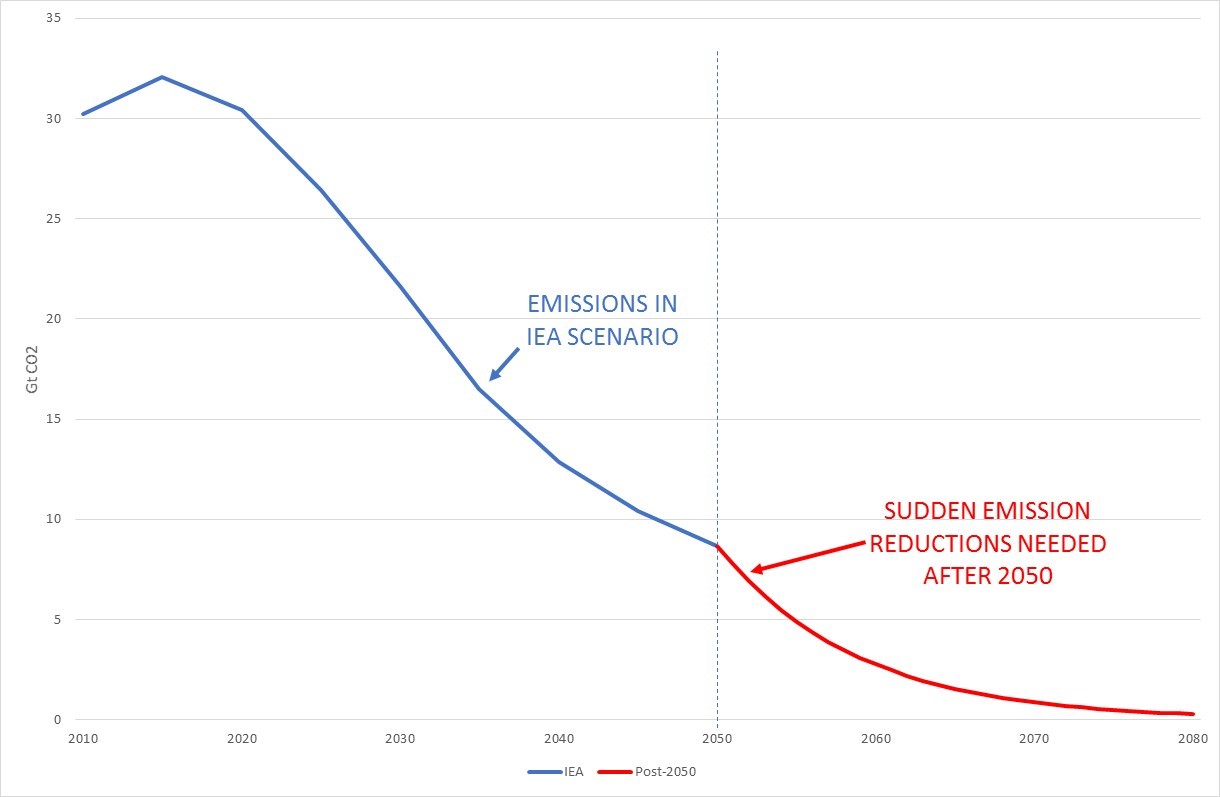
On Monday, we welcomed the first step by the International Energy Agency towards describing how energy would look for the world to meet one of the Paris
Gas-Lit
If it is sometimes hard to tell the difference between fossil-fuel lobbyists and the billionaire press, that’s because there isn’t one.

The Climate Movement Isn’t in Retreat, It’s Under Attack…and It’s Time to Fight Back | Newsletter
In 2020, a source shared a presentation with me from an internal branding workshop they’d been asked to attend for bp. It was fascinating for a number of reasons, not least because it indicated that the oil major felt genuinely threatened by a surprising new enemy: young people. There have always been ebbs and flows […]

Technological Optimism and the Unspoken Abandonment of Paris
On 7 October 2026, The Guardian published an article titled Scientists who put faith in technology are less likely to take climate action. The article reported on a study by the London School of Economics, which surveyed more than 9,000 scientists across 115 countries about their views on whether technology will largely solve the problems caused by climate change. The findings suggested that scientists expressing greater faith in technological solutions were less likely to engage in civic action or make significant changes to their own lifestyles.
"Wandering towards dystopia": CSIRO scientists want open discussion of climate impacts before it's too late
Senior CSIRO scientists discussed how to have an "open conversation" about the rising threats from a warming world before "it's too late".