

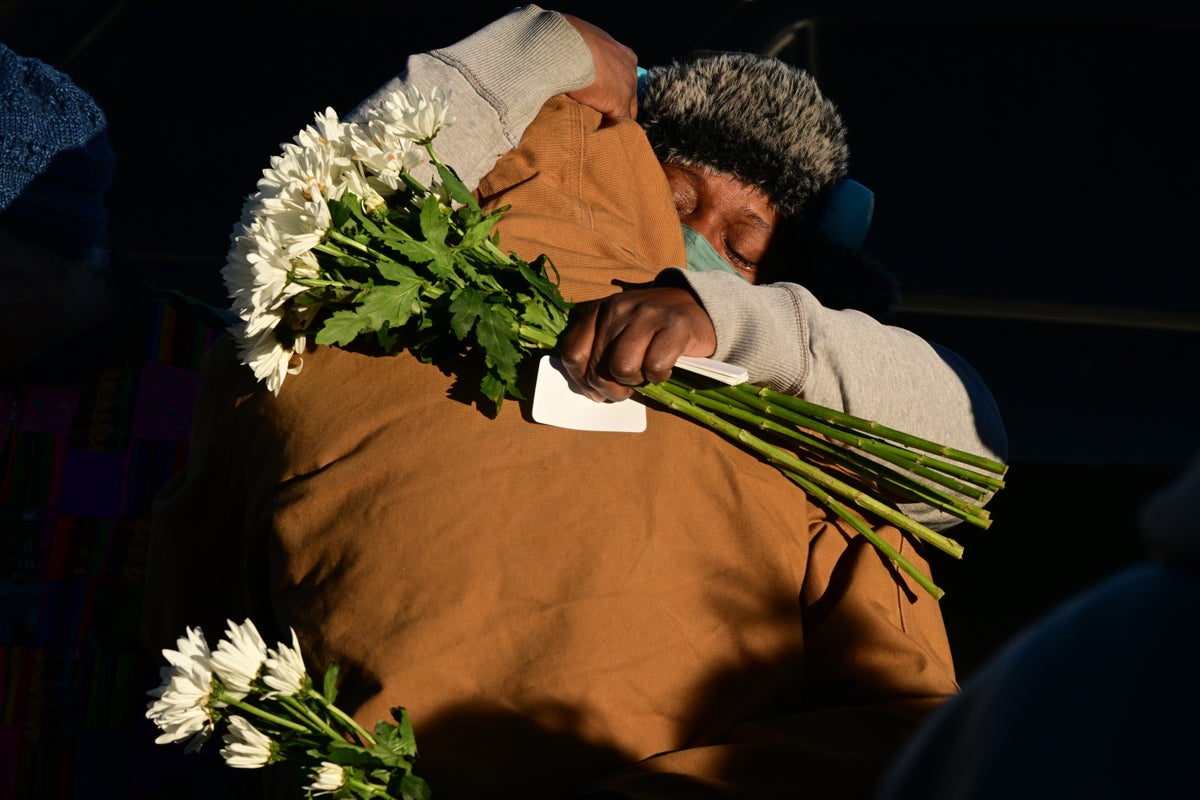
Hate speech from the far right is increasing the risk of violence against LGBTQ+ people such as the Club Q shooting
Speech is violence? Not if we want a liberal, intellectual society
Offensive speech can cause mental and emotional pain. But classifying it as violence erodes the foundations of intellectual liberalism.
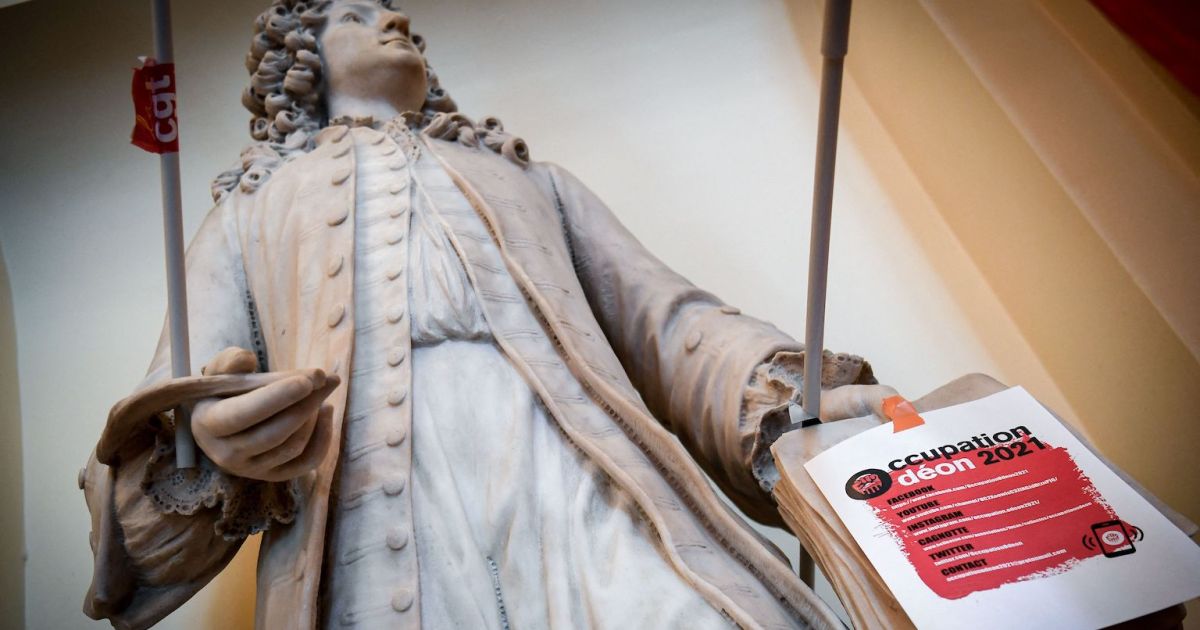
'A directive from above': Former NYT editor lays out how the paper pushes anti-trans bigotry
In this in-depth interview, former New York Times editor Billie Jean Sweeney details how the paper shifted towards openly promoting anti-trans hatred, how some staff tried to stop it, how it's directed from the very top and the damage this legitimization of bigotry has done

The Faux Free Speech Warriors Attacking Free Speech
There’s a particularly insidious and cynical form of censorship gaining prominence in America: the weaponization of “free speech” rhetoric, combined with abuses of the judicial sy…

“It is a racial war:” Analyzing the violent rhetoric of active club members on X - Institute for Strategic Dialogue
ISD research revealed that some members of US-based Active Clubs are using X accounts to call for violence against targeted communities.

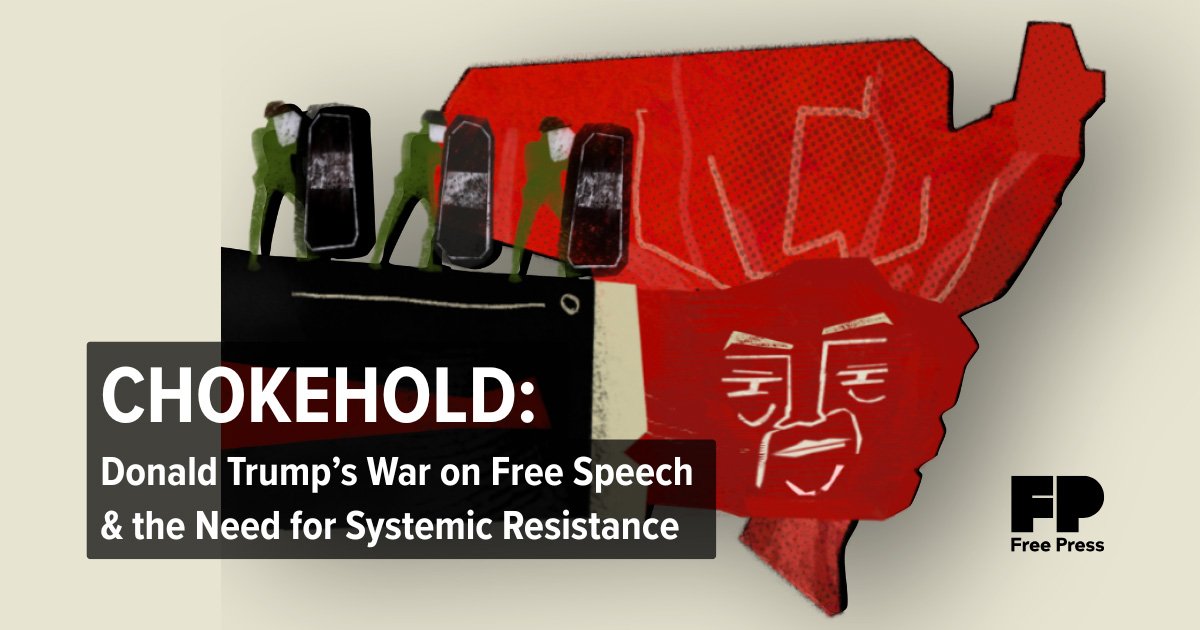
Chokehold: Donald Trump’s War on Free Speech & the Need for Systemic Resistance
This Free Press report examines the Trump administration’s hostile relationship with dissent and free expression in 2025. It analyzes how Trump and his political enablers have sought to undermine and chill the most basic freedoms protected by the First Amendment.
Data Feminism for AI
Attacks on women and trans people are not happening in a vacuum. Communications scholars W. Lance Bennett and Marianne Kneuer recently argued that we are witnessing the intensification of "illiberal public spheres" around the world (Bennett and Kneuer, 2023). These are characterized by a set of anti-democratic communications tactics that include the denigration and exclusion of minoritized people, targeted attacks on the press and political institutions, and transgression of norms of civil discourse. Such tactics are enabled and amplified by the social media platforms owned by Big Tech, whose business model elevates attention above all other metrics, such that they profit richly off extremism, threats, spectacle, and lies. The success of this corporate partnership with right-wing extremism is evident in the proliferation of book bans (Magnusson, 2024), the demonization of DEI and critical race theory (Crenshaw, 2022), and mob tactics to doxx, intimidate, misrepresent, and otherwise silence people that study misinformation, speak out against racial and gender violence, or rule against insurrectionists (Edmonds, 2024). At the same time, we have seen the continued work of feminists, including Latin American, Indigenous, and abolitionist feminists in the US and globally, doing the work of imagining alternate worlds (Cullors, 2021; Davis, 2022; Ricaurte, 2019; Simpson, 2017). This paper represents our own first attempt to imagine a more equitable, sustainable, feminist world for AI research.
Seen but not heard: The New York Times failed to quote trans people in over 60% of 2023 stories on anti-trans legislation
A new report from Media Matters and GLAAD finds that The New York Times excluded the perspectives of trans people from two-thirds of its stories about anti-trans legislation in the year following public criticism for its handling of the topic. Media Matters previously reported that the Times helped fuel a right-wing anti-trans panic in 2022 by platforming anti-trans extremists, painting rising transgender identification as a social contagion, and fearmongering about the costs of transgender acceptance. In February 2023, the paper received two separate open letters: one from a coalition of 150+ organizations and leaders, including GLAAD, and a separate letter signed by hundreds of Times contributors that criticized the outlet's contributions to a deadly anti-LGBTQ culture war. The newspaper attempted to conflate both efforts, dismissing all criticisms of its coverage as merely “protests organized by advocacy groups.” Between February 15, 2023, when those letters were separately delivered to the Times, and February 15, 2024, the Times published at least 65 articles that mentioned U.S. anti-trans legislation in either their headline or lead paragraphs. We counted how often the paper quoted openly trans or gender-nonconforming sources, cited anti-trans misinformation or talking points without context or adequate fact-checking, and accurately represented the records of anti-trans figures mentioned in its stories. Our findings: 66% of the articles did not quote even one trans or gender-nonconforming person. 18% of the articles quoted misinformation from anti-trans activists without adequate fact-checking or additional context. 6 articles obscured the anti-trans background of sources, erasing histories of extremist rhetoric or actions.

Right-leaning groups say MN 15 prosecution violates free speech of anti-ICE activists
Free speech and conservative legal groups are urging a federal judge to order prosecutors to release documents in the Minnesota activists conspiracy case that defendants say could reveal political targeting and First Amendment violations tied to a Trump administration directive.
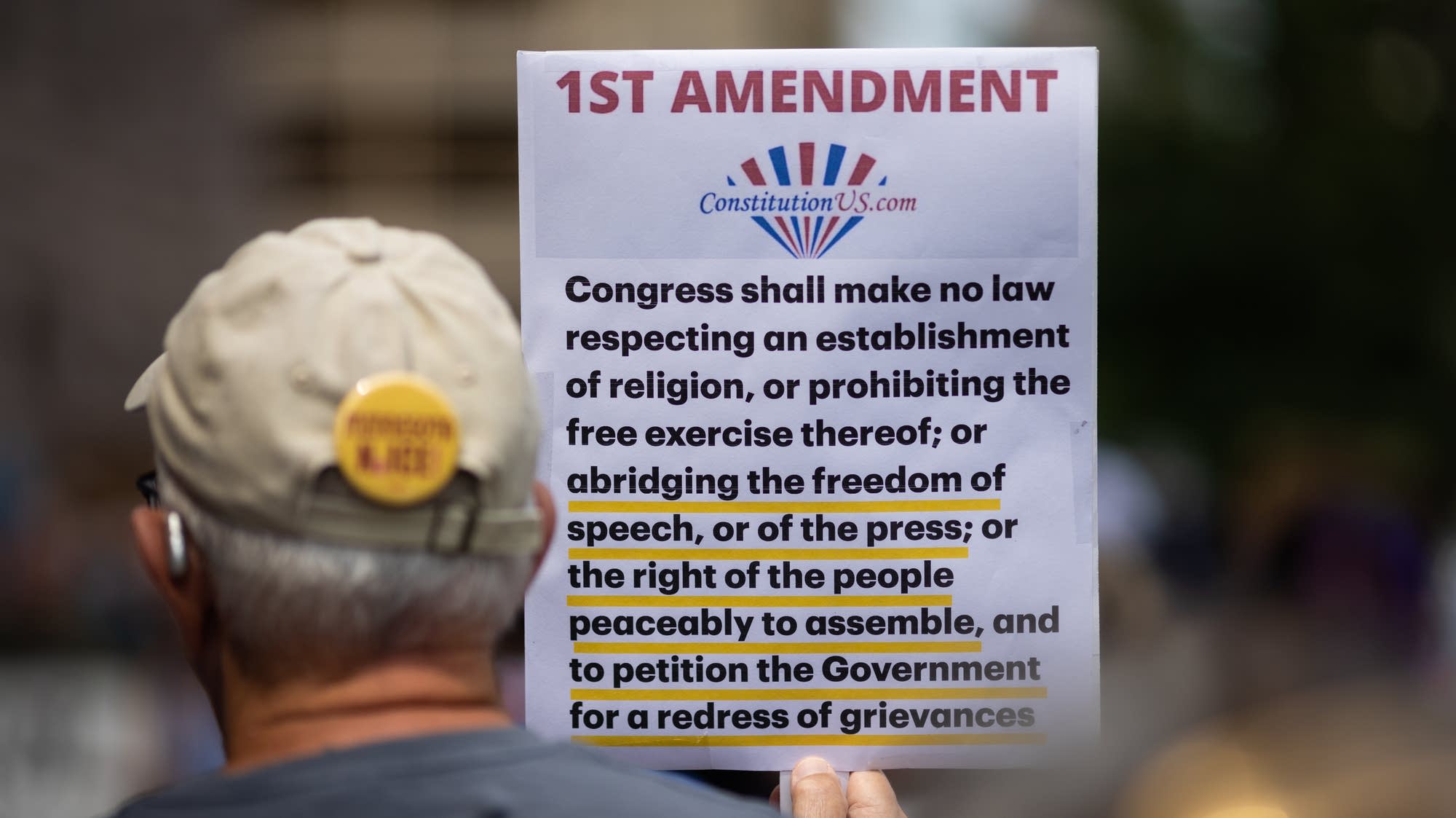
When protests normalize intolerance: The hidden costs of far-right demonstrations
Large crowds expressing xenophobic views publicly can signal that such beliefs are socially acceptable or mainstream, influencing others to think this behavior is normal
Elon Musk's Grokipedia Pushes Far-Right Talking Points
The new AI-powered Wikipedia competitor falsely claims that pornography worsened the AIDS epidemic and that social media may be fueling a rise in transgender people.

Far Right Groups Targeting Pride Month - Google My Maps
Tracking the far right anti-LGBTIQ activists, Christian Nationalists, White Supremacists, and violent extremist groups targeting LGBTIQ events during Pride Month. Incident Report: https://tinyurl.com/PrideIncident Map Information: https://tinyurl.com/MappingPride #DefendPride Resources: https://itsgoingdown.org/defendpride/ Project of Radical Reports: https://www.radicalreports.org Contact: radicalreportsnewsletter@gmail.com
A Better Conversation on Guns
For the U.S. to make lasting progress against firearm violence, it must change the way it talks about — and talks to — people who carry.

The Algorithmic Management of Polarization and Violence on Social Media
Access the PDF version of this essay by clicking the icon to the right.
What 10,000 students taught us about combating LGBTphobia in schools
School-based interventions can help, but repeated exposure and the ability to engage resistant groups are key to shifting social norms
Q&A: The Myth of "Radicalization" | American Civil Liberties Union
>What’s wrong with radicalization? >What's at Stake? > What's The Proper Role For Law Enforcement? > What's The Bottom Line? WHAT'S WRONG WITH “RADICALIZATION”? The word “radicalization” is commonly used in public and policy discourse, but what people mean by it varies and there’s no single agreed-upon definition. The problem is that government policies and programs are based on a theory of “radicalization” that assumes a process through which people turn to violence because of radical or extreme beliefs. This theory is unscientific and discredited — and government programs based on it result in monitoring or suppression of First Amendment-protected beliefs and ideas. For example, this dangerous radicalization theory is being applied to American Muslim communities, most recently in the form of “countering violent extremism ” programs. According to this theory, the adoption or expression of “extreme” or “radical” religious ideas or practices places individuals on a path toward terrorism or violence, and there are observable “indicators” that can identify those who are “vulnerable” to “radicalization.” This is false. The ACLU has repeatedly provided statements to Congress — in 2009, 2010, 2011, and 2012 — to explain the factual and methodological flaws in reports that promote this radicalization theory. Our allies have also written reports debunking the theory. As we and others have explained, despite years of study and experience in the United States and elsewhere, researchers have not identified criteria or behavioral indicators that can be used to reliably predict who will commit an act of terrorism or political violence. Simply put, religious beliefs and practices do not correlate with a propensity toward violence. Instead, the freedom to engage in these activities goes to the core of what it means to be an American. Cloaking American Muslims — or any other belief communities — with suspicion puts at risk the freedom of religion, gives the appearance of official endorsement of one set of religious beliefs over another, and threatens to chill free association and free speech. WHAT'S AT STAKE? The radicalization myth threatens the fundamental freedoms of American Muslims and all Americans. Government efforts to inquire whether American Muslims — or anyone else — holds “radical” or “extreme” beliefs, however those are defined, stigmatize entire communities and promote a climate of fear and self-censorship. Our values are undermined when people forsake religious exercise, political discussions, and intellectual debate to avoid being branded as extreme or at risk of “radicalization.” Probing people’s thoughts and beliefs also engenders distrust of the government and undermines the relationship between communities and law enforcement. For example, it can cripple government efforts to demonstrate to Muslims at home and abroad that the United States seeks to live up to its ideals in its equal treatment of all Americans, including Muslims, and is not engaged in a “war against Islam.” More broadly, our nation’s founders recognized that radical beliefs that challenge social and political orthodoxies are valuable and necessary for a vibrant society and democracy. That is why First Amendment, which protects the freedoms of belief, religion, speech, and association, occupies a special place in our history and in the Constitution. Unfortunately, though, government suspicion of beliefs and unsupported theories of “radicalization” are nothing new, and our nation’s history shows they are often used to target minorities or those who dissent. For example, during World War I, Congress banned anti-war speech and the FBI conducted investigations of Americans’ political beliefs to identify purported radicals and opponents. Erroneous theories of eugenics supported racist immigration policies and Jim Crow anti-miscegenation laws for decades. Misguided “red” scares and racism drove abominable policies like blacklists, McCarthyism, and Japanese internment. And the FBI infamously spied on civil rights movement leaders in the name of national security during the J. Edgar Hoover era. WHAT'S THE PROPER ROLE FOR LAW ENFORCEMENT? The protections built into the Constitution help ensure that law enforcement officers focus their investigative resources where there is evidence of wrongdoing or criminal activity. The police can conduct an investigation when they have reasonable suspicion to believe that a crime has been, or is being, committed. But the standard for initiating or widening an investigation must be rigorous enough to focus security resources on criminal activity and prevent abuse. One form of such abuse occurs when officers investigate or monitor people based on their religious beliefs or practices. Former Attorney General Eric Holder rightly stated that “law enforcement has an obligation to ensure that members of every religious community enjoy the ability to worship and to practice their faith in peace, free from intimidation, violence or suspicion. That is the right of all Americans. And it must be a reality for every citizen. In this nation, our many faiths, origins, and appearances must bind us together, not break us apart.” Too often, though, law enforcement and intelligence have targeted religious, racial, ethnic, or national origin communities for monitoring and suspicion. In the case of American Muslims, “countering violent extremism” initiatives may task communities with reporting to law enforcement about individuals’ radical or extreme beliefs. Although warning law enforcement of threats is indeed a shared civic and social responsibility, it would be illegal, unfair, and impractical for law enforcement officials to require any religious or belief community to prove its loyalty to this country by monitoring or “informing” on its members. To the contrary, American Muslims, like the rest of this country's citizens, have the right to protest illegal, overzealous or abusive government security measures and to vigorously exercise, and encourage others to exercise, rights guaranteed in the Constitution. Some in American Muslim communities have also expressed legitimate concerns about whether those who volunteer information to law enforcement will find themselves threatened with legal jeopardy. Individuals should speak to lawyers before talking to law enforcement — and know that refusing to talk to law enforcement without a lawyer is a constitutional right. WHAT'S THE BOTTOM LINE? The government’s “radicalization” theory has become a euphemism for religious and ideological profiling. It leads to discrimination and stigmatization, and is fundamentally un-American. Casting suspicion on American faith or belief communities is wrong and does nothing to make us safer.
Online anonymity/pseudonymity

“There's plenty of research in this topic area that shows hate speech doesn't decline when real-name policies are in effect, in fact usually the inverse, and the diversity of people contributing to conversations decreases” — bsky.app/profile/did:plc:5w4eqcxzw5jv5…
Research - Disqus

What’s in a name? A forward view of anonymity online

Anonymity and Online Commenting: The Broken Windows Effect and the End of Drive-by Commenting

Anonymity, Pseudonymity, and Deliberation: Why Not Everything Should Be Connected
Online anonymity: study found ‘stable pseudonyms’ created a more civil environment than real user names

Real-Name Policies: The War Against Pseudonymity