

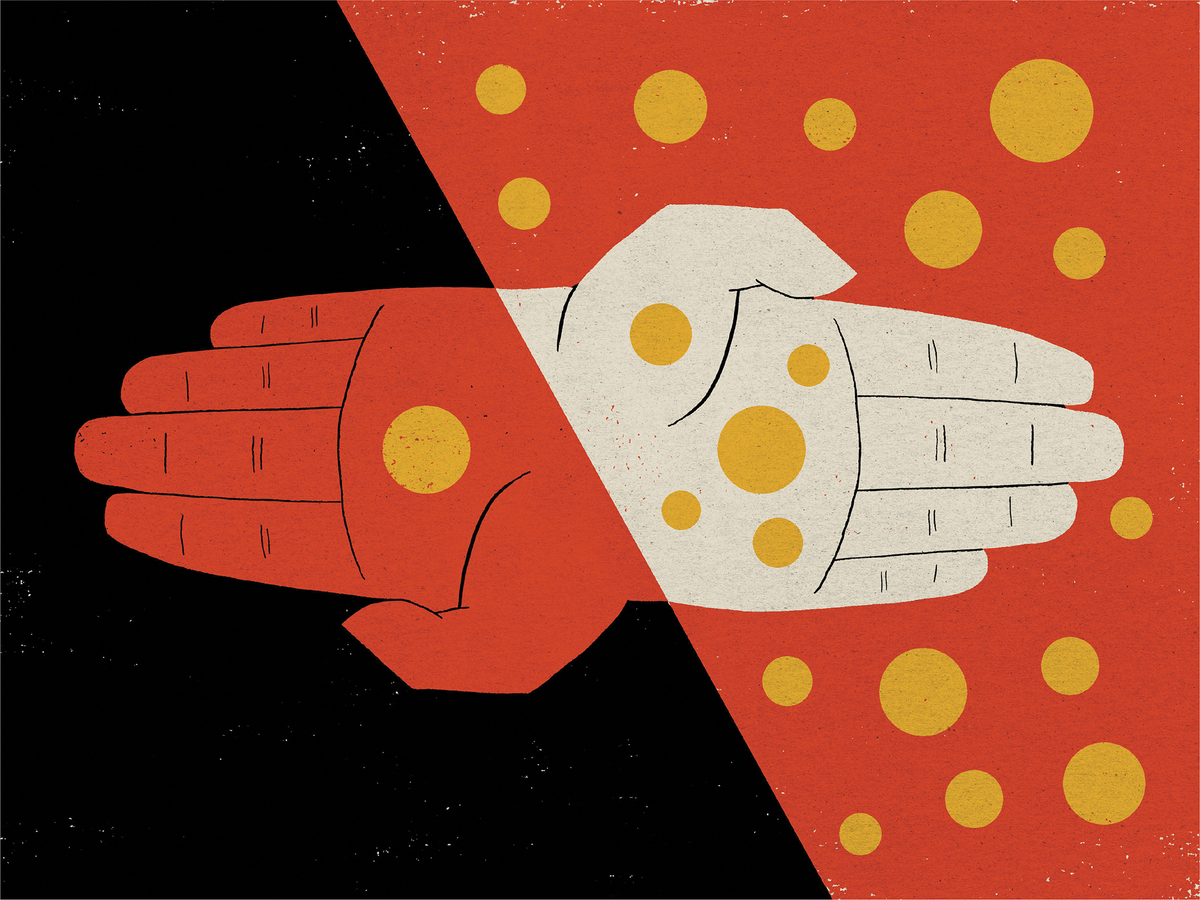
Wealth naturally trickles up in free-market economies, model suggests
Global Inequality — Harvard University Press
Winner of the Bruno Kreisky Prize, Karl Renner InstitutA Financial Times Best Economics Book of the Year An Economist Best Book of the Year A Livemint Best Book of the YearOne of the world’s leading economists of inequality, Branko Milanovic presents a bold new account of the dynamics that drive inequality on a global scale. Drawing on vast data sets and cutting-edge research, he explains the benign and malign forces that make inequality rise and fall within and among nations. He also reveals who has been helped the most by globalization, who has been held back, and what policies might tilt the balance toward economic justice.“The data [Milanovic] provides offer a clearer picture of great economic puzzles, and his bold theorizing chips away at tired economic orthodoxies.”—The Economist“Milanovic has written an outstanding book…Informative, wide-ranging, scholarly, imaginative and commendably brief. As you would expect from one of the world’s leading experts on this topic, Milanovic has added significantly to important recent works by Thomas Piketty, Anthony Atkinson and François Bourguignon…Ever-rising inequality looks a highly unlikely combination with any genuine democracy. It is to the credit of Milanovic’s book that it brings out these dangers so clearly, along with the important global successes of the past few decades.—Martin Wolf, Financial Times
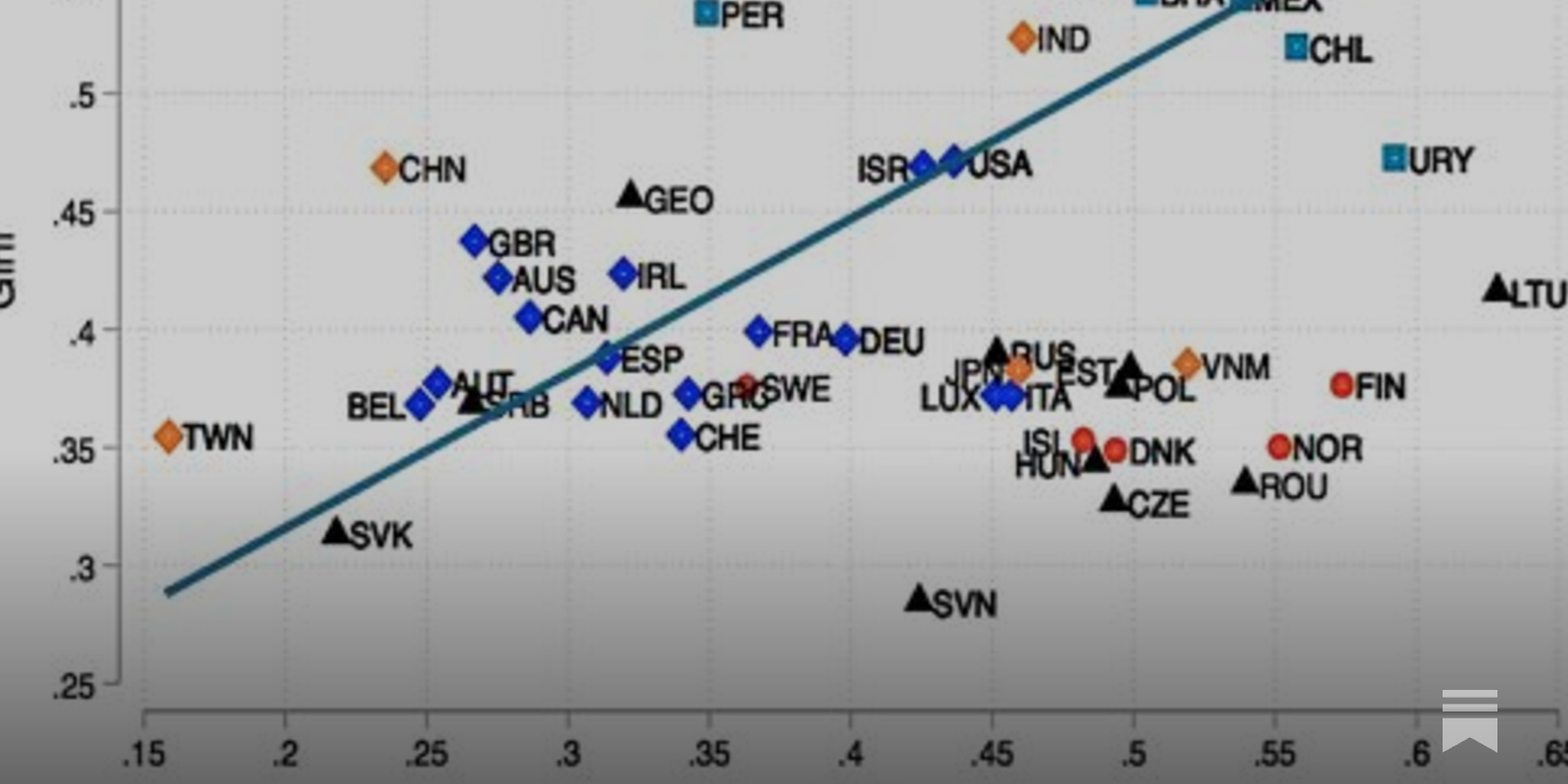
New Capitalism II: Compositional vs income inequality
Are all class-based societies unequal?
Why the super rich are inevitable
Why some mathematicians argue the economy is designed to create a few super rich people – unless we stop it.

The Origin and Future of Economic Inequality
The Divide — Jason Hickel
The Divide: A Brief Guide to Global Inequality and its Solutions Penguin Random House UK, 2017

The myth of catch-up development: trends in core–periphery inequality from 1960 to 2023
The conventional narrative in international development holds that poorer countries are “catching up” with richer countries through the process of capitalist growth. This paper assesses this claim ...

Capitalism in Crisis Amid Slow Growth and Growing Inequality
Six years after the Lehman disaster, the industrialized world is suffering from Japan Syndrome. Growth is minimal, another crash may be brewing and the gulf between rich and poor continues to widen. Can the global economy reinvent itself?

Wealth Capture Policies | Windfall Policy Atlas
What mechanisms can ensure AI-driven productivity gains are captured for the public benefit?

Capitalism, Inequality, and the Myth of Catch-Up Development
Prevailing narratives in international development hold that poorer countries can and will "catch-up" with richer countries through the process of
Do the Rich Capture All the Gains from Economic Growth?
Adjusted for inflation, the US economy has more than doubled in real terms since 1975.

AI Adoption and Inequality
There are competing narratives about artificial intelligence’s impact on inequality. Some argue AI will exacerbate economic disparities, while others suggest it could reduce inequality by primarily disrupting high-income jobs. Using household microdata and a calibrated task-based model, we show these narratives reflect different channels through which AI affects the economy. Unlike previous waves of automation that increased both wage and wealth inequality, AI could reduce wage inequality through the displacement of high-income workers. However, two factors may counter this effect: these workers’ tasks appear highly complementary with AI, potentially increasing their productivity, and they are better positioned to benefit from higher capital returns. When firms can choose how much AI to adopt, the wealth inequality effect is particularly pronounced, as the potential cost savings from automating high-wage tasks drive significantly higher adoption rates. Models that ignore this adoption decision risk understating the trade-off policymakers face between inequality and efficiency.
Meritocracy: the great delusion that ingrains inequality | Jo Littler
From Theresa May to Donald Trump, our leaders sell it as a utopian system of fairness – but ‘merit’ has been manipulated to privilege the wealthy

Le nouveau capitalisme (2/3) : inégalités compositionnelles versus inégalités de revenu
Traduction de "New capitalism II: Compositional vs income inequality. Are all class-based societies unequal?" de Branko Milanovic

The Myth of Capitalism Exposed
We need a revolution to cast off monopolies and restore entrepreneurial freedom. First of two excerpts from “The Myth of Capitalism.”

Power: A Primer for Perplexed Economists
Let's Assume an Unfettered Marketplace of Ideas! Or Actually, Let's Not.
Economic Inequality
How is inequality measured, who produces key databases, and what does the data tell us?