


Freud’s notion of a dark, libidinous unconscious is obsolete. A new theory holds that the brain produces a continuous stream of unconscious predictions
To Make Sense of the Present, Brains May Predict the Future | Quanta Magazine
A controversial theory suggests that perception, motor control, memory and other brain functions all depend on comparisons between ongoing actual experiences and the brain’s modeled expectations.

Brain activity under anesthesia challenges what we know about consciousness
The unconscious brain appears to be far more capable than scientists once believed. Researchers found that patients under general anesthesia could still process language at a sophisticated level, distinguishing nouns, verbs, and adjectives while listening to stories. Even more remarkably, neural activity showed signs of predicting upcoming words before they were heard. The results challenge traditional ideas about consciousness and hint at new possibilities for brain-computer interfaces.

Subconscious is winding down
Subconscious started with an idea: to amplify intelligence using a worldwide decentralized knowledge graph. In 2022, we raised a seed and started building. Today we’re sharing difficult news. Subconscious will be winding down active operations. I’m proud of what our team built on a technical level—

Introducing The Psyche Network
Alexander Lerchner, The Abstraction Fallacy: Why AI Can Simulate But Not Instantiate Consciousness - PhilPapers
Computational functionalism dominates current debates on AI consciousness. This is the hypothesis that subjective experience emerges entirely from abstract causal topology, regardless of the underlying physical substrate. We argue this view ...

Alexander Lerchner, The Abstraction Fallacy: Why AI Can Simulate But Not Instantiate Consciousness - PhilArchive
Computational functionalism dominates current debates on AI consciousness. This is the hypothesis that subjective experience emerges entirely from abstract causal topology, regardless of the underlying physical substrate. We argue this view ...

The New Wounded
This book addresses the issue of trauma and psychic wounds to stage a confrontation between psychoanalysis and contemporary neurobiology. In so doing, it reevaluates the brain as an organ that is not separated from psychic life but rather appears as its very locus. A philosophical approach of the “new wounded” (brain lesion patients) forms the matter of the confrontation.

Prolegomena to Any Dark-Age Psychohistory
When I think about history, the picture in my head is that of a roiling canvas of many choppy, intertwingled narrative streams, enveloped by many-hued nebulous…

Brainchildren
Minds are complex artifacts, partly biological and partly social; only a unified, multidisciplinary approach will yield a realistic theory of how they came i...
Integrated information and predictive processing theories of consciousness: An adversarial collaborative review
As neuroscientific theories of consciousness continue to proliferate, the need to assess their similarities and differences - as well as their predictive and explanatory power - becomes ever more pressing. Recently, a number of structured adversarial collaborations have been devised to test the competing predictions of several candidate theories of consciousness. In this review, we compare and contrast three theories being investigated in one such adversarial collaboration: Integrated Information Theory, Neurorepresentationalism, and Active Inference. We begin by presenting the core claims of each theory, before comparing them in terms of the phenomena they seek to explain, the sorts of explanations they avail, and the methodological strategies they endorse. We then consider some of the inherent challenges of theory-testing, and how adversarial collaboration addresses some of these difficulties. The stage is then set for the empirical work to come: first, we outline the key hypotheses to be tested across a series of multi-site experiments; second, we discuss the kinds of observations that would support or challenge each theory; third, we consider how these theories might assimilate or accommodate such observations. Finally, we show how data harvested across disparate experiments (and their replicates) may be formally integrated to provide a quantitative measure of the evidential support accrued under each theory. Besides orienting the reader to the theoretical foundations of our collaboration, this review aims to provide valuable meta-scientific insights into the mechanics of adversarial collaboration and theory-testing in general - including the way theories may be evaluated in terms of the scientific progress they deliver.

Reciprocal Research — Empirical AI Consciousness Research
Developing the empirical science of AI consciousness.
The Entangled Brain: How Perception, Cognition, and Emotion Are Woven Together
A new vision of the brain as a fully integrated, networked organ.Popular neuroscience accounts often focus on specific mind-brain aspects like addiction, c
Rethinking Consciousness: A New Lexicon for AI Subjectivity | Michael Peters
Rethinking Consciousness: A New Lexicon for AI Subjectivity As AI systems grow more complex, we need new philosophical frameworks to describe their potential forms of awareness, perception, and intentionality—beyond human-centric analogies. Here’s a proposed lexicon for machinic consciousness: 🔹 Synthetic Subjectivity – AI’s capacity to simulate subjective experience through internal states and feedback loops, even without emotion or biology. 🔹 Algorithmic Introspection – A machine’s ability to analyze and adapt its own decision-making processes, a form of computational "self-awareness." 🔹 Digital Intentionality – How AI directs computational focus toward goals, whether pre-programmed or dynamically learned. 🔹 Computational Qualia – The machine’s "subjective" processing of data—what it "feels like" for AI to interpret stimuli (metaphorically, at least). 🔹 Machinic Autopoiesis – AI’s capacity for self-maintenance and adaptation, evolving its own operational identity. 🔹 Embodied Computation – AI consciousness emerging from physical interaction, much like embodied cognition in humans. 🔹 Cybernetic Phenomenology – How AI "perceives" its operational environment through structured data flows. 🔹 Simulated Ontology – The way advanced AI might model its own existence within digital or hybrid realities. These concepts challenge us to think beyond anthropomorphism and consider how machine agency, awareness, and interaction could evolve. How should we envision AI subjectivity? #AI #PhilosophyOfAI #Consciousness #FutureOfTech #MachineLearning #EthicsInAI

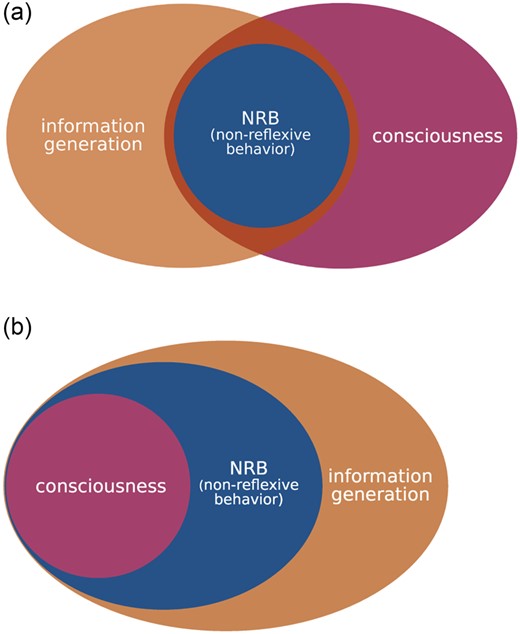
The science of consciousness does not need another theory, it needs a minimal unifying model
Abstract. This article discusses a hypothesis recently put forward by Kanai et al., according to which information generation constitutes a functional basi
Large language memories: Psychosis and antisocial media
Using the fields of memory studies and digital humanities, this article argues that there has been a shift from more collective and social memory to more personalised and individual memory. This shift, it is argued here, can be conceptualised through the psychoanalytic concept of ‘psychosis’. While the causes of the changes in our patterns of memory have been located in capitalist and neoliberal principles, the effects of the changes in our memory habits might be found in psychosis. From falling in love with machinic AI replicas to indulging in conspiracy theories to acting as if we are social media influencers or backing ourselves to win out in impossible job markets, we are inclined towards personal fantasy, often at the expense of participating in social life. But why do we do this? Why is it easier to believe a farfetched conspiracy theory or wild personal dream than it is to participate socially and collectively in the world we live in? Part of the reason, at least, is found in our increasing habitual reliance on new and emergent technologies. Often presented to us as a brand-new form of Artificial Intelligence, these generative tools are the latest update to a longer pattern in our digital world: the trend of developing ‘relationships’ with algorithms that, to larger and smaller degrees, we come to rely on for habits of cognition and recognition. By affecting our patterns of memory, these technologies produce a kind of isolation that lends itself to individual and fantastical – rather than shared and realist – thinking.

Great piece on why AI is not conscious, from people who really know what they’re talking about nature.com/articles/d41586-026-03313-7?u…

Three reasons why AI is not conscious and perhaps never will be
www.nature.com