
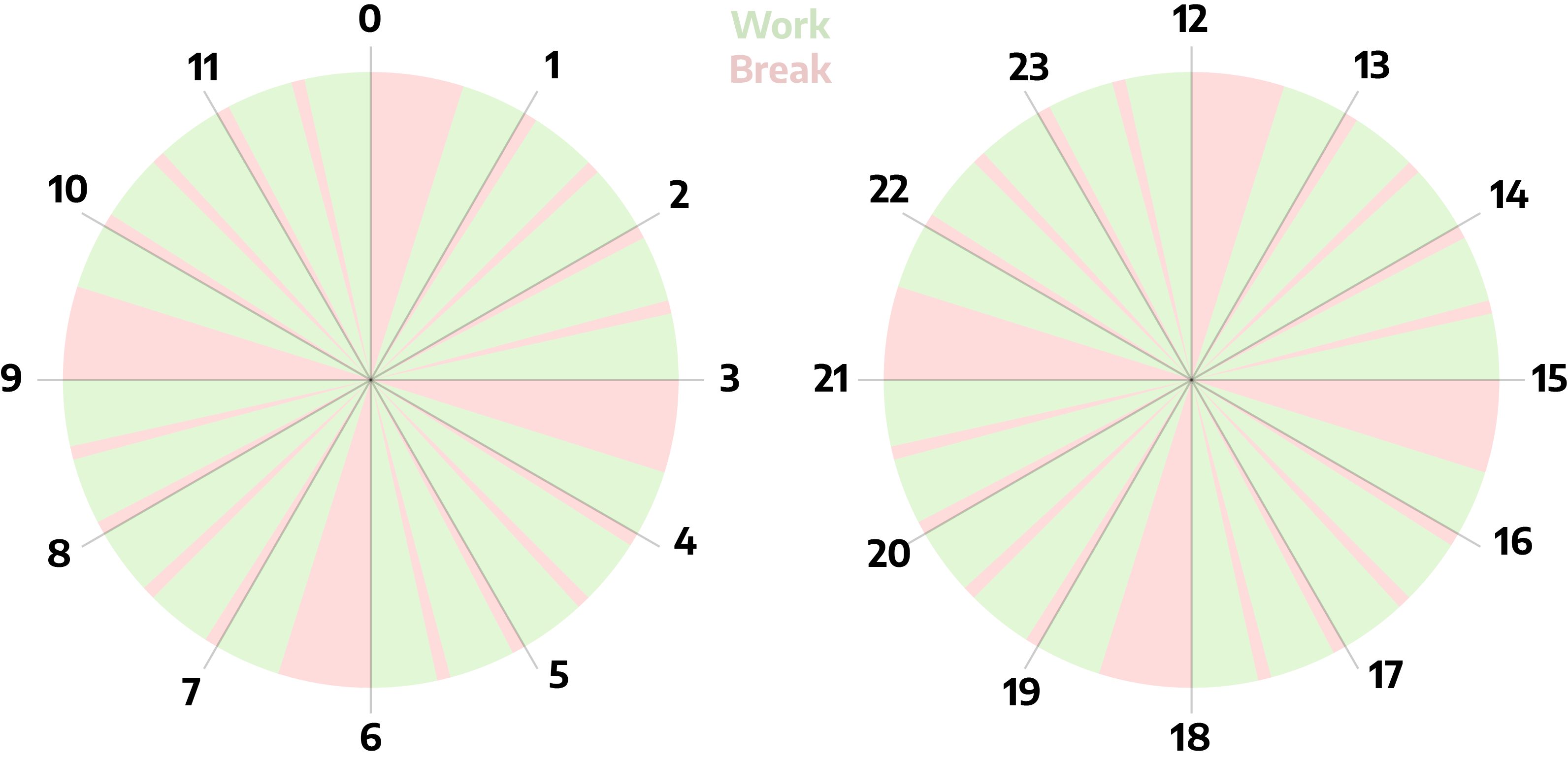
Many engineers should be doing less work. I don’t necessarily mean producing less code or fewer changes, but literally working fewer hours in the day. When they do work, they should be working at a slower pace. I like to aim to be running at 80% utilization by default: unless I have a high-pressure project going on, I spend 20% of my workday away from the computer.
Less stress, more productivity: why working fewer hours is better for you and your employer
There’s always too much work to be done on software projects, too many features to implement, too many bugs to fix. Some days you’re just not going through the backlog fast enough, you’re not producing enough code, and it’s taking too long to fix a seemingly-impossible bug. And to make things worse you’re wasting time in pointless meetings instead of getting work done. Once it gets bad enough you can find yourself always scrambling, working overtime just to keep up. Pretty soon it’s just expected, and you need to be available to answer emails at all hours even when there are no emergencies. You’re tired and burnt out and there’s still just as much work as before. The real solution is not working even harder or even longer, but rather the complete opposite: working fewer hours.
Maybe you should do less “work”
Working in tech, I've observed developers who work as hard as possible when they don't need to. I’m here today to tell you that it's a bad idea and you shouldn't do it.
The solution to (nearly) everything: working less | Rutger Bregman
Excessive work and pressure are status symbols. But overtime is deadly. If we worked less we’d make fewer errors, address inequality and have a better life

AI Doesn’t Reduce Work—It Intensifies It
One of the promises of AI is that it can reduce workloads so employees can focus more on higher-value and more engaging tasks. But according to new research, AI tools don’t reduce work, they consistently intensify it: In the study, employees worked at a faster pace, took on a broader scope of tasks, and extended work into more hours of the day, often without being asked to do so. That may sound like a win, but it’s not quite so simple. These changes can be unsustainable, leading to workload creep, cognitive fatigue, burnout, and weakened decision-making. The productivity surge enjoyed at the beginning can give way to lower quality work, turnover, and other problems. To correct for this, companies need to adopt an “AI practice,” or a set of norms and standards around AI use that can include intentional pauses, sequencing work, and adding more human grounding.

How to be more productive without forcing yourself
Imagine you could work more and be wildly productive. And you wouldn’t need to force yourself to work.
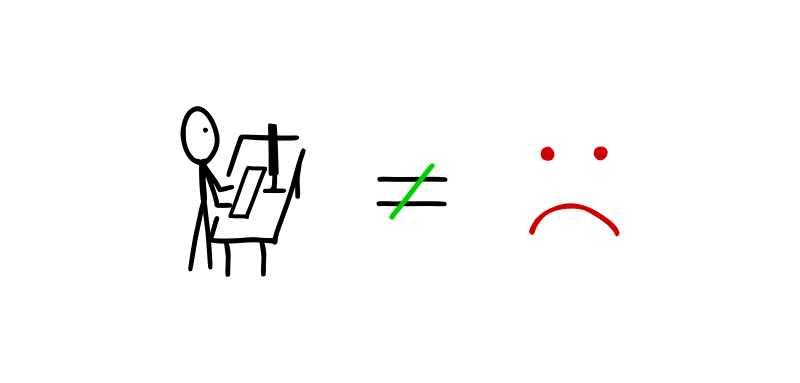
People don't work as much as you think
There is a persistent idea that people work 40 hours a week. They don't, and if you try to do this it will break you. Here are some more reasonable guidelines.

Making 20% Time Work | begriffs.com
Following Google’s lead many companies have instituted “20% time” for their employees. This is one day per week in which employees can work on projects of their own choosing. The practice keeps developers motivated and sharp, produces tools to solve company problems, and in the best case creates open source which builds prestige and helps recruitment.
Why working fewer hours would make us more productive
A shorter working week could improve our mental and physical health and even mitigate climate change, research shows

Deep work. Essentialism in asynchronous culture
Deep work Nowadays, we are getting accustomed to working in a continuously interrupting environment. Smartphone notifications, hundreds of e-mails, open spaces, and meetings slicing our workday. We are feeling busy, and overworked, but are we more productive? If I am a salesman or project coordinator that way of working can bring good effects and even improve my skills. However, for Software Developers, Designers, and other professionals that need a quiet environment for creative effort, it can lead only to frustration and burnout. They need something that is called deep work. Deep work is a concept popularized by Cal Newport in his book under the same title published in 2016. The author divides mental activity into two categories: shallow work, that does not need intensive concentration like sending e-mails, formatting documents, chatting using communicators, etc. deep work, that demands distraction-free focus on one task like writing a document, learning a new skill, designing a software system, etc.
It’s Time to Embrace Slow Productivity
We need fewer things to work on. Starting now.

Is full-time work bad for our brains?
If you’re over 40, working more than 25 hours a week could be affecting your intelligence, new research suggests

Efficiency is the Enemy
If you ever find yourself stressed, overwhelmed, sinking into stasis despite wanting to change, or frustrated when you can’t respond to new opportunities, you need more slack in your life. Here’s how slack works and why you need more of it.
AI Isn’t Lightening Workloads. It’s Making Them More Intense.
The technology is increasing the speed, density and complexity of work rather than reducing it, a new analysis of 164,000 people’s work activity shows.

Every productivity thought I've ever had, as concisely as possible - …
I combed through several years of my private notes and through everything I published on productivity before and tried to summarize all of it in this post. If you’re unproductive right now Here’s what you should do if you’ve been procrastinating for an entire day: Accept that you won’t do anything today and try not to get angry at yourself Set the alarm for the time you will be preparing to go to bed today No, really. Do it. It will take 20 seconds Procrastinate for the …
Why I Strive to be a 0.1x Engineer
There has been more discussion recently on the concept of a “10x engineer”. 10x engineers are, (from Quora) “the top tier of engineers that are 10x more productive than the average” Productivity I have observed that some people are able to get 10 times more done than me. However, I’d argue that individual productivity is... Read more »
The 10 Best Practices for Remote Software Engineering
At face value, when we think of developer productivity we might think of effectiveness in time management, communication, and task completion.14 Although we are drawn to personal workflow or time management tools, and learning secrets to improving our productivity, ironically this quest for the holy grail can sometimes take us off course and be a detriment to our productivity. The problem is that accomplishing tasks or having a filled up schedule does not necessarily equate to productivity. Creating a formulaic working strategy, as was common in the last century, does not either.a,8,13 Productivity is less a quality that can be easily measured,b controlled, or improved directly with tools, but instead is a human element that manifests from developer happiness.