There’s a kind of polite fiction at the heart of the software industry. It goes something like this: Estimating how long software projects will take is very…
Measuring developer productivity? A response to McKinsey
The consulting firm came up with a methodology they claim can measure software developer productivity. But that measurement comes at a high price – and we offer a more sensible approach.
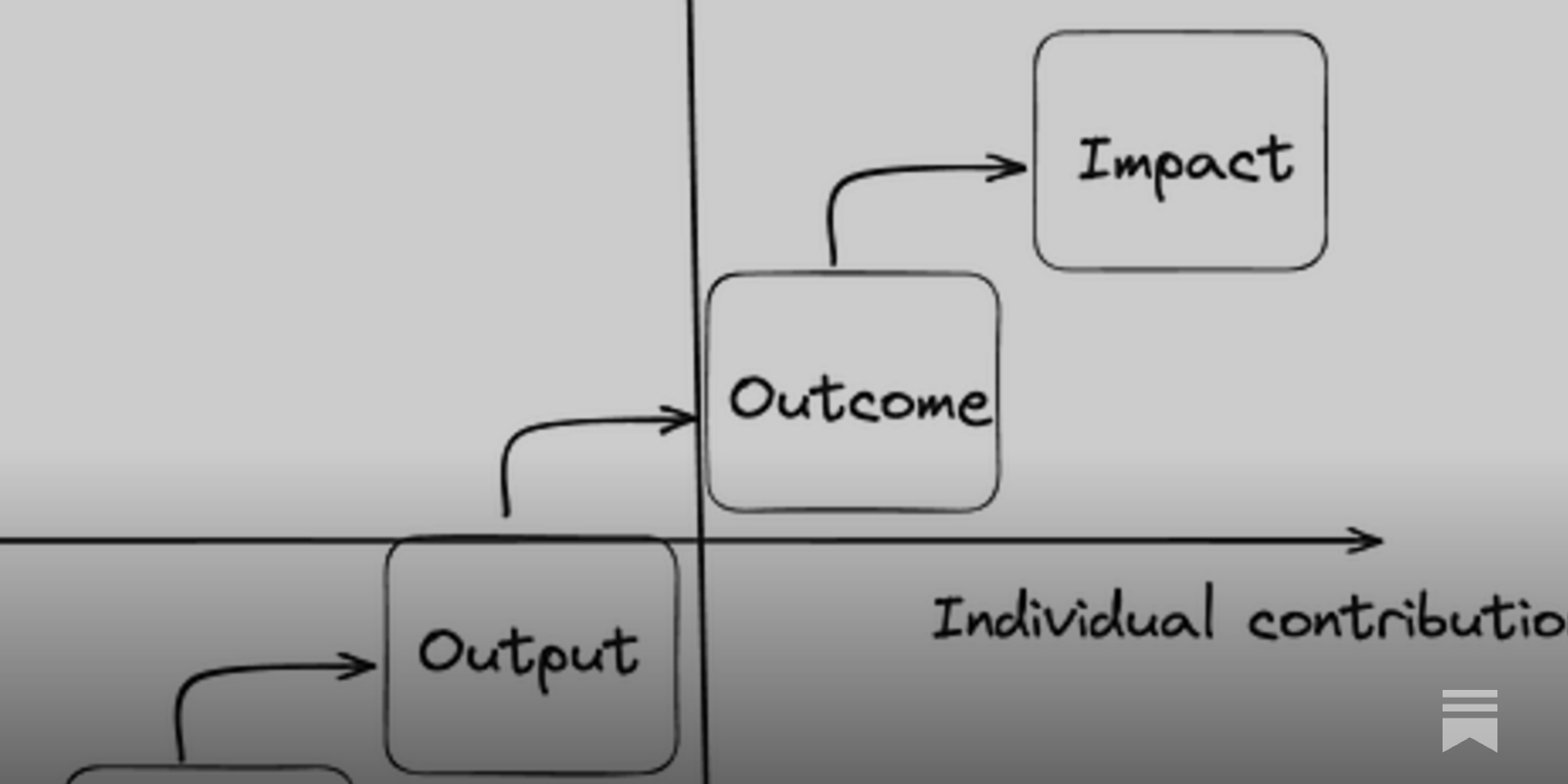
You have to beat the models at something
In 2025, I wrote that software engineers ought to be assessed by “value over replacement”: not how much money they made for their company, but how much they…
Making 20% Time Work | begriffs.com
Following Google’s lead many companies have instituted “20% time” for their employees. This is one day per week in which employees can work on projects of their own choosing. The practice keeps developers motivated and sharp, produces tools to solve company problems, and in the best case creates open source which builds prestige and helps recruitment.
Developers spend most of their time figuring the system out
I am often asked what I mean when I say that developers spend most of their time figuring the system out. Let’s unpack the statement.
Measuring the Impact of Early-2025 AI on Experienced Open-Source Developer Productivity
We conduct a randomized controlled trial to understand how early-2025 AI tools affect the productivity of experienced open-source developers working on their own repositories. Surprisingly, we find that when developers use AI tools, they take 19% longer than without—AI makes them slower.

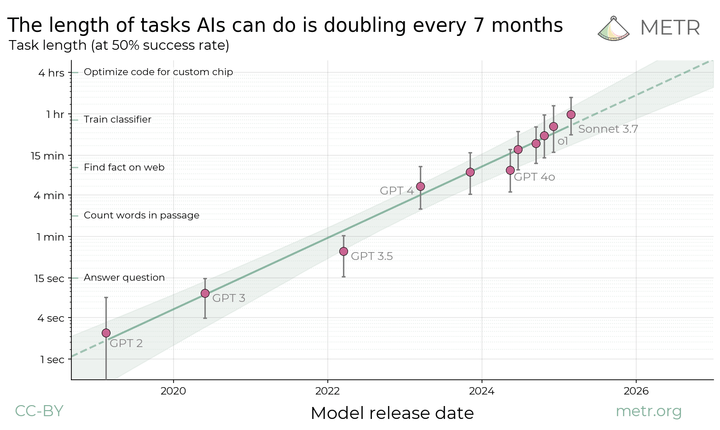
Measuring AI Ability to Complete Long Tasks
We propose measuring AI performance in terms of the *length* of tasks AI agents can complete. We show that this metric has been consistently exponentially increasing over the past 6 years, with a doubling time of around 7 months. Extrapolating this trend predicts that, in under a decade, we will see AI agents that can independently complete a large fraction of software tasks that currently take humans days or weeks.
The 10 Best Practices for Remote Software Engineering
At face value, when we think of developer productivity we might think of effectiveness in time management, communication, and task completion.14 Although we are drawn to personal workflow or time management tools, and learning secrets to improving our productivity, ironically this quest for the holy grail can sometimes take us off course and be a detriment to our productivity. The problem is that accomplishing tasks or having a filled up schedule does not necessarily equate to productivity. Creating a formulaic working strategy, as was common in the last century, does not either.a,8,13 Productivity is less a quality that can be easily measured,b controlled, or improved directly with tools, but instead is a human element that manifests from developer happiness.

Software Engineering Productivity Research - Home
Staff Engineer: Leadership beyond the management track
At most technology companies, you'll reach Senior Software Engineer, the career level, in five to eight years. At that point your path branches, and you have the opportunity to pursue engineering management or continue down the path of technical excellence to become a Staff Engineer.
Measuring the Impact of Early-2025 AI on Experienced Open-Source Developer Productivity
Despite widespread adoption, the impact of AI tools on software development in the wild remains understudied. We conduct a randomized controlled trial (RCT) to understand how AI tools at the February-June 2025 frontier affect the productivity of experienced open-source developers. 16 developers with moderate AI experience complete 246 tasks in mature projects on which they have an average of 5 years of prior experience. Each task is randomly assigned to allow or disallow usage of early 2025 AI tools. When AI tools are allowed, developers primarily use Cursor Pro, a popular code editor, and Claude 3.5/3.7 Sonnet. Before starting tasks, developers forecast that allowing AI will reduce completion time by 24%. After completing the study, developers estimate that allowing AI reduced completion time by 20%. Surprisingly, we find that allowing AI actually increases completion time by 19%--AI tooling slowed developers down. This slowdown also contradicts predictions from experts in economics (39% shorter) and ML (38% shorter). To understand this result, we collect and evaluate evidence for 20 properties of our setting that a priori could contribute to the observed slowdown effect--for example, the size and quality standards of projects, or prior developer experience with AI tooling. Although the influence of experimental artifacts cannot be entirely ruled out, the robustness of the slowdown effect across our analyses suggests it is unlikely to primarily be a function of our experimental design.

Developer AI Token Costs Could Exceed Their Salaries in Two Years - Slashdot
"Enterprises may soon be paying as much for their developers' AI token usage as they do for their salaries," writes InfoWorld: According to Gartner, these costs will meet, or even exceed, the typical software engineer's monthly salary within the next two years. This is not only because developers ...

AI | 2025 Stack Overflow Developer Survey
84% of respondents are using or planning to use AI tools in their development process, an increase over last year (76%). This year we can see 51% of professional developers use AI tools daily.
What We Know We Don't Know: Empirical Software Engineering
Empirical Software Engineering is the study of what actually works in programming. Instead of trusting our instincts we collect data, run studies, and peer-review our results. This talk is all about how we empirically find the facts in software and some of the challenges we face, with a particular focus on software defects and productivity. Talk doesn’t seem to be online yet; in the meantime, you can see a recording of an older version of the talk here.
A Guide to Measuring Engineering Team Performance
“You can’t manage what you can’t measure.” While software development practices constantly change, there will always be a tier of truly top engineering teams who stand above…

The Impact of AI Coding Assistants on Software Engineering: A Longitudinal Study
AI coding assistants have become prolific in recent years. Through a longitudinal mixed-methods investigation, we examined how professional software engineers perceive the effects of AI coding assistants in regard to task focus, developer experience, and productivity. Two questionnaires were administered six months apart, yielding 158 eligible participants at the first time point, 101 at the second, and a matched longitudinal cohort of 95. Participants reported spending less time on most development tasks, with 82% reporting less on writing code. We find broader shift in focus from creation to verification activities. We propose a new category of work we term supervisory engineering work, encompassing the direction, evaluation, and correction of AI output. We also identified a productivity-experience paradox: productivity perceptions held stable, with 84% reporting improvement at both time points, yet among matched participants, the proportion reporting worsened developer experience in at least one dimension nearly doubled from 14% to 27%, with flow state and cognitive load eroding while feedback loops improved. These findings suggest that AI coding assistants are impacting both the nature of software engineering work and how engineers experience it.
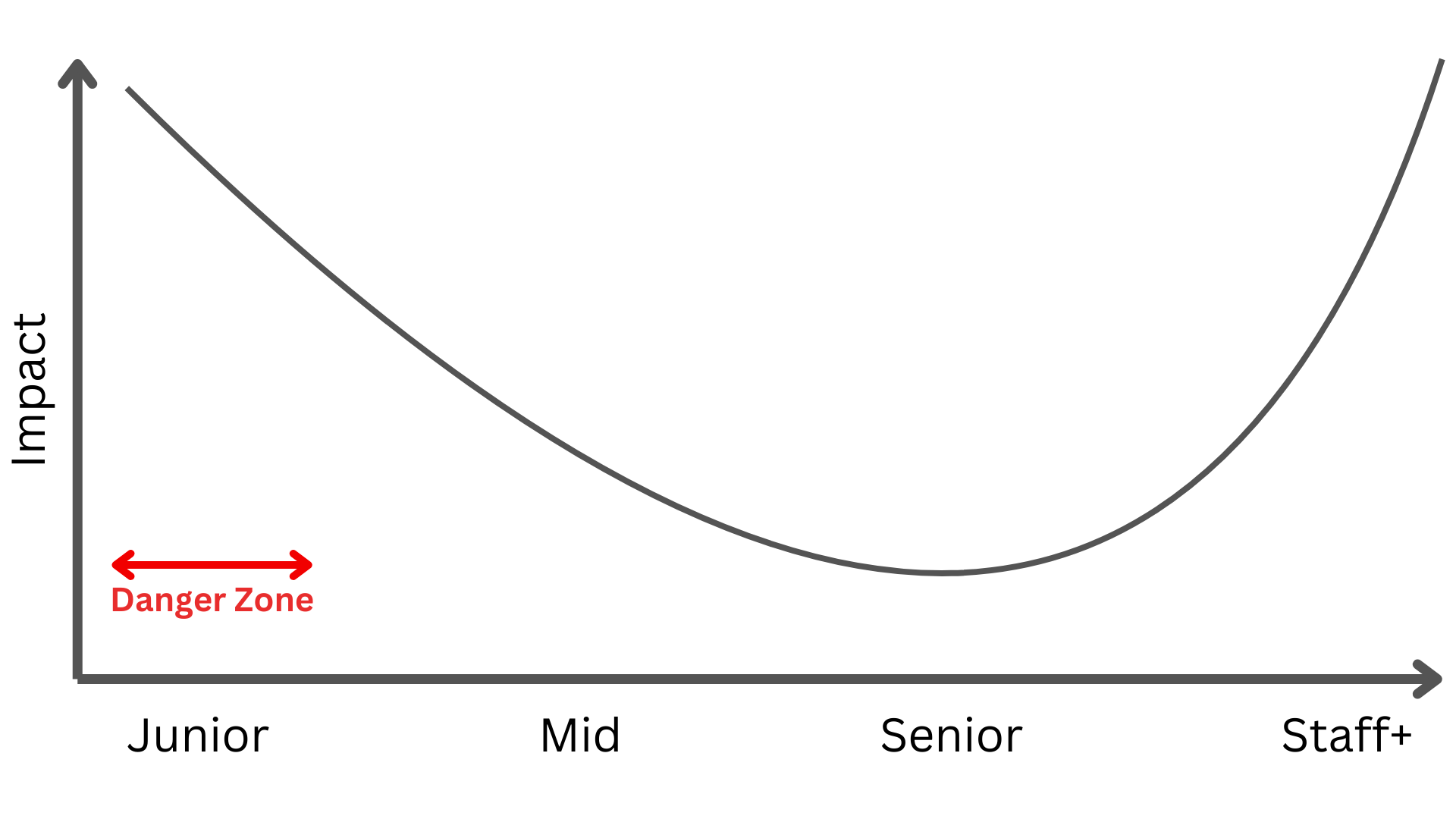
The LLM Curve of Impact on Software Engineers
In this article, I share my personal mental model of how LLMs affect software engineers at different levels, and why this leads to both excitement and scepticism.