


When you’re on fire, problems are transparent: they’re solved simply by the act of looking at them. Even complicated layers of multiple problems can simply be glanced through like stacked panes of glass. But nobody can work that way all the time.
Bridges & scruples
For your own sanity, you have to remember that not all problems can be solved. Not all problems can be solved, but all problems can be illuminated. —Ursula Franklin
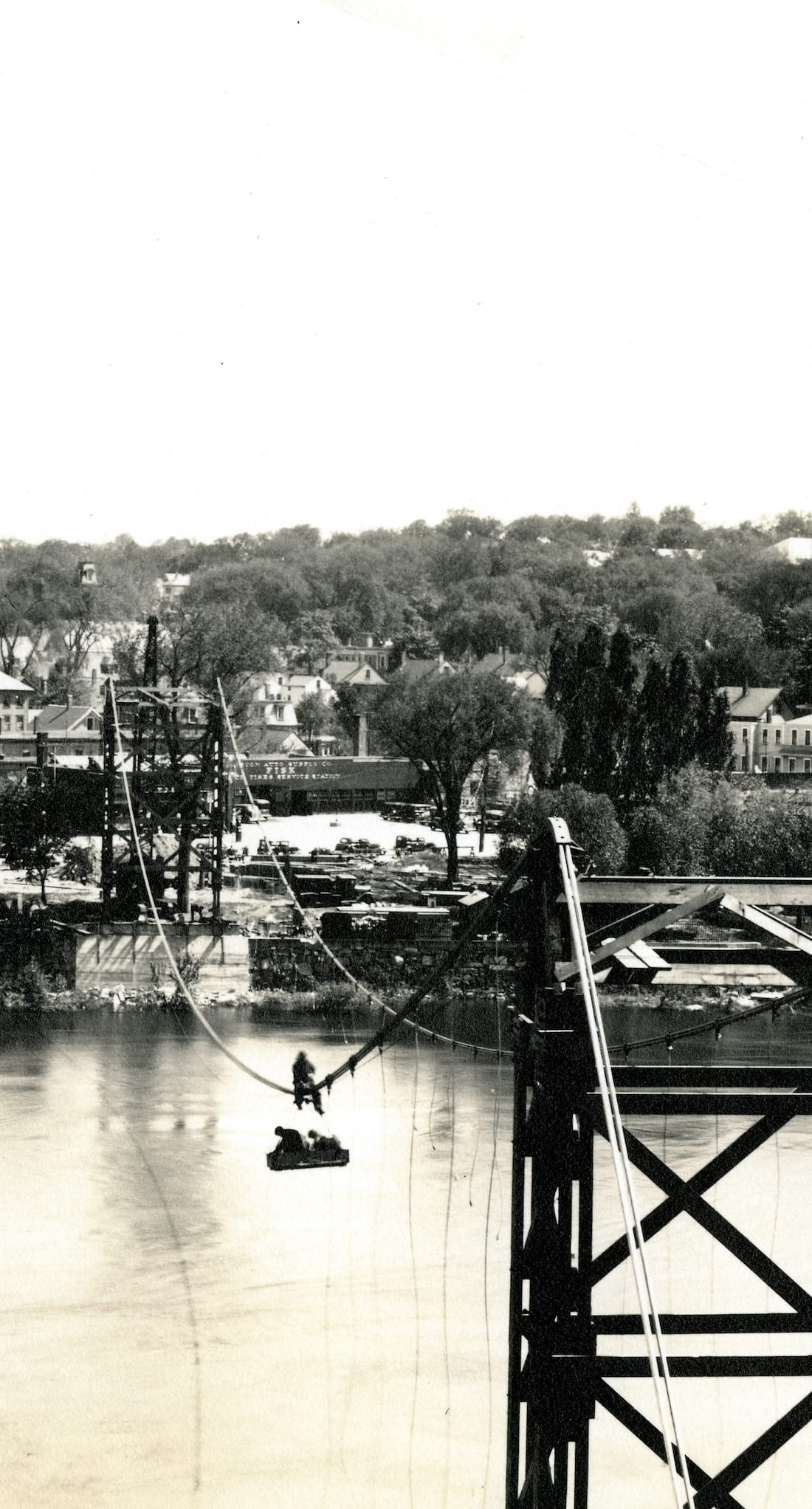
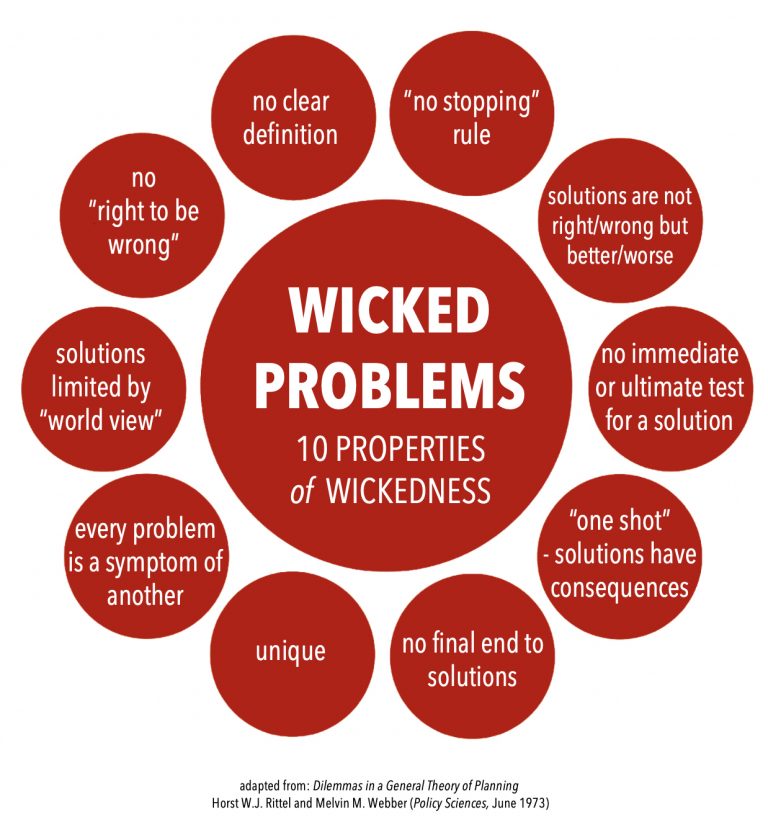
Wicked problem
In planning and policy, a wicked problem is a problem that is difficult or impossible to solve because of incomplete, contradictory, and changing requirements that are often difficult to recognize. It refers to an idea or problem that cannot be fixed, where there is no single solution to the problem; "wicked" does not indicate evil, but rather resistance to resolution. Another definition is "a problem whose social complexity means that it has no determinable stopping point". Because of complex interdependencies, the effort to solve one aspect of a wicked problem may reveal or create other problems. Due to their complexity, wicked problems are often characterized by organized irresponsibility.
The mistake we all make... and the simple experiment that reveals it
Your answer reveals how you see the world – and the common error that hampers our decision making. In an extract from his new book, psychologist Richard Nisbett reveals the ‘mindware’ to help us think smarter

Terence Tao (@tao@mathstodon.xyz)
I wrote recently about how the collection of good, fruitful open problems is now being mined in a non-renewable fashion, leading to the potential scenario of these problems becoming scarce. This may seem unintuitive at first, since the set of possible problems one could ask is infinite. Perhaps the following analogy can help: a country or region can suffer a critical shortage of drinking water while simultaneously being surrounded by a massive ocean. One can easily generate any number of open problems in mathematics at will, such as working out the 10^10^10th digit of pi. But the vast majority of such problems are not worth focusing attention on: they show no particular propensity to reveal any further insights or connections to other questions, or may either be too easy or too impossible relative to known techniques to learn anything from the exercise. (1/4)
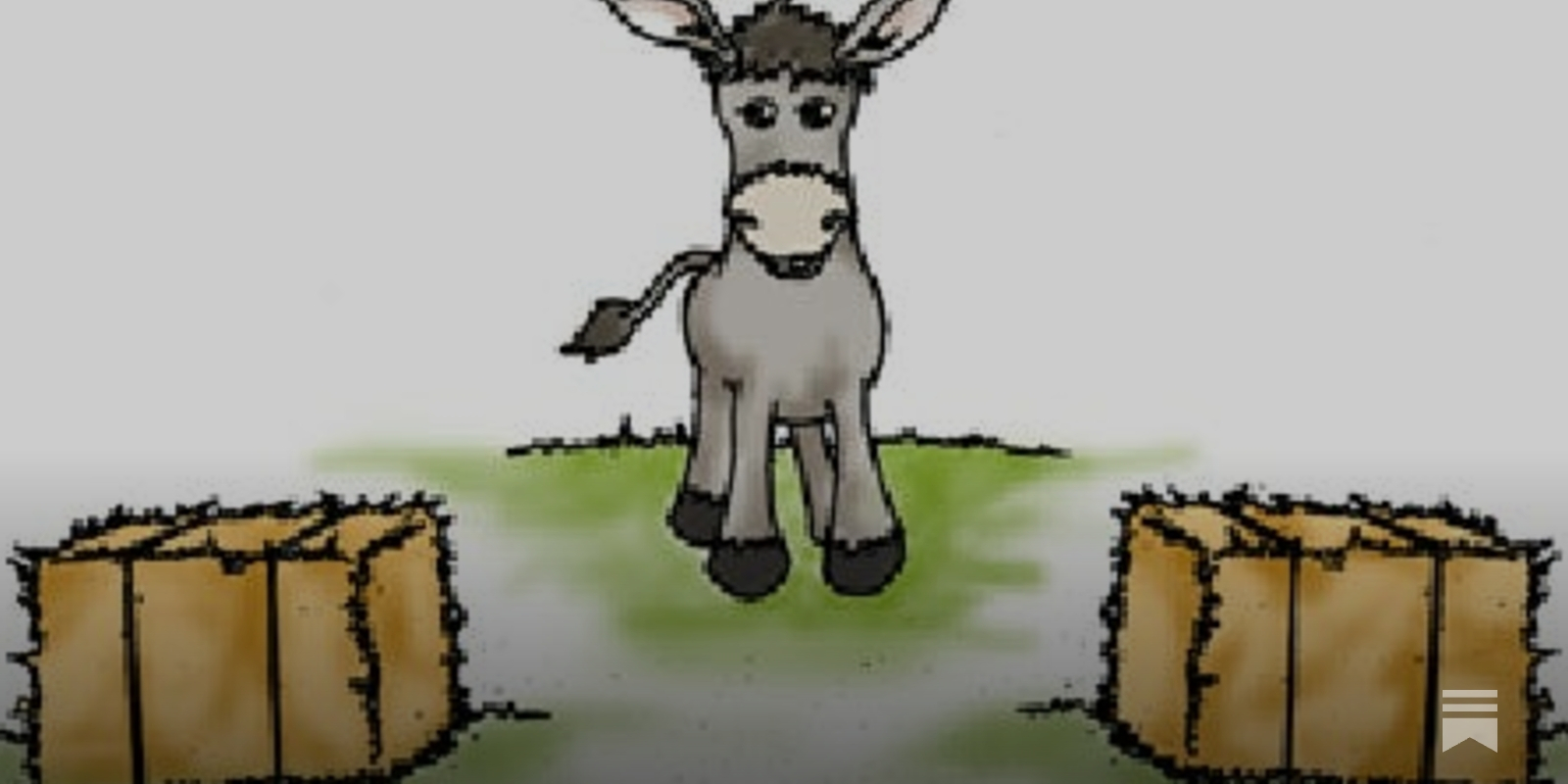
People Spend Too Much Time On Decisions with Equally Satisfying Outcomes
The pitfalls of analysis paralysis
Opinion | Can You Get Smarter? (Published 2015)
There is much that you can do to keep cognitively sharp.

How To Think Real Good | Meta-rationality
Practical epistemology: heuristics for how to think about difficult things, particularly using formal methods.
Terence Tao (@tao@mathstodon.xyz)
In basic research, such as pure mathematics, one might naively expect that the natural question to ask with regards to a given problem X in a field is "What is the answer to X?". But in many cases the more valuable question is "What can be learned from studying X?" The answer to X itself can of course be one of the things learned in this process of study; but one can learn far more useful information besides, such as * What are the main difficulties to overcome to resolve X? * What new techniques can one discover in order to solve X? * Why are existing techniques insufficient to solve the problem by itself? * How does X relate to results in prior literature? * Can one uncover new connections between X and other topics Y, Z, ...? * What are some natural related or followup questions X', X'', ... to study? Nevertheless, until recently the two questions were closely aligned, to the point where it was not really necessary to distinguish the two: the only practical route to solving a difficult problem was to first address many of the subquestions listed above. (1/3)
(PDF) Why is dialogical solving of a logical problem more effective than individual solving?: A formal and experimental study of an abstract version of Wason’s task
PDF | We study the accomplishment of the abstract version of Wason’s selection task in a cooperative dialogue context that has been neglected in the... | Find, read and cite all the research you need on ResearchGate

The Illusion of Thinking: Understanding the Strengths and Limitations of Reasoning Models via the Lens of Problem Complexity
Recent generations of frontier language models have introduced Large Reasoning Models (LRMs) that generate detailed thinking processes…
Itai Sher on Twitter / X
I think there should be a norm that when a set of AI solutions to mathematical problems is released, the set of all problems attempted be released alongside.When trying to understand AI capabilities, it is problematic to selectively report only positive results. https://t.co/ywcWCnFojS— Itai Sher (@itaisher) August 1, 2026
Smoke-away on Twitter / X
Andrej Karpathy: "What you want is the inner thought monologue of your brain... The trajectories in your brain as you're doing problem solving, if we had a billion of that, AGI is here roughly speaking." pic.twitter.com/C0kBUITPBv— Smoke-away (@SmokeAwayyy) October 18, 2024

Cognitive Bias Lab | Learn to Make Better Decisions
Explore cognitive biases with interactive tests, simulations, and real-world examples. Free platform to sharpen decision-making and critical thinking — no sign-up needed.
Up and Down the Ladder of Abstraction
"In science, if you know what you are doing, you should not be doing it. In engineering, if you do not know what you are doing, you should not be doing it. Of course, you seldom, if ever, see either pure state."
The Irrational Decision
How the computer revolution shaped our conception of rationality—and why human problems require solutions rooted in human intuition, morality, and judgment

The AI Question that No AI Person Asks