

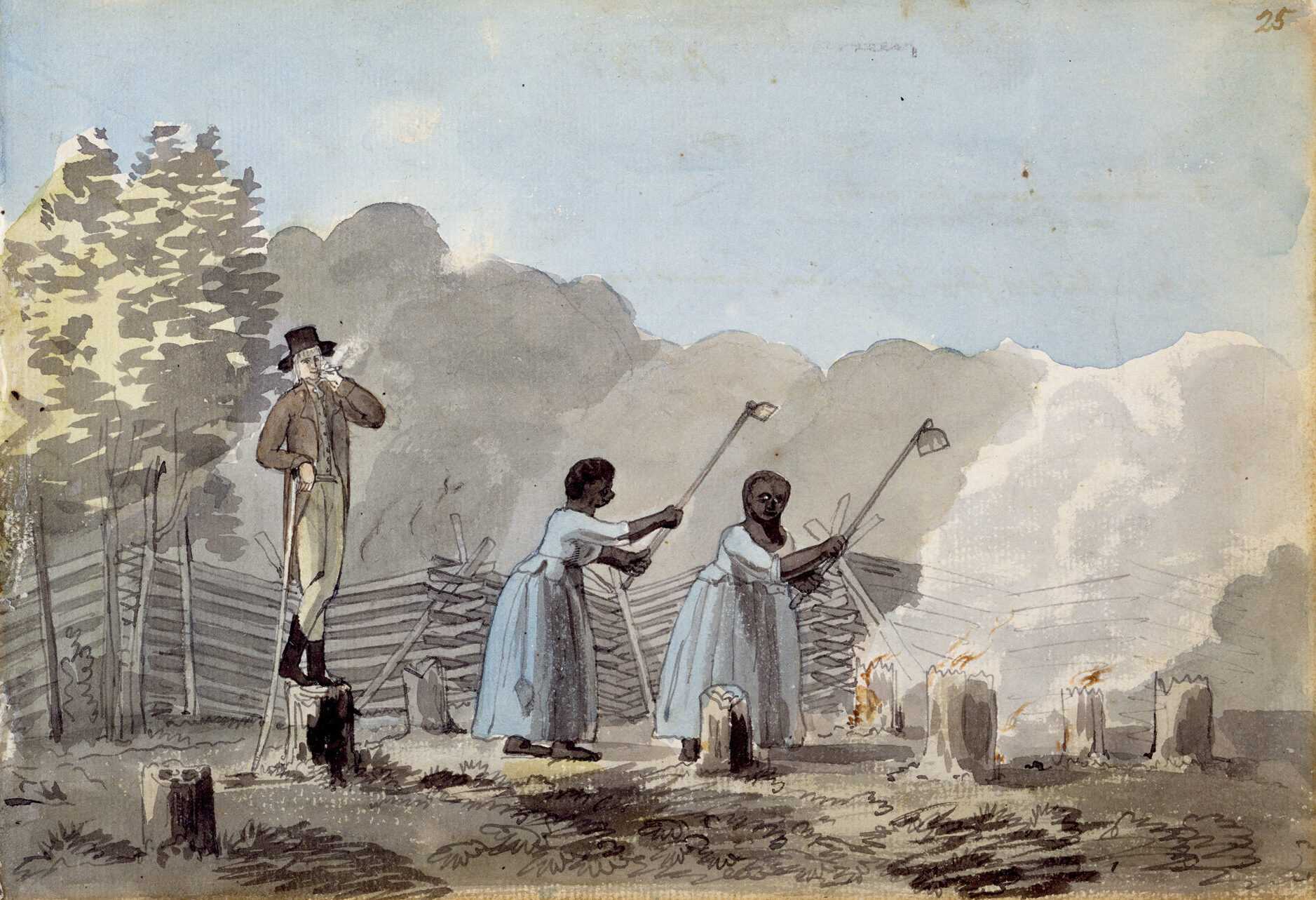
When the Chesapeake region began taking shape, race and class were ill-defined. But Africans quickly became enslaved for life.
The Chesapeake Slave Trade:Regional Patterns, African Origins, and Some Implications | History Cooperative
THE movement of peoples from the Old World to the New and the resulting transfers or transformations of homeland cultures in new physical and social environments has been a central theme of early American history. Overwhelmingly, historians have written on the transfers of peoples from sixteenth- through eighteenth-century Europe and sub-Saharan Africa to various American destinations in isolation from one another. When these two contemporary migration flows are considered together, sheer numbers demonstrate that, up to 1776, the majority of men, women, and children transported from the Old World to British North America were, to varying degrees, unfree. And increasingly throughout most of the eighteenth century, those migrants came from Africa and were permanently enslaved.
Race Science, Slavery, And The Unreality Of White Supremacy
The unreality that justifies white supremacy has shape shifted
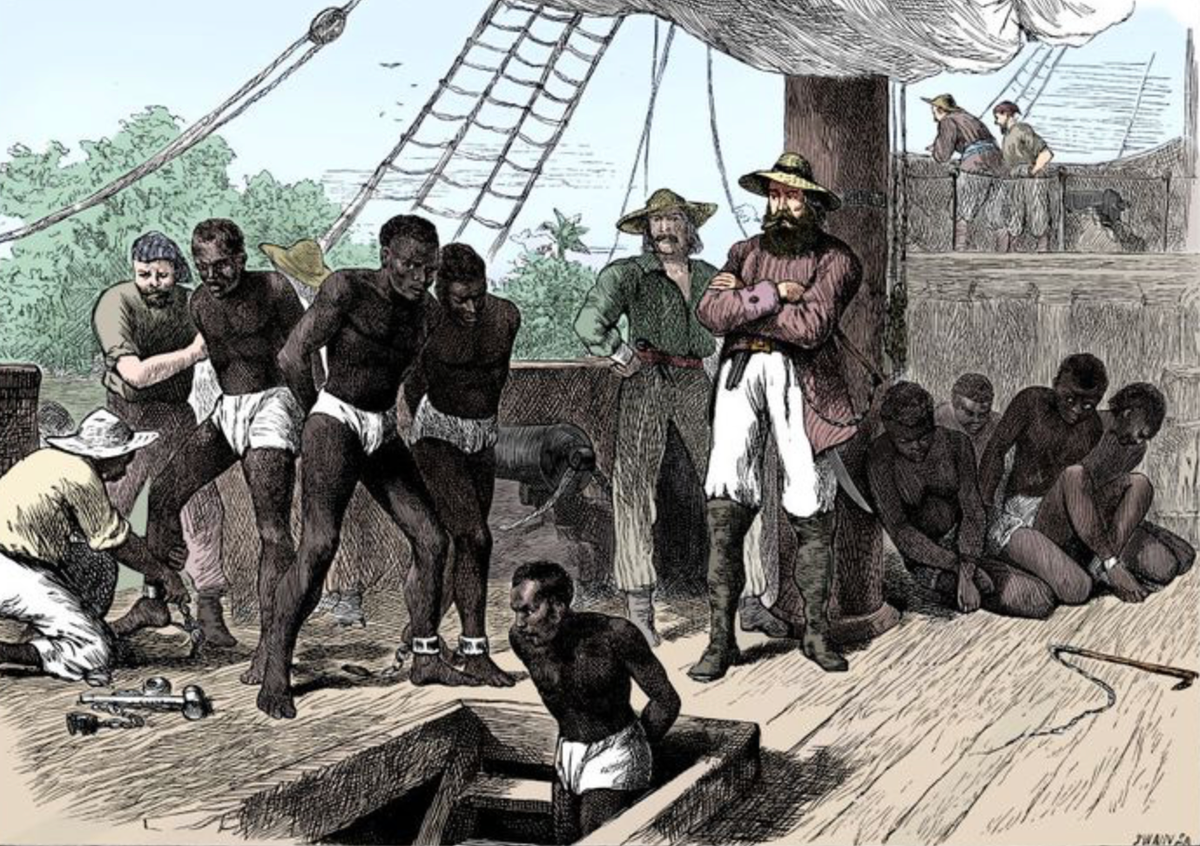
How You Start is How You Finish? The Slave Patrol and Jim Crow Origins of Policing
Though history books may say otherwise, policing in the United States has its roots in the slave patrols in the South. The institution of policing, and the larger justice system, must reconcile its past to evolve away from its racist roots.

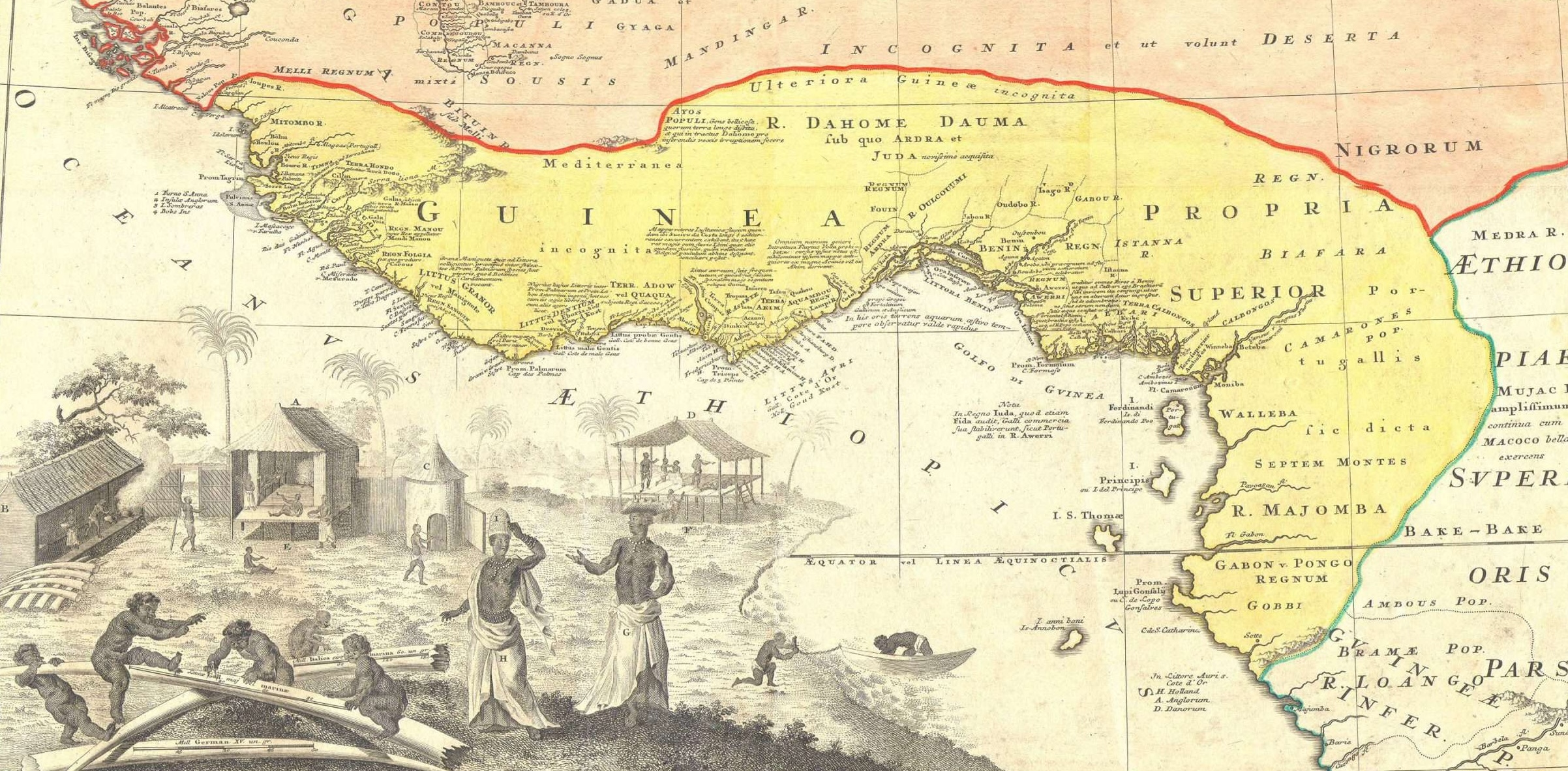
How Indigenous West African Communities Resisted the European Slave Trade
Compelling evidence of massive African resistance to Atlantic slavery can be found from the very onset of the European colonial arrival on the con-tinent. When the Portuguese gained control of the …
Slave Songbook : Origin of the negro Spiritual
The Racialization of Print
Readers since Thomas Jefferson have believed it possible to judge entire races of people based on a single book, yet no one has attempted to explain the orig...
The Color of Reason: The Idea of'Race'in Kant's Anthropology
Anthropology and Physical Geography. They were popular lectures attended by people from the general public. The present manual contains my lectures on anthropology. As to Physical Geography, however, it will not be possible, considering my age, to

I'll go on a little rant about this paper in @QJEHarvard if only for its treatment of the literature. As it's clearly not the first paper to analyze Black economic progress after slavery, we'll focus on the value-added over previous research. An important reference here is Sacerdote (ReStat 2005) "Slavery and the Intergenerational Transmission of Human Capital". by @AndreasShrugged(Andreas Backhaus) | Twitter Thread Reader
I'll go on a little rant about this paper in @QJEHarvard if only for its treatment of the literature. As it's clearly not the first paper to analyze Black economic progress after slavery, we'll focus on the value-added over previous research. An important reference here is Sacerdote (ReStat 2005) "Slavery and the Intergenerational Transmission of Human Capital".

Voluptuous Disintegration: A Future History of Black Computational Thought
I really think that I know that Americans now are simply overwhelmed; like what is happening, what can we do. Everybody's tendency is understandably to try to take care of yourself; cover your back, make sure you have a house, a door for the key. I say that as understandable as that is, it seems to me that we cannot afford to divorce ourselves from what is happening in South Africa, for example, or for that matter, what is happening in West Germany, or Poland any more than the Reagan administration divides these issues. I think that the Reagan Administration and people in that; they see everything in global terms. From Brooklyn to Angola is not a big jump for them at all. I think that unless we, the people, begin to think in the same way, to make these connections, really on a visceral level, I feel for the survival of the species [Jordan 1981]
The Water’s Edge: Empire, Race, and the Global History of Oakland, California, 1848-1980
Author(s): Klein, Andrew Nelson Carver | Advisor(s): Kelley, Robin D.G. | Abstract: This dissertation explores historical intersections between capitalism, race-making, environmental change, and U.S. foreign relations from the vantage of Oakland’s waterfront. It tracks the evolution of this geostrategic coastline since it emerged as a coal-powered nexus of railroads, steamships, and military installations during American colonization. Revising the story of Oakland’s development from a global perspective, my project documents how local boosters, businessmen, and bureaucrats forged intimate ties with far-flung territories administered by U.S. troops and landowners. Combining social and environmental history with methods from Black studies, I map the transformation of Oakland’s fertile estuary into an infilled hub of postindustrial commerce, a vital node of military logistics, and a focal point for racialized labor migration. Simultaneously, this dissertation reveals how, over the long twentieth century, Black, Indigenous, Chinese, and other working-class Oaklanders found footholds on the harbor, often repurposing its imperial routes for dramatically different ends. Drawing on archives and oral histories in Cuba, Hawai‘i, and across the continental United States, I trace Oakland’s tradition of radical internationalism, most visible in the antiwar and Black Power movements of the sixties, to multi-generational struggles over the governance of coastal land. I argue that Oakland’s waterfront both bridged the continental and overseas expansion of an ascendant world power and came to serve as a proving ground for alternative forms of globalization. “The Water’s Edge” therefore offers a critical reappraisal of the generally place-bound history of North American urbanism and far-reaching lessons for building just cities in a present defined by global environmental crises.

Analytic racecraft: Race-based averages create illusory group differences in perceptions of racism.

Home
TheGrio: Your source for breaking news, politics, lifestyle and entertainment focusing on the African-American community.

#Charlestonsyllabus - AAIHS
Here is a list of readings that educators can use to broach conversations in the classroom about the horrendous events that unfolded in Charleston, South Carolina on the evening of June 17, 2015. These readings provide valuable information about the history of racial violence in this country and contextualize the history of race relations in South

News for Black America - NewsOne
Breaking news for and about Black America: politics, original stories, diverse opinions, current events and their impact on Black lives.

Somebody Blew up Oakland: Dispossession as a Praxis of Racial Ordering
Author(s): Jones, Stephanie Delise | Advisor(s): Hironaka, Ann; Sojoyner, Damien | Abstract: In this dissertation, I investigate the relationship between underdevelopment and Black geographies. I then explore the consequences of this relationship on the city of Oakland. From 2019 to 2021, I conducted 68 in-depth field interviews of Black Oakland residents who detailed the processes and mechanisms by which California housing policy contributed to the displacement of Black subjects. Building on the work of scholars of Black geographies, I have interrogated the myth of development and the relationship to the dispossession of Black geographies. I theorize how racial capitalism produces vulnerable populations through housing in urban areas. The empirical contribution of my research is to provide a framework for Black geographies as people are being displaced. The theoretical contribution is to provide a conceptualization for Black geographies existing through abjections and placelessness as understood through residents of Oakland.I argue that the relationship between dispossession and refusal creates a distinct politic. In chapter two, I theorize the work of Moms for Housing to further understand Black knowledges of resistance to dispossession. Moms for Housing is used as a case study to highlight the many theoretical implications of dispossession occurring in Oakland. In chapter 3, I use two interviews from developers to demonstrate the contradictions in what I call the mythology of development. In chapter 4, I walk through the geographic stories of 2nd and 3rd generation Oakland residents and demonstrate each of the ways they feel locked out of the city as a result of the urban changes. In chapter 5, I demonstrate how communities resist dispossession and disposability. The city of Oakland lacks proactive implementation of equitable housing policy. The lack of action by the city of Oakland puts the onus on everyday residents to organize against their landlords, employers and the state.