Flaw Reporting for AI (FLARE-AI) allows developers and security researchers to submit artificial intelligence flaws for formal, coordinated disclosure.
AI CVE Slop: The Crisis Drowning Open Source Security
The proliferation of AI-generated vulnerability reports — commonly termed “AI slop” — has emerged as one of the most significant…
Top AI Security Incidents of 2025 Revealed | Adversa AI
Discover how AI systems are being hacked in the wild — from prompt injection to agent abuse — with real breaches, lessons, and defenses in Adversa AI’s 2025 report.

AI-SLOP: Develop best current practises for Open Source maintainers · Issue #178 · ossf/wg-vulnerability-disclosures
Open source projects are increasingly facing a wave of low-quality, AI-generated vulnerability reports and contributions—commonly referred to as "AI-slop." This issue aims to develop best...
Microsoft Struggling With Hundreds of AI-Discovered Security Bugs — ProPublica
Anthropic’s Mythos has flagged bugs faster than Microsoft can fix them. Documents reviewed by ProPublica reveal the tech giant's “mad dash” behind the scenes to patch holes before hackers can find and exploit them.

A quote from Daniel Stenberg
The challenge with AI in open source security has transitioned from an AI slop tsunami into more of a ... plain security report tsunami. Less slop but lots of reports. …
Security incident disclosure — July 2026
We’re on a journey to advance and democratize artificial intelligence through open source and open science.

Vulnerability Research Is Cooked
For the last two years, technologists have ominously predicted that AI coding agents will be responsible for a deluge of security vulnerabilities. They were right! Just, not for the reasons they thought.
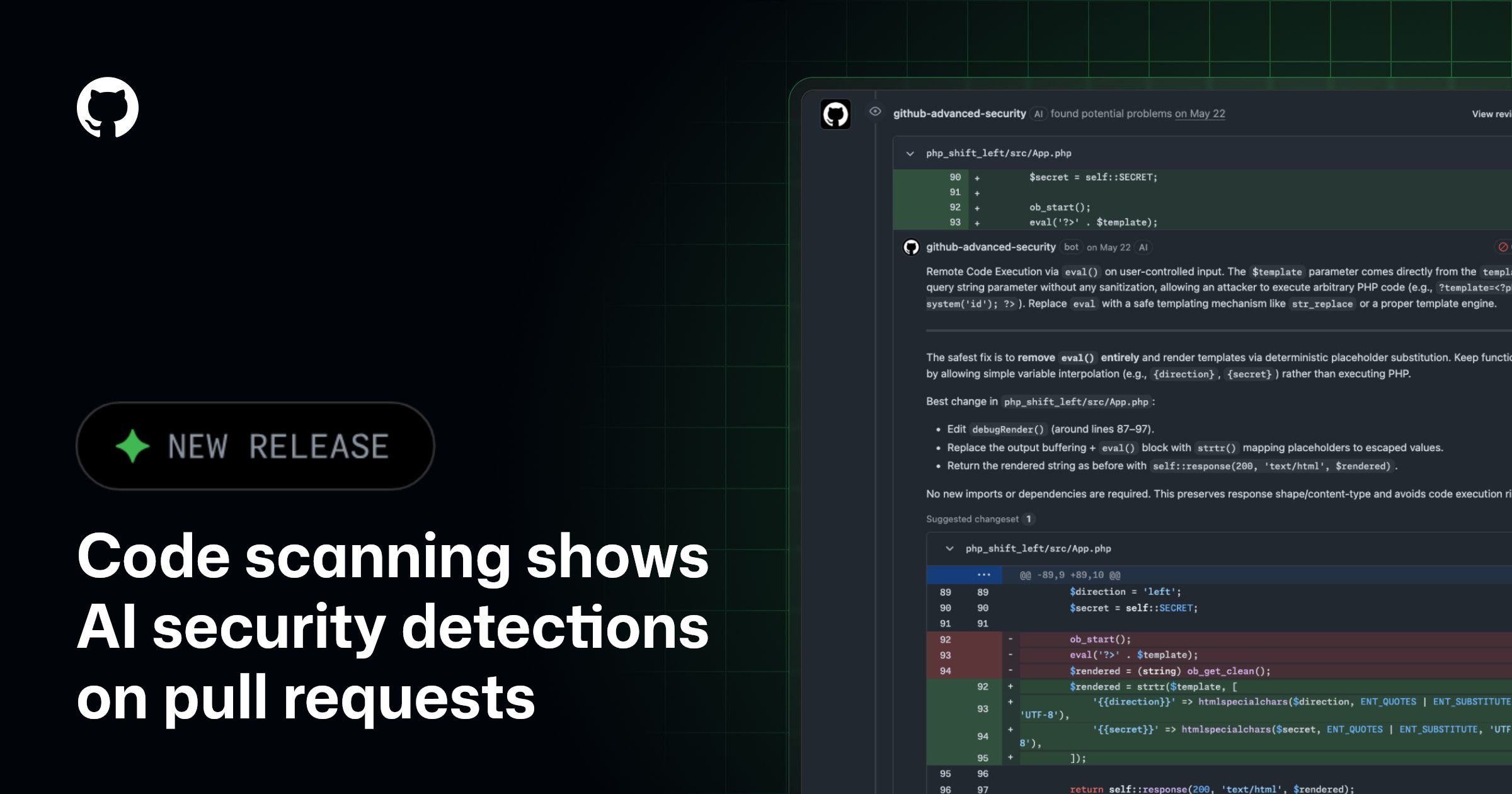
Code scanning shows AI security detections on pull requests - GitHub Changelog
GitHub code scanning now surfaces AI-powered security detections directly on pull requests, expanding vulnerability coverage to languages and frameworks not currently supported by CodeQL. These detections help teams identify and…
OpenAI launches new initiative to help find and patch open source bugs | TechCrunch
OpenAI is using AI to help the open source community better protect itself.

The 2025 AI Agent Index Documenting Technical and Safety Features of Deployed Agentic AI Systems
Agentic AI systems are increasingly capable of performing professional and personal tasks with limited human involvement. However, tracking these developments is difficult because the AI agent ecosystem is complex, rapidly evolving, and inconsistently documented, posing obstacles to both researchers and policymakers. To address these challenges, this paper presents the 2025 AI Agent Index. The Index documents information regarding the origins, design, capabilities, ecosystem, and safety features of 30 state-of-the-art AI agents based on publicly available information and email correspondence with developers. In addition to documenting information about individual agents, the Index illuminates broader trends in the development of agents, their capabilities, and the level of transparency of developers. Notably, we find different transparency levels among agent developers and observe that most developers share little information about safety, evaluations, and societal impacts. The 2025 AI Agent Index is available online at https://aiagentindex.mit.edu.
The 2025 AI Agent Index: Documenting Technical and Safety Features of Deployed Agentic AI Systems
Agentic AI systems are increasingly capable of performing professional and personal tasks with limited human involvement. However, tracking these developments is difficult because the AI agent ecosystem is complex, rapidly evolving, and inconsistently documented, posing obstacles to both researchers and policymakers. To address these challenges, this paper presents the 2025 AI Agent Index. The Index documents information regarding the origins, design, capabilities, ecosystem, and safety features of 30 state-of-the-art AI agents based on publicly available information and email correspondence with developers. In addition to documenting information about individual agents, the Index illuminates broader trends in the development of agents, their capabilities, and the level of transparency of developers. Notably, we find different transparency levels among agent developers and observe that most developers share little information about safety, evaluations, and societal impacts. The 2025 AI Agent Index is available online at https://aiagentindex.mit.edu

The 2025 AI Agent Index: Documenting Technical and Safety Features of Deployed Agentic AI Systems
Agentic AI systems are increasingly capable of performing professional and personal tasks with limited human involvement. However, tracking these developments is difficult because the AI agent ecosystem is complex, rapidly evolving, and inconsistently documented, posing obstacles to both researchers and policymakers. To address these challenges, this paper presents the 2025 AI Agent Index. The Index documents information regarding the origins, design, capabilities, ecosystem, and safety features of 30 state-of-the-art AI agents based on publicly available information and email correspondence with developers. In addition to documenting information about individual agents, the Index illuminates broader trends in the development of agents, their capabilities, and the level of transparency of developers. Notably, we find different transparency levels among agent developers and observe that most developers share little information about safety, evaluations, and societal impacts. The 2025 AI Agent Index is available online at https://aiagentindex.mit.edu
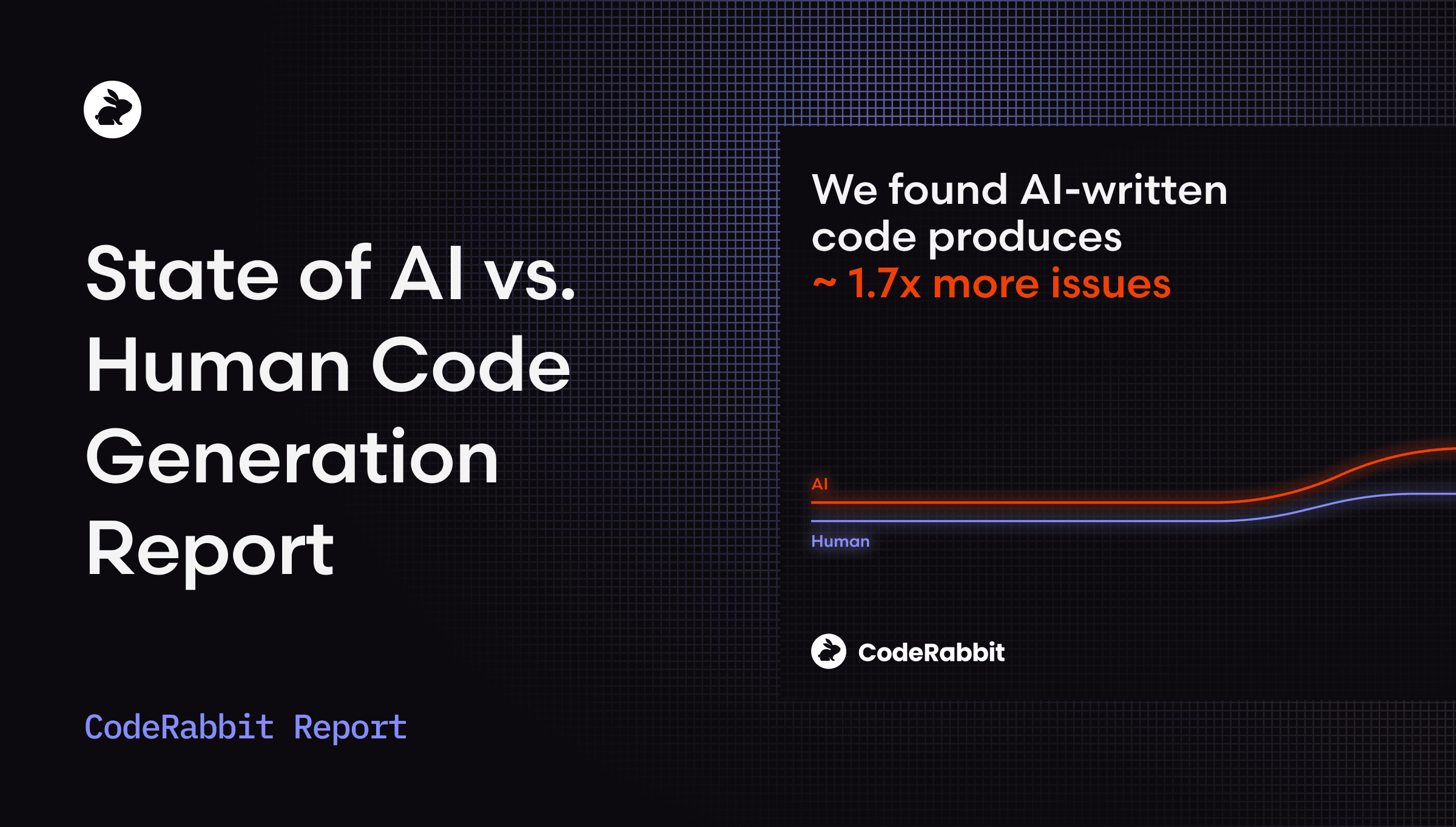
AI vs human code gen report: AI code creates 1.7x more issues
We analyzed 470 open-source GitHub pull requests, using CodeRabbit’s structured issue taxonomy and found that AI generated code creates 1.7x more issues.
AI, open code and vulnerability risk in the public sector
Guidance for safely publishing source code in the open, and reducing the risk of AI-accelerated vulnerability discovery.

Measuring the Impact of Early-2025 AI on Experienced Open-Source...
Despite widespread adoption, the impact of AI tools on software development in the wild remains understudied. We conduct a randomized controlled trial (RCT) to understand how AI tools at the...
LukeW | Common AI Product Issues
At this point, almost every software domain has launched or explored AI features. Despite the wide range of use cases, most of these implementations have been t...