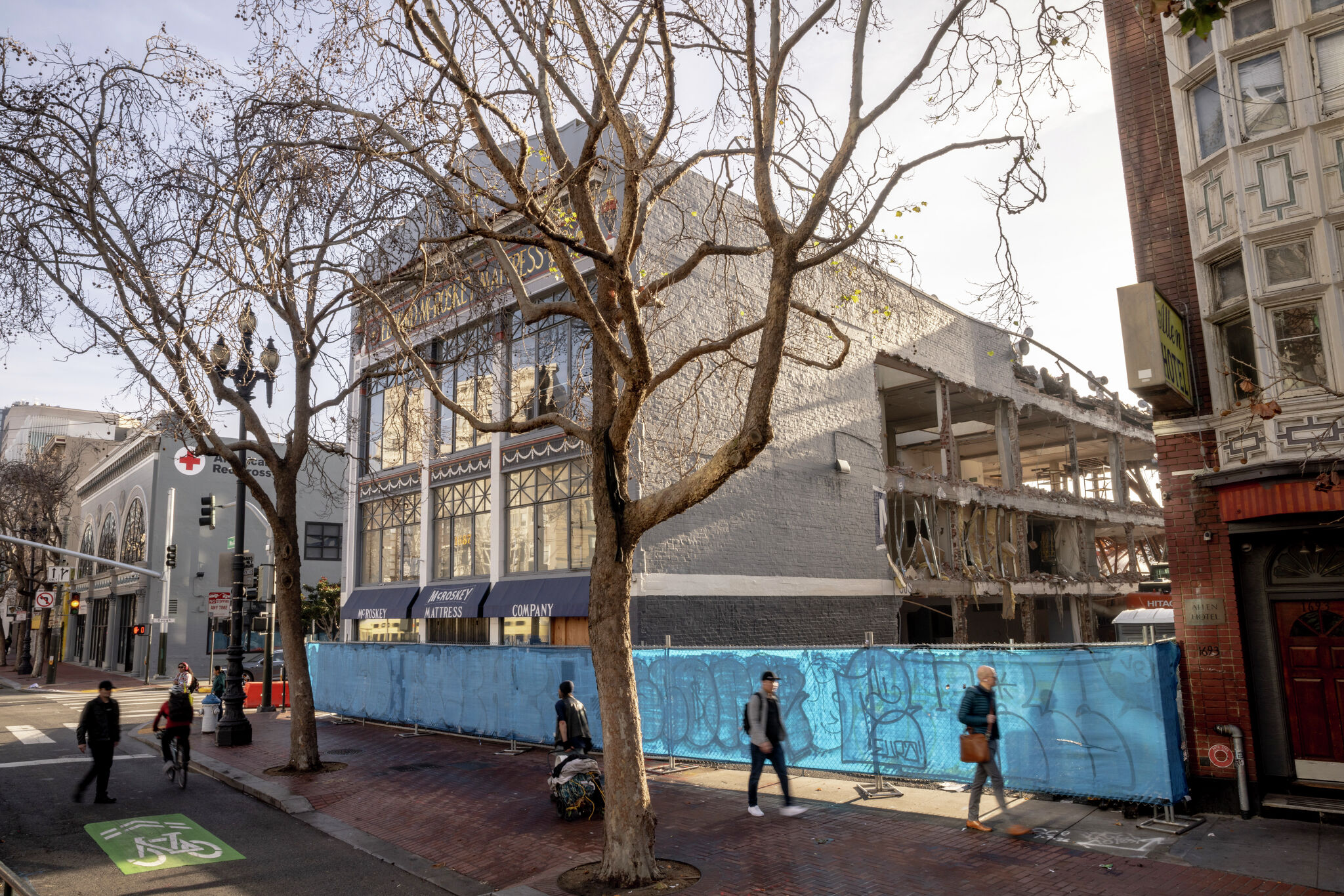
San Francisco is creating a formal process to determine who qualifies as an artist, a new certification required for city residents hoping to live in this affordable housing development.
Artist Corporations: A groundbreaking structure for creative people
Creative people deserve the same economic advantages as everyone else. So we’re going to build it together.

The Community Artists' Collective | Non Profit | Houston, TX
The Community Artists' Collective is the catalyst which provides the inspirational and educational sources for artists and citizens so that they can use their talents and creative abilities to solve economic, cultural and social challenges in the natural and built environments in which we live, work

Deploy San Francisco | DigitalOcean
Deploy San Francisco is an in-person conference where you'll learn to navigate what's next in AI with infrastructure insights and strategies. Register for free.

Tools & Projects | Future Cities Institute
fciprojects.ca is the home of FCI's working tools and projects: built alongside municipalities, grounded in economic reality and free to adopt.


License F.A.Q. - David Revoy
Website of David Revoy, artist and instructor using only Free/Libre and Open-Source software since 2009.
The AI Kids Take San Francisco
Brilliant, workaholic teenagers are flooding the city — and reshaping our future in their image.

The AI Kids Take San Francisco
Brilliant, workaholic teenagers are flooding the city — and reshaping our future in their image.
Searching for the True Price of Public Paintings in Oakland
Sorell Raino-Tsui helps connect Oakland's muralists with customers who can pay them fairly for their work. But what if he's helping hasten gentrification?

How Artist Corporations became law
The Artist Corporation (A-Corp) is a new legal business form designed specifically for artists and creators. It simplifies shared ownership, protects creative missions and intellectual property, and creates infrastructure for collaboration and future benefits like group healthcare. This piece explains how the A-Corp came to be. For an

Oakland is a Vibe: Blackness, Cultural Framings and Emancipations of The Town
Author(s): Heitz, Kaily | Advisor(s): Scott Lewis, Jovan | Abstract: In this dissertation, I examine the ways that developers and Black community organizers in Oakland, California, utilize a situated concept of Black culture to produce value in the city. This value is constituted by a politics of Blackness rooted both in racial capitalism, shifting structures of community care, and their affective articulations. The affective qualities of Black Oakland – which includes a sense of relationality, creativity, and resistance – are understood colloquially as “vibe.” While representations of vibe are mobilized by both developers and community organizations to respectively advance and resist gentrification, I argue that the vibe of the city is constituted by a Black sense of place that cannot be reproduced through capitalist representations of cultural value alone. This study of vibe presents an opportunity to take seriously the invitation of Black geographic scholarship to work at the intersection of poetics and historical materialism by exploring relationality as a site that coproduces racialized space and experience. Where developers leverage notions of vibe to generate value through private investment, Black organizers utilize such representations in order to reclaim the physical space necessary to the very production of vibe. The latter strategy is, I suggest, an enactment of what I call “emancipatory framing,” in which hegemonic framing is mobilized in order to create alternative spaces for liberatory praxes. This dissertation explores vibe and emancipatory framing at three different scales: the Black body, the independent business, and the grassroots collective. I conclude that vibe as a material and metaphorical asset of Blackness, is at the root of contestations over place, and sometimes contradictory imaginaries of freedom.


An Interview with Robert Frank - "If An Artist Doesn't Take Risks, Then It's Not Worth It." (2007)
An Exclusive Interview with Robert Frank, Robert Frank’s Studio, New York, July 22, 2007

Out of the shadows: S.F. limits when shade can be used to block new housing
The SHADE Act limits shadow review in San Francisco and halves the time allowed for certain appeals before projects can proceed.