Drawing on Indigenous worldviews about wealth and sustainability, along with the wisdom and lived experiences of Indigenous thought leaders and practitioners in the economic sector in BC, Step into the River: A Framework for Economic Reconcilation explores ways in which economic reconciliation can be a catalyst for transforming our economic system.
Indigenous Cooperatives in Canada: The Complex Relationship between Cooperatives, Community Economic Development, Colonization, and Culture
This paper describes the intersection of the cooperative movement and Indigenous communities in Canada. The paper brings a lens of nation and race to an analysi

Otipêy | Indigenous-Led Investment Platform
Indigenous-led investment platform delivering real returns and lasting impact. We design, build and manage funds that advance Indigenous economic self-determina
Solidarity Syllabus: Indigenous Peoples, Rematriation, and Resisting AI Data Centers — Solidarity Is
For this Solidarity Syllabus, we are learning alongside Indigenous organizers, leaders, and communities whose work offers important solidarity lessons and invitations for how we might understand land, water, sovereignty, and resistance to data centers. Indigenous Peoples Day is observed

How to Finance Community-Led Solutions (SSIR)
Raven Indigenous Outcomes Funds has pioneered community-driven outcomes contracts to center Indigenous communities in Canada as leaders in addressing health and social problems. They present a bold new model for outcomes purchasing. <meta property=

Seven Generations Principle: Healing the Past & Shaping the Future — The Indigenous Foundation
This is adapted from an Unrooted podcast episode by Breanne Smith @breazieboozhoo What if I told you that the choices we make today could shape the lives of those who come seven generations after us? And that we are the bridge between our ancestors’ resilience & our descendants’ future.

Grassroots Economics — Community-Powered Economies
Empowering communities across the World with community currencies, ecosystem restoration, and commitment pooling since 2010.
Indigenous Knowledges and Data Governance Protocol — Indigenous Innovation Initiative
Between March 2020 and March 2021, the Indigenous Innovation Initiative co-created the Indigenous Knowledges and Data Governance Protocol with the community, to guide how we collect and use Indigenous Knowledges and Data. Click on the image below to learn more about this Protocol. Since then, t

Sustainability is not enough: we need regenerative cultures
By Daniel C. Wahl

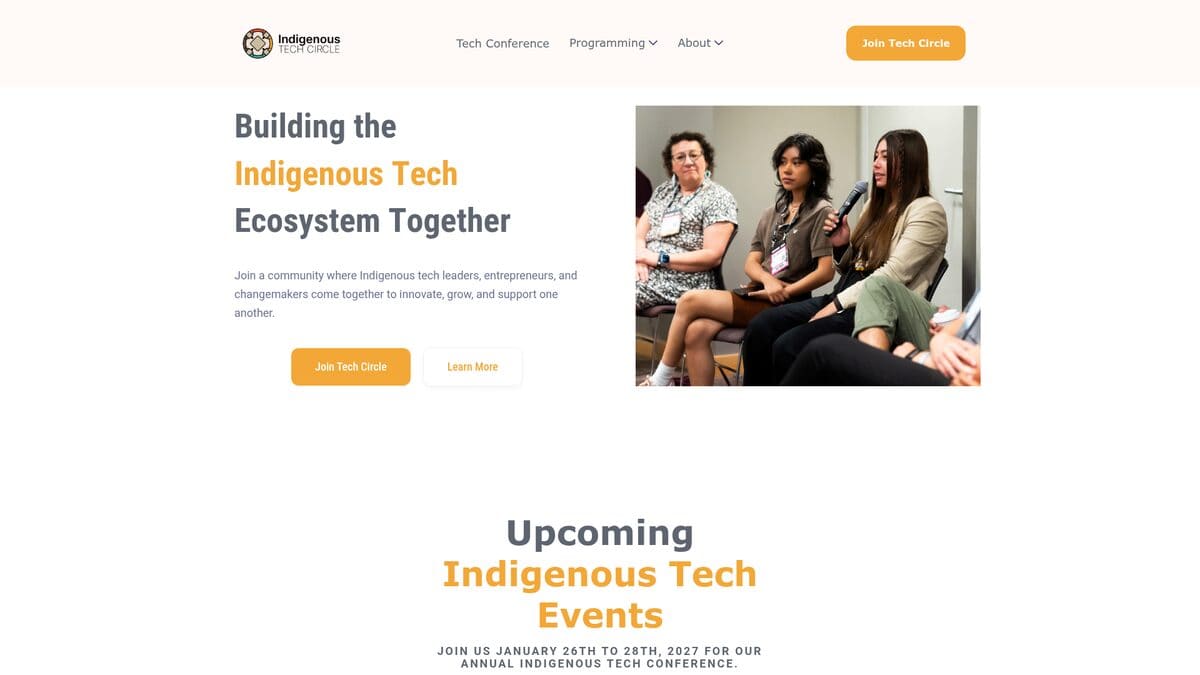
Indigenous Tech Circle | Indigenous-led Tech in Canada
Indigenous-led community connecting technologists, founders, investors, and changemakers across Canada — host of the largest Indigenous tech conference.
Indigenous Data Sovereignty (DDN3-A11)
This article explores Indigenous data sovereignty, identifies some of the data-related challenges faced by Indigenous Peoples and highlights the work done to overcome these challenges.

Culturalizing sustainability
Policy-makers and scientists dominate high-level sustainability debates but any decision that follows has consequences for ordinary people in their local communities and environments. We asked experts to reflect on the importance of embracing a culturally informed, bottom-up approach to the sustainability discourse and action.

Home - Schumacher Center for a New Economics
Our mission is to envision a just and regenerative economy; apply the concepts locally; then share the results for broad replication. Programs Library Lectures & Publications The Decentralism File Community Land Trust Local Currencies Reinventing The Commons All Programs eNewsletters All News “Since there is now increasing evidence of environmental deterioration, particularly in … Continued

The Shared Patterns of Indigenous Culture, Permaculture and Digital Commons | David Bollier
Rarely have I read an essay that knits together some very different commons with such wisdom and depth. Joline Blais' 2006 essay, “Indigenous Domain: Pilgrims, Permaculture and Perl,” is a wonderfully insightful analysis that reveals the underlying unity and logic of commons principles. Her piece appeared in Intelligent Agent (vol. 6, no. 2), published by the Inter-Society for the Electronic Arts.
Animikii: Indigenous Technology for an Equitable Future
Animikii empowers Indigenous communities with culturally informed technology solutions like Niiwin—our groundbreaking tool for Indigenous data sovereignty and community empowerment.

Regenerative Economics
Regenerative economies strengthen social and ecological systems. It's time for economics education to show us how.

Doctrine of Discovery Project
Explore the Doctrine of Discovery Project archive of legal history, papal bulls, repudiations, and resources on Indigenous sovereignty, justice, and decolonization.