

A breakdown of the most interesting engineering patterns in Claude Code's leaked source code: composable system prompts, runtime instruction injection, context compression, forking, prompt caching architecture, and more.
Diving into Claude Code's Source Code Leak
Engineer’s Codex is a publication about real-world software engineering.
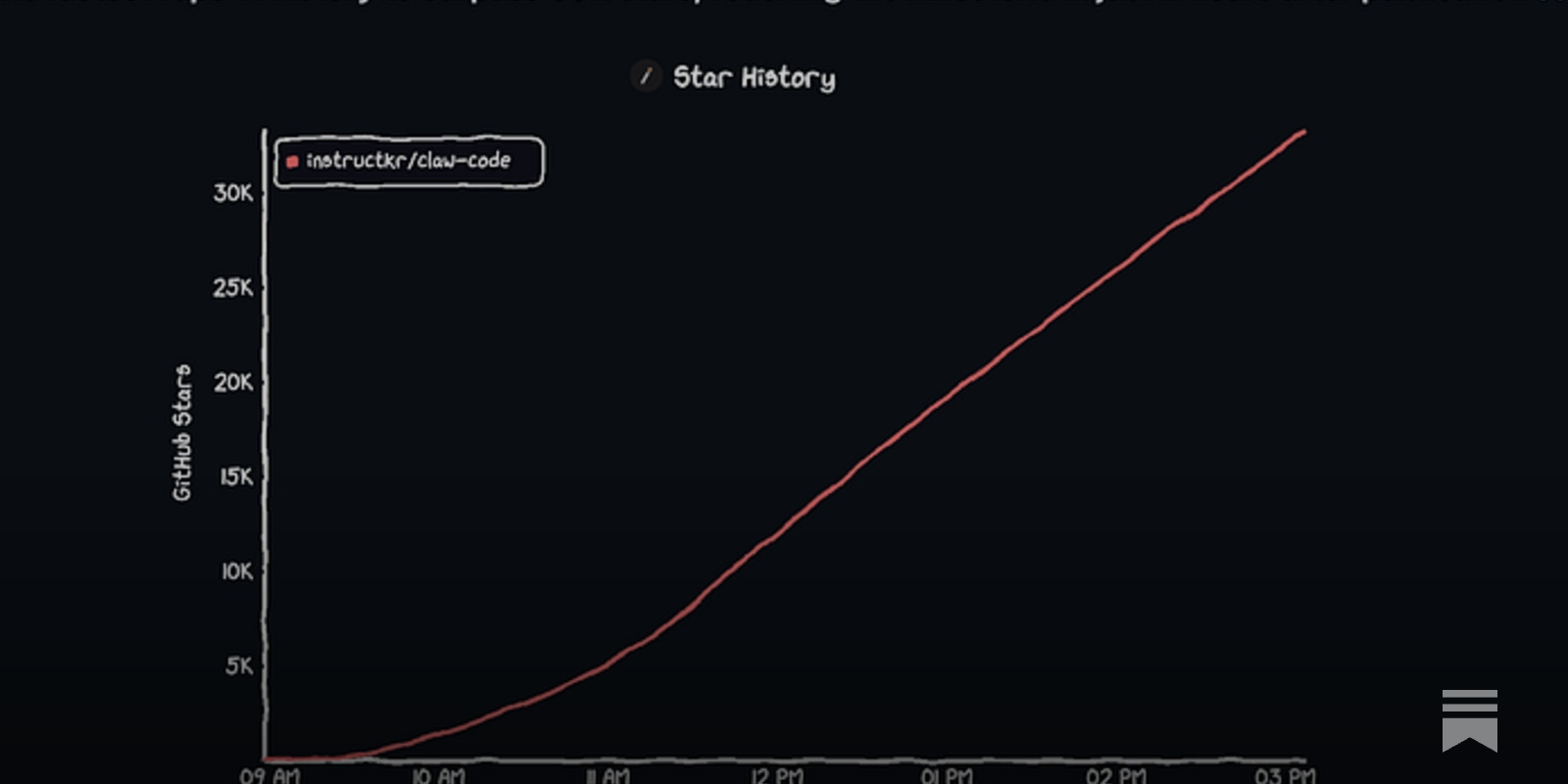
Entire Claude Code CLI source code leaks thanks to exposed map file
512,000 lines of code that competitors and hobbyists will be studying for weeks.
Modular: The Claude C Compiler: What It Reveals About the Future of Software
Compilers occupy a special place in computer science. They're a canonical course in computer science education. Building one is a rite of passage. It forces you to confront how software actually works, by examining languages, abstractions, hardware, and the boundary between human intent and machine execution.

Claude Code, Codex and Agentic Coding #8
When I started this series, everyone was going crazy for coding agents.

esoteric.codes
esolangs, esoplatforms, esosystems, and all that break from the norms of computing

Claude Code Unpacked
What actually happens when you type a message into Claude Code? The agent loop, 50+ tools, multi-agent orchestration, and unreleased features, mapped from source.

Coding After Coders: The End of Computer Programming as We Know It - …
archived 16 Mar 2026 15:14:04 UTC

Pluralistic: It’s extremely good that Claude’s source-code leaked (02 Apr 2026) – Pluralistic: Daily links from Cory Doctorow
Anthropic's developers made an extremely basic configuration error, and as a result, the source-code for Claude Code – the company's flagship coding assistant product – has leaked and is being eagerly analyzed by many parties:
Letta Code | Hacker News
If you're a Claude Code user (I assume much of HN is) some context on Letta Code: it's a fully open source coding harness (#1 model-agnostic OSS on Terminal-Bench, #4 overall).
Agent READMEs: An Empirical Study of Context Files for Agentic Coding
Agentic coding tools receive goals written in natural language, break them down into specific tasks, and write or execute code with minimal human intervention. Central to this process are agent context files (e.g., AGENTS.md and CLAUDE.md) that provide persistent, project-level instructions. In this paper, we conduct the first large-scale empirical study of 2,303 agent context files from 1,925 repositories to characterize their structure, maintenance, and content. We find that these files are not static documentation but complex, difficultto-read artifacts that evolve like configuration code through frequent, small additions. Our content analysis of 16 instruction types shows that developers prioritize functional context, such as test procedures (75.9%), implementation details (70.8%), and architecture (68.1%). We also identify a significant gap: non-functional requirements such as security (14.8%) and performance (14.5%) are rarely specified. These findings indicate that while developers use context files to make agents functional, they provide few guardrails to ensure that agent-written code is secure or performant, highlighting the need for improved tools and practices.

Made by mechanical means
How I'm using Claude in fall 2026: Blender, CGI, and music composition, without running code on my computer or opening a single Claude Code thread myself.
The Art of Code - Dylan Beattie
Daily Dose of Data Science on Twitter / X
Claude Code fully dissected!Researchers from UCL reverse-engineered the leaked Claude source. What they found changes how you should think about agent design.Only 1.6% of the codebase is AI decision logic.The other 98.4% is operational infrastructure. Permission gates, tool… https://t.co/5HYH7qV3wQ pic.twitter.com/5SBHQy5wFH— Daily Dose of Data Science (@DailyDoseOfDS_) June 13, 2026

