


A new report modeling a property tax building exemption in Spokane rebalances incentives toward community goals, encouraging homebuilding and discouraging in-city vacant land speculation.
Would a Land Value Tax Fix That? (Neon Liberalism #77, with Christopher England)
Samantha and guest Christopher England, author of Land and Liberty, talk the legacy of Henry George and his most famous proposal: the land value tax. They put George in his historical context, alongside Gilded Age oligarchy and radical political movements from socialism to anarchism. Why did Georgism fade away, why
Data center land use issues are fake
We have plenty of land, data centers provide more revenue per unit area than any other building, and we should have way less farmland

Yeah, We're Going to Have to Tax the Middle Class
Funding Fairer Housing - The McKell Institute
A levy on individual landholdings worth over $20m could deliver a stamp duty cut for all new houses, enhancing supply and fairness.

The Folk Economics of Housing
Why is housing supply so severely restricted in US cities and suburbs? Urban economists offer two primary hypotheses: homeowner self-interest and political fragmentation. Homeowners, who outnumber and have organizational advantages over renters, are said to lobby against development to protect their property values. The fragmentation hypothesis emphasizes that development's negative externalities are borne locally while most of the benefits accrue regionally or nationally, leading localities to block housing. This paper offers another explanation: ordinary people simply do not believe that adding more housing to the regional stock would reduce housing prices. Across three original surveys of urban and suburban residents, only a minority of respondents say that a large, positive, regional housing supply shock would reduce prices or rents. These beliefs are weakly held and unstable (suggesting people have given the issue little thought), but respondents do have stable views about who is to blame for high housing prices: developers and landlords. Large, bipartisan supermajorities support price controls, demand subsidies, and restrictions on putative bad actors, policies which they believe would be more effective than supply liberalization for widespread affordability. We discuss the implications of these findings for efforts to expand the supply of housing.
What Happens When Data Centers Come to Town?
The rapid growth of data centers, with their enormous energy and water demands, necessitates targeted policy interventions to mitigate environmental impacts and protect local communities. To address these issues, states with existing data center tax breaks should adopt sustainable growth policies for data centers, mandating energy audits, strict performance standards, and renewable energy integration, while also requiring transparency in energy usage reporting. “Renewable energy additionality” clauses should ensure data centers contribute to new renewable capacity rather than relying on existing resources.

More Housing is Possible: a National Town Hall · Burhan for State Senate
Join Vice Mayor Burhan Azeem and the people behind the Montana Miracle, California’s SB79, and the ROAD to Housing Act to discuss recent wins and what comes next for the housing movement. Speakers will dig into the policy that's moving the needle, the campaigns and organizing that got us here, and how local leadership can turn big ideas into more homes. Expect sharp takes, lively panels, and the collective brainpower of the country's most effective housing advocates in one (virtual) room.

Community Wealth Building — Urban Affairs Review
Scholars of urban politics have long debated the issue of what cities can and should do to promote the economic well-being of their residents. As the of election Zohran Mamdani illustrates, urban residents are increasingly demanding that city governments do more to address the increasingly exorbitant costs of housing, childcare, and transportation. One obvious solution is to raise taxes on the private holders of wealth. By the same token, his election has prompted handwringing on the right about the “inevitable” flight of capital out of New York City. Scholarship that runs the gamut from the public choice school associated with the “city limits” perspective (Peterson 1981) through to Marxian accounts (Logan and Molotch 1987) all recognize that the private ownership of wealth and the mobility of capital puts cities in a bind, especially in a context of highly circumscribed levels of federal urban spending. Though several scholars (Logan and Swanstrom 1990; Kantor and Savitch 1993; Schragger 2016) have demonstrated that cities have greater latitude to promote egalitarian public policies than these perspective allow, few would argue that the deep structural problems of economic and social inequality can be fully resolved by tax-and-spend liberalism (Imbroscio 2010).
The Artist Loft: Affordable Housing (for White People)
Do these tax-subsidized apartments perpetuate segregation by excluding some low-income households?

Judge Rules Alabama Power Can Keep Its Solar Fee, Among the Nation’s Highest - Inside Climate News
Despite a sunny climate, Alabama ranks 49th among U.S. states in residential solar installations—lower than Alaska. Advocates say the steep solar fee is part of the reason why.
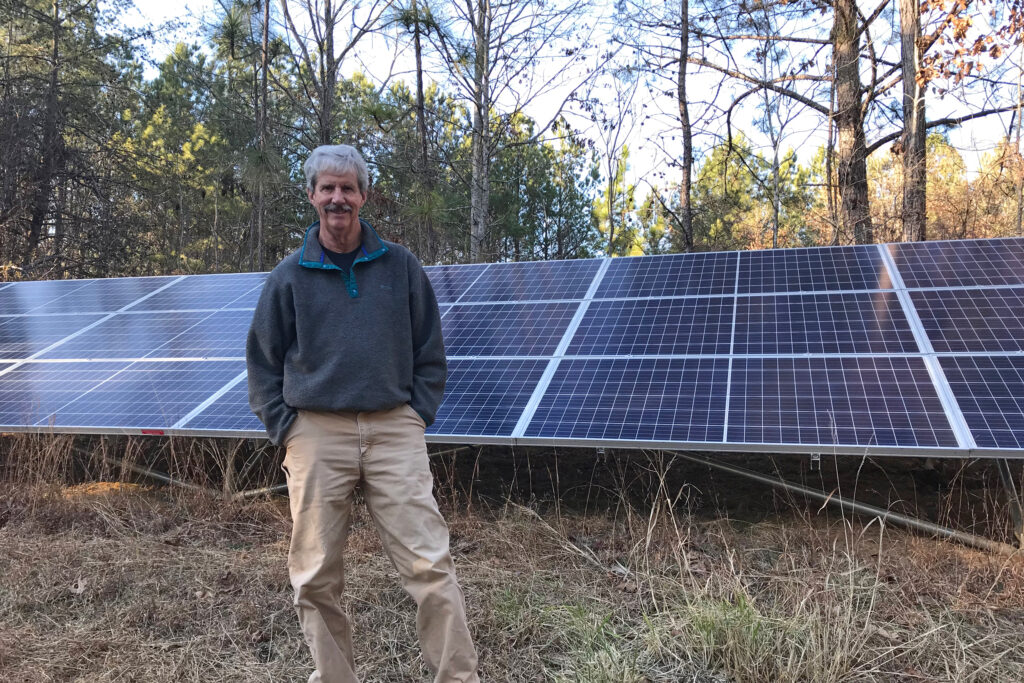
I Moved to New York to Pay More in Taxes—and I’m Glad I Did
I wasn’t getting the bang for my buck in my red-state redoubt. But if I hadn’t moved, I might never have found out how good it could get.

Our full video on the American billionaire buy-out of BC farmland 🚨
Californians are subsidizing mansion wildfire insurance as FAIR risk explodes
As commercial insurers have fled California in the wake of wildfires, FAIR has become the insurer of first resort for owners of multimillion-dollar properties in exclusive but fire-prone communities.

Don’t let lawyers ruin homeownership in California
The government must notice that and treat their lobbying with the same skepticism.

A simple trick to fix the data center debate
Remove the status quo bias by asking "would we spend this much in tax revenue to avoid the externalities of the data center?"

Alberta to pause provincial gasoline tax as of Oct. 1 | CBC News
Alberta Premier Danielle Smith says her government is axing its fuel tax for three months to help combat the cost at the pumps. Smith says starting Oct. 1, drivers will save 13 cents a litre on gasoline and diesel.
