

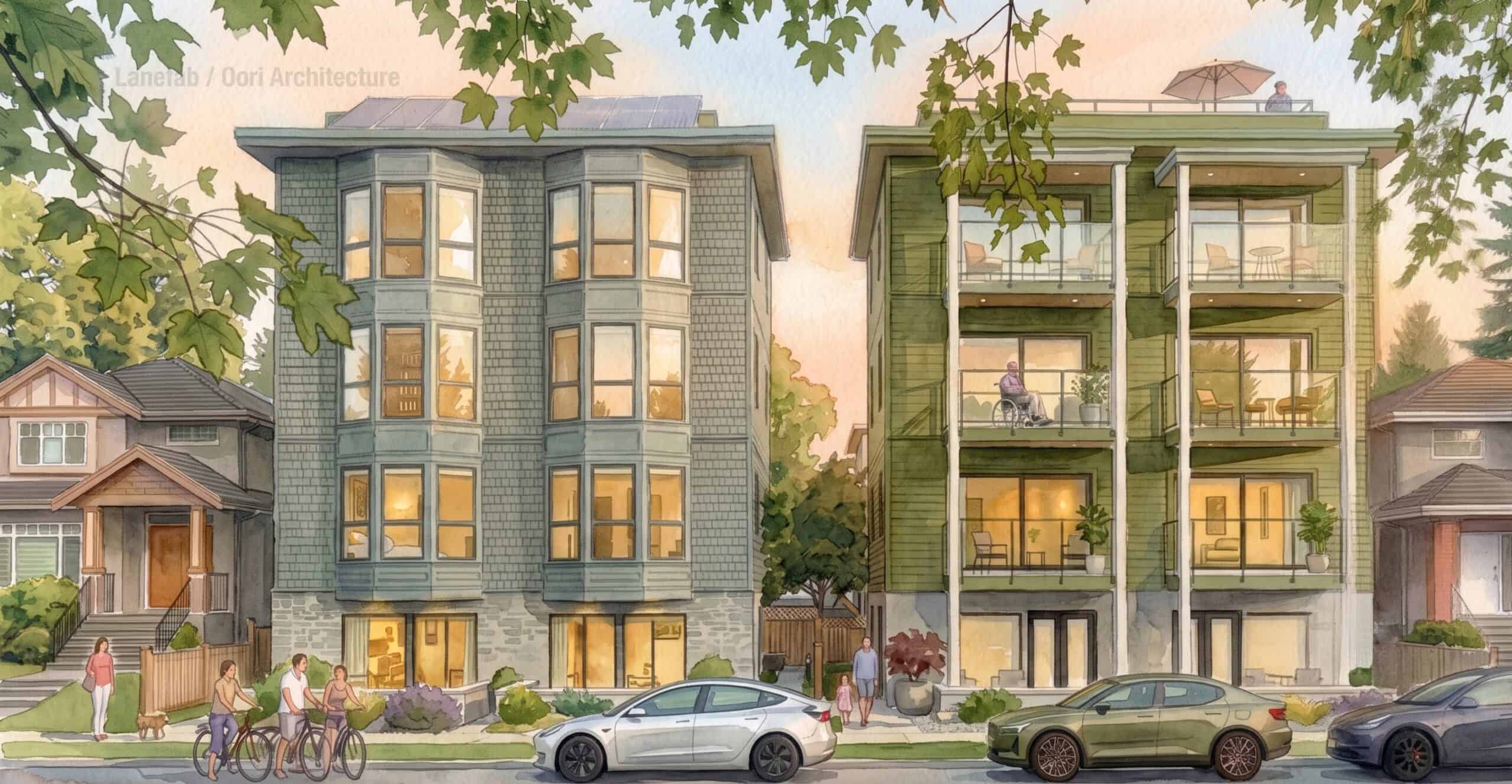
The Four/Five design prioritizes green space, daylight, affordability, and accessibility—all for greater connection and community.
Designing a wayfinding concept for Vancouver's Skytrain system.
I wasn’t always a big fan of public transport.

Future Thinkers Smart Village
A vision for a living lab for regenerative civilization redesign in the Interior of British Columbia, Canada.
Computational Public Space
Design for a Living Planet: Settlement, Science, & the Human Future
In this brief, accessible volume, the authors — an urban philosopher and a mathematician-physicist — explain the surprising new findings from the sciences that are beginning to transform environmental design in the modern era. Authors Michael Mehaffy and Nikos Salingaros explore fractals, networks, self-organization, dynamical systems and other revolutionary ideas, describing them to non-science readers in a direct and engaging way. The book also examines fascinating new topics of design, including Agile, Wiki, Design Patterns and other “open-source” approaches from the software world. The authors conclude that a profound transformation is under way in modern design — and today’s students and practitioners will need to be aware of its implications for our future.“Lucidly describes what’s coming in the world of design — and what needs to come.” — Ward Cunningham, Inventor of wiki, and pioneer of Pattern Languages of Programming, Agile, and Scrum“Essential reading for all urban designers.” — Jeff Speck, Author of Walkable City“Brilliant.” — Charles Montgomery, Author of Happy City“Inspired, compelling and fascinating… Recognizes that a true architecture can be dug from the facts, insights, and theories, that occur with a broadening of science to include the human being.” — Christopher Alexander, Author of A Pattern Language and Notes on the Synthesis of FormSome comments on the individual chapters:“Packed with detail and beautiful in presentation.” — Gil Friend“Human society must find a path of retreat. Salingaros and Mehaffy point the way.” — David Brussat, Providence Journal“Michael Mehaffy and Nikos Salingaros have written some brilliant articles on how we can co-create cities which are truly resilient, rather than being ‘engineered resilient’.” — Smallworld Urbanism“For me, this essay was like a flash of insight, and I suddenly saw the world in a new light.” — Oeyvind Holmstad, Permaliv“We’ve just come across a very thoughtful article by Michael Mehaffy and Nikos Salingaros… [who] draw a number of lessons from biological systems and use them to draw conclusions about how resilient human systems must be designed.” — Resilient Design Institute“Salingaros and Mehaffy take us from the configuration of city spaces to the order of cells in living beings.” — Jaap Dawson, Delft Institute of Technology“If you wanted to know where the cutting edge was in urban design, it is here.” — Patrick J. Kennedy, CarFreeInBigD“This is the single most intelligent and illuminating article I’ve seen on Archdaily in 3 years.” — Nìming Pínglùn Zhě, ChinaMichael Mehaffy is an urbanist and design theorist, and a periodic visiting professor or adjunct in five graduate universities in four countries and three disciplines (architecture, urban planning and philosophy) including the University of Oregon (US) and the University of Strathclyde (UK). He has been a close associate of the architect and software pioneer Christopher Alexander, and a Research Associate with the Center for Environmental Structure, Alexander’s research center founded in 1967. He is currently executive director of Portland, Oregon based Sustasis Foundation, and editor of Sustasis Press.Nikos A. Salingaros is a mathematician and polymath known for his work on urban theory, architectural theory, complexity theory, and design philosophy. He has been a close collaborator of the architect and computer software pioneer Christopher Alexander. Salingaros published substantive research on Algebras, Mathematical Physics, Electromagnetic Fields, and Thermonuclear Fusion before turning his attention to Architecture and Urbanism. He is Professor of Mathematics at the University of Texas at San Antonio and has been on the Architecture faculties of universities in Italy, Mexico, and The Netherlands.
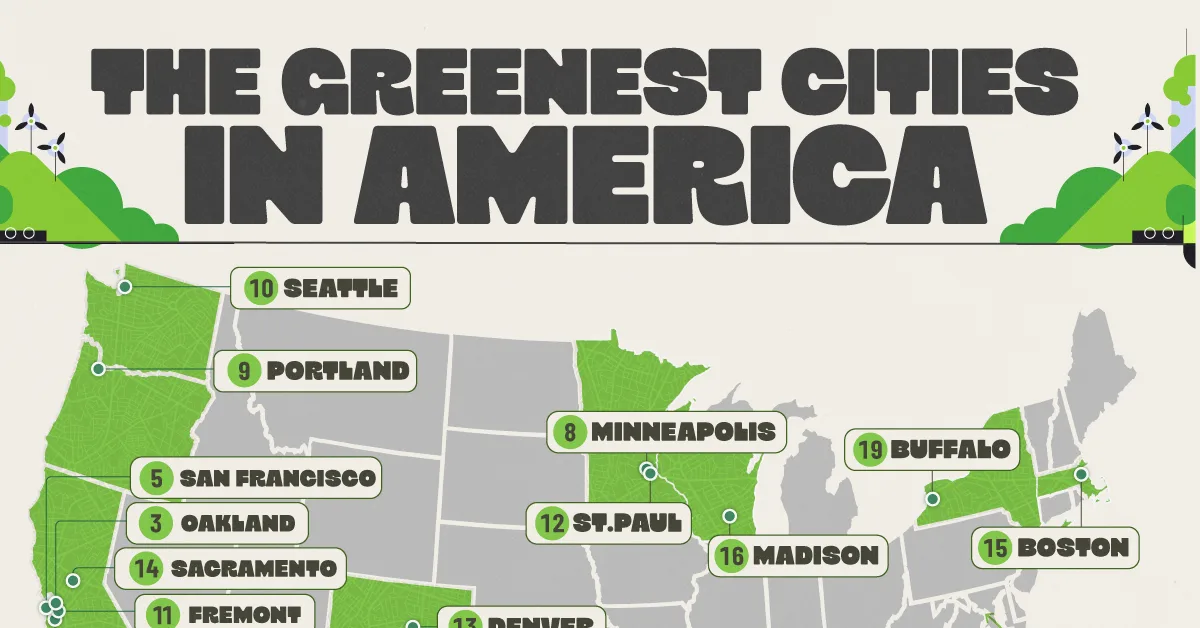
Mapped: Greenest Cities in America in 2025
The 2025 ranking of America’s greenest cities reveals San Jose, CA in the #1 spot, followed by Washington, D.C.
Z-Space Vancouver
Z-Space Arts & Technology Society provides affordable, sustainable, community oriented office and creative space dedicated to supporting creative technologists, startups and innovative small businesses. 505 Hamilton, Vancouver, BC, Canada
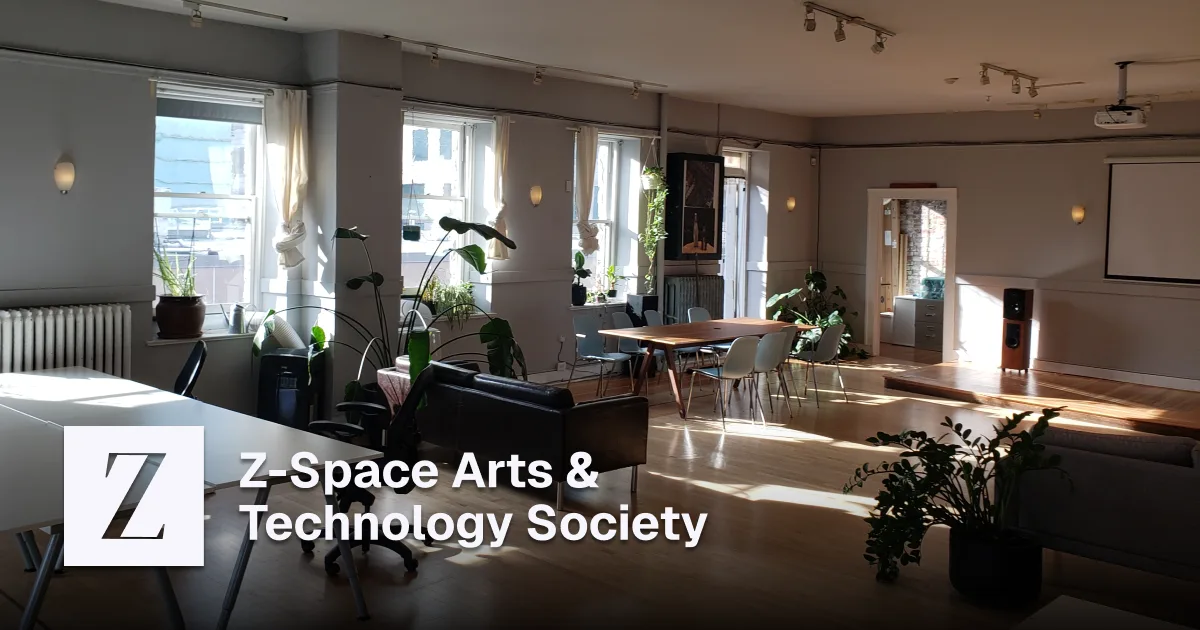
Urban problems: nature-based solutions and a Green New Deal everywhere
Nature-based Solutions with localised Green New Deals could save our settlements, and provide a just transition to a low-carbon society

Architecture and the Internet: Designing places in cyberspace
Cyberspace, as the information space is called, has become accessible in the past decade through the World Wide Web. And although it can only be experienced through the mediation of computers, it is quickly becoming an alternative stage for everyday economic, cultural, and other human activities. As such, there is a potential and a need to design it according to place–like principles. Making places for human inhabitation is, of course, what architects, landscape architects, and town planners have been doing in physical space for thousands of years. It is curious, therefore, that Cyberspace designers have not capitalized on the theories, experiences, and practices that have been guiding physical place–making. While most 3D environments closely mimic physical spaces, they are, by and large, devoid of the essential characteristics that differentiate a ‘place’ from mere ‘space.’ And only rarely are they sensitive to, and take advantage of, the peculiarities of Cyberspace. We believe that this state of affairs is temporary, characteristic of early adoption stages of new technologies. As the Web matures, and as it assumes more fully its role as a destination rather than as means of communication, there will be a growing need to design it according to place–making principles. By looking at physical architecture as a case study and metaphor for organizing space into meaningful places, this paper explores the possibility of organizing Cyberspace into spatial settings that not only afford social interaction, but, like physical places, also embody and express cultural values. At the same time, because Cyberspace lacks materiality, is free from physical constraints, and because it can only be ‘inhabited’ by proxy, these ‘places’ may not necessarily resemble their physical counterparts.
Homepage - Vancouver Magazine
Vancouver Magazine is the indispensable playbook to Canada’s most exciting city. Since 1975, Vancouver Magazine has been your an insider’s guide to the people, places, events and (most importantly) the incredible restaurant scene that make this such a special place to live, work and play. Our editors bring curated, considered recommendations and insights to every page and digital content piece, with a playful, punchy spirit. Whether we’re covering the coolest up-and-coming Vancouver fashion designers, a buzzy new restaurant opening, the hottest spots to hit on your long weekend Gulf Island getaway or wild and wonderful urban planning solutions, we’re on a mission to prove this is So Fun City.
Where Does Community Live? - some responses - Connected Places
I agree that the architecture of a space matters, but I'm not sure the extent we agree as to how much a protocol really matters, versus what we build with them. Roundabout is built on atproto, and I'm quite happy with the decision. I think our architecture very strongly supports our communities.
Blue Zones
What began as a National Geographic expedition, lead by Dan Buettner, to uncover the secrets of longevity, evolved into the discovery of the 5 places around the world where people consistently live over 100 years old, dubbed the Blue Zones. Dan and his team of demographers, scientist and anthropologists were able to distill the evidence-based common denominators of these Blue Zones into 9 commonalities that they call the Power 9. They have since taken these principles into communities across the United States working with policy makers, local businesses, schools and individuals to shape the environments of the Blue Zones Project Communities. What has been found is that putting the responsibility of curating a healthy environment on an individual does not work, but through policy and environmental changes the Blue Zones Project Communities have been able to increase life expectancy, reduce obesity and make the healthy choice the easy choice for millions of Americans.

Thrilled to share that our project @roundabout.town (give them a follow!) will be powering new, healthy digital public spaces in Chicago! This is part of chicago.com, a partnership with Chicago Public Media, which is the @chicago.suntimes.com and @wbez.org. niemanlab.org/2026/08/can-public-media-buil…

Can public media build its own social network? Chicago Public Media teams up with New_ Public to try
www.niemanlab.orgThrilled to be sharing my latest work at #CogSci2026! Many of the spaces we move through, from kitchens to airports, were designed with specific uses in mind. How do people create such environments, and how do users figure out what they were designed for? 📃 osf.io/preprints/psyarxiv/hd6px_v1

