


A groundbreaking analysis of political hobbyism—treating politics like a spectator sport—and an urgent and timely call to arms for the many well-me...
Politics? In My Fandom? - Dhole Moments
I dislike politics in general. That doesn’t mean I don’t write about it when it’s relevant, but I’m always less happy with any of my writing that touches on these subjects. …

We Are Civic Media
A discipline-crossing introduction to civic media via accounts from grassroots practitioners “Civic media” is the use of contemporary technologies to connect communities, inspire action, build civic capacity, and sustain social change efforts. Written by artists, creators, storytellers, organizers, and others working at the intersections of technology, social justice, and culture, this book summons civic media through the lived experiences of its contributors. Latoya Peterson delves into the therapeutic power of gaming; Akilah Hughes discusses identity and community through the lens of her campaign to change her high school's racist mascot; and Tyree Boyd-Pates emphasizes the potential power of museum curation to challenge power dynamics and bridge digital and physical realms. Through the experiences of these grassroots practitioners and many others, We Are Civic Media offers accessible insights for those interested in understanding, respecting, and practicing civic media.
My Political Journey | The Paper Pilot
The Paper Pilot's digital garden of thoughts on philosophy, politics, and sociology
'No Politics' Rules | The Paper Pilot
The Paper Pilot's digital garden of thoughts on philosophy, politics, and sociology
Elections and Activism: Campaign Skills
The Commons is an online library for the change makers of the world and for those interested in social change, activism, organising, advocacy and justice.
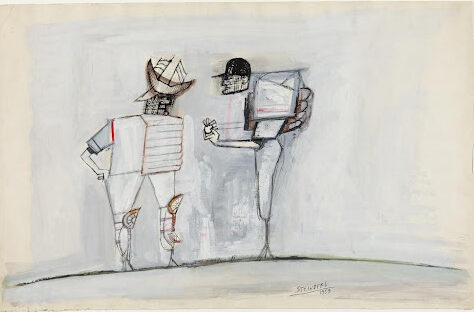
A Philosophical Game: An Interview with Saul Steinberg by Lauren Kane
November 4, 2021 – Steinberg and George Plimpton discuss how the form of sports reflects on nationhood.
Can Creative Hobbies Actually Change the World?
At first glance, belonging to a calligraphy guild or attending a quilting circle may seem like the very definition of apolitical activity. A handful of people gathering in a library conference room…

The Player and the Played
In an age when capitalism feels like an unwinnable game, extreme reactionary ideas and politics are on the rise. The Hunger Games, Game of Thrones, Squid Gam...
Volunteering and Civic Action: Boundaries Blurring, Boundaries Redrawn
The aim of this introduction to the special issue is to call into question the presumed conceptual divide between volunteering and civic action and suggest an analytical tool and four perspectives that bring to light the varying meanings of popular engagement. Volunteering and civic action are laden with different moral meanings, are associated with different theoretical approaches and, just as important, have been assigned different roles in society. This conceptual divide is reflected in the academic debate. Only rarely, however, has the academic debate explored and discussed how the meaning of volunteering and civic action has changed historically. Therefore, we argue for a contextual and relational interpretation of the different forms of popular engagement instead of the application of essentialist definitions of volunteering and civic action. In order to examine the variety of popular engagement without being caught up in pre-made or taken-for-granted conceptualisations of volunteering and civic action as two separate forms of popular engagement, we propose approaching variations of popular engagement with respect to two criteria: first, to what degree popular engagement is enacted in institutionalised spheres of politics or in social public spheres and, second, to what degree actions of popular engagement are controversial or operating in line with what is widely agreed upon and dominant in public opinion. Moreover, we argue that history, discourses, politics and a relational approach are four crucial perspectives in order to reveal the varying meanings of popular engagement.
Hyperpolitics: Extreme Politicization without Political Consequences
POLITICS AFTER THE END OF THE END OF HISTORYWhat happens when politics is everywhere, yet nothing seems to change? From the abandoned dance floors of Thatcher’s London to the mass mobilizations of Black Lives Matter, Anton Jäger traces how public life has become infused with protest, spectacle, and moral urgency — while the old infrastructure of parties, unions, and civic solidarity has been hollowed out.Hyperpolitics revisits the illusions of the “end of history” and dissects the strange energies that replaced them: viral outrage, endless culture wars, and the digital rush of causes that flare and vanish overnight. Jäger shows how the promises of post–Cold War liberalism gave way to a restless, unsteady public sphere where private passions overflow into politics but rarely build enduring power.Ranging from Guy Debord and Wolfgang Tillmans to Houellebecq’s disenchanted fictions, Hyperpolitics makes sense of a world in which collective action remains fragmented and the social fabric thinner than ever. For anyone trying to grasp why our age feels so charged yet so inconsequential, this book offers a vital map through the new contradictions of our hyperpolitical moment.
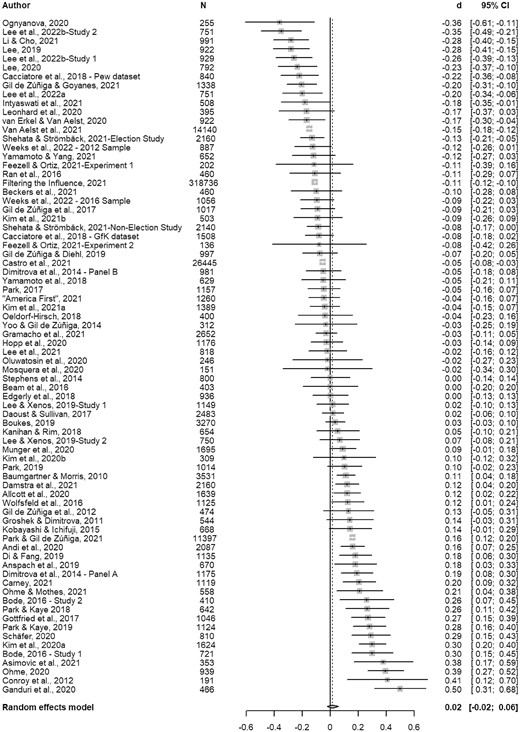
Do people learn about politics on social media? A meta-analysis of 76 studies
Abstract. Citizens turn increasingly to social media to get their political information. However, it is currently unclear whether using these platforms act
Guide to Incrementals/Appeal to Players | The Paper Pilot
The Paper Pilot's digital garden of thoughts on philosophy, politics, and sociology
That's the meaning: You cannot just take tools whose purpose and politics is dominance and violence and "make them liberatory". This goes deeper than "just" embedded politics or lofty talks about ethics, it comes down to what kind of relations you believe do and should and must not define the world.
Since some seem determined not to get it: Arguing science shouldn’t be political is like arguing that ducks shouldn’t be waterfowl. Sure, whatever floats your boat, but they wouldn’t be ducks then would they? Science is a collective human effort at sensemaking—the very definition of political.

Carl T. Bergstrom
When I was 5, I loved science, which I took to be planets and magnets and chemicals and shit. Soon I realized science was a collective human activity, and these were just the objects of its attention. Anyway, whenever I read an OpEd on how science isn't political, I think "Are you 5 years old?"

