


CBT-I is an evidence-based treatment for insomnia that can improve sleep without medication. Learn how it works and what to expect from therapy.
Comparison of adaptive pacing therapy, cognitive behaviour therapy, graded exercise therapy, and specialist medical care for chronic fatigue syndrome (PACE): a randomised trial
CBT and GET can safely be added to SMC to moderately improve outcomes for chronic fatigue syndrome, but APT is not an effective addition.

I couldn’t sleep, then I tried cognitive shuffling | Psyche Notes to Self
The usual advice didn’t help my sleep problems, but then I tried an exercise that kickstarts the sleep-onset control system

New Treatment Guideline, Same Old Denialism
The science is clear. CBT and GET are not useful treatments for ME/CFS. But cognitive dissonance is a powerful force, and we can fully expect continued denials from the conspiratorial fringe

Avatar Therapy Successfully Treats Schizophrenic Patients Suffering from Auditory Hallucinations
Researchers found that avatar therapy was more effective at reducing hallucinations than counseling.

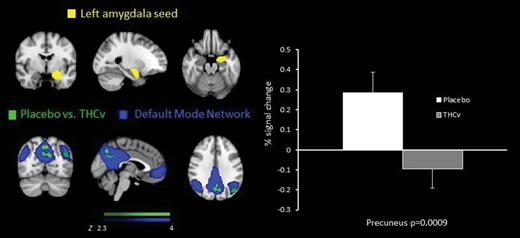
The CB1 Neutral Antagonist Tetrahydrocannabivarin Reduces Default Mode Network and Increases Executive Control Network Resting State Functional Connectivity in Healthy Volunteers
AbstractBackground:. The cannabinoid cannabinoid type 1 (CB1) neutral antagonist tetrahydrocannabivarin (THCv) has been suggested as a possible treatment f
Figuring out why a nap might help people see things in new ways
An EEG signal of sleep is associated with better performance on a mental task.

This 10-Minute Routine Will Increase Your Clarity And Creativity
“Your subconscious mind works continuously, while you are awake, and while you sleep.” — Napoleon Hill

Sleep Deficit: The Performance Killer
Reprint: R0610B Companies today glorify the executive who logs 100-hour workweeks, the road warrior who lives out of a suitcase in multiple time zones, and the negotiator who takes a red-eye to make an 8 AM meeting. But to Dr. Charles A. Czeisler, the Baldino Professor of Sleep Medicine at Harvard Medical School, this kind of corporate behavior is the antithesis of high performance. In fact, he says, it endangers employees and puts their companies at risk. In this interview, Czeisler describes four neurobiological functions that affect sleep duration and quality as well as individual performance. When these functions fall out of alignment because of sleep deprivation, people operate at a far lower level of performance than they would if they were well rested. Czeisler goes on to observe that corporations have all kinds of policies designed to protect employees—rules against smoking, sexual harassment, and so on—but they push people to the brink of self-destruction by expecting them to work too hard, too long, and with too little sleep. The negative effects on cognitive performance, Czeisler says, can be similar to those that occur after drinking too much alcohol: “We now know that 24 hours without sleep or a week of sleeping four or five hours a night induces an impairment equivalent to a blood alcohol level of .1%. We would never say, ‘This person is a great worker! He’s drunk all the time!’ yet we continue to celebrate people who sacrifice sleep for work.” Czeisler recommends that companies institute corporate sleep policies that discourage scheduled work beyond 16 consecutive hours as well as working or driving immediately after late-night or overnight flights. A sidebar to this article summarizes the latest developments in sleep research.
Pre-sleep treatment with galantamine stimulates lucid dreaming: A double-blind, placebo-controlled, crossover study
Lucid dreaming is a remarkable state of consciousness in which one is aware of the fact that one is dreaming while continuing to dream. Based on the strong relationship between physiological activation during rapid eye-movement sleep and lucid dreaming, our pilot research investigated whether enhancing cortical activation via acetylcholinesterease inhibition (AChEI) would increase the frequency of lucid dreams and found AChEI to be a promising method for lucid dream induction. In the current study we sought to quantify the size and reliability of the effect of AChEI on lucid dreaming, dream recall and dream content as well as to test the effectiveness of an integrated lucid dream induction protocol which combined cholinergic stimulation with other methods for lucid dream induction. Participants (N = 121) with high dream recall and an interest in lucid dreaming were randomly assigned counterbalanced orders of 3 doses of galantamine (0, 4 and 8 mg). On 3 consecutive nights, they awoke approximately 4.5 hours after lights out, recalled a dream, ingested the capsules and stayed out of bed for at least 30 minutes. Participants then returned to bed and practiced the Mnemonic Induction of Lucid Dreams technique while returning to sleep. The percentage of participants who reported a lucid dream was significantly increased for both 4 mg (27%, odds ratio = 2.29) and 8 mg doses (42%, odds ratio = 4.46) compared to the active placebo procedure (14%). Galantamine also significantly increased dream recall, sensory vividness and complexity (p<0.05). Dream recall, cognitive clarity, control, positive emotion, vividness and self-reflection were increased during lucid compared to non-lucid dreams (p<0.0001). These results show that galantamine increases the frequency of lucid dreams in a dose-related manner. Furthermore, the integrated method of taking galantamine in the last third of the night with at least 30 minutes of sleep interruption and with an appropriately focused mental set is one of the most effective methods for inducing lucid dreams available today.
Opinion | Rethinking Sleep (Published 2012)
It’s not the quantity of sleep that restores and refreshes, but the quality.

Sleep Science: In the Era of Screens, Rest is Crucial
Our floodlit society has made sleep deprivation a lifestyle. But we know more than ever about how we rest—and how it keeps us healthy.

'Sleep should be prescribed': what those late nights out could be costing you
Leading neuroscientist Matthew Walker on why sleep deprivation is increasing our risk of cancer, heart attack and Alzheimer’s – and what you can do about it
<em>Journal of Sleep Research</em> | ESRS Journal | Wiley Online Library
Napping is a cross-cultural phenomenon which occurs across the lifespan. People vary widely in the frequency with which they nap as well as the improvements in alertness and well-being experienced. T...

How to Deal With Your Nighttime Anxiety
For some people, it happens like clockwork: Their anxiety is manageable during the day, but as soon as their head hits the pillow, every possible bad

Creatine found to improve cognitive performance during sleep deprivation | Hacker News
Although, I could see this being beneficial in fields where labour is scarce (e.g.: the medical field), I fear it could lend towards a "sleep deprivation is okay, just take creatine" rationale in other fields.
How to Increase the Duration of Deep Sleep with Daily Activities
Deep sleep or slow wave sleep is well-known to be beneficial for mental and physical well-being. In this case study, we use InfraNodus text analysis tool to conduct a review of scientific literature on deep sleep to discover the factors that increase its duration. We put particular emphasis on behavioral changes that can be implemented in everyday life.
