


After almost five years in development, the new HTTP/3 protocol is nearing its final form. Earlier iterations were already available as an experimental feature, but you can expect the availability and use of HTTP/3 proper to ramp up over in 2021. So what exactly is HTTP/3? Why was it needed so soon after HTTP/2? How can or should you use it? And especially, how does it improve web performance? Let’s find out.
Some notes about HTTP/3
HTTP/3 is going to be standardized. As an old protocol guy, I thought I'd write up some comments. Google (pbuh) has both the most popular ...
HTTP: The Protocol Every Web Developer Must Know—Part 1
Learning the fundamentals of the World Wide Web is crucial, especially if you are planning to build web apps. And HTTP is at the heart of any web application you could build. HTTP stands for...

TLS Everywhere, not https: URIs - Design Issues
A few years after HTTP appeared, around when W3C was founded in 1994, it was clear that an unencrypted and unauthenticated connection was too much of a liability for a lot of serious stuff, such as e-commerce, which everyone wanted to do on the web. (In those days, mass Deep Packet Inspection was not technically feasible, so the ubiquitous snooping which we have to day was not the main driver.) There were, among the ideas, two secure versions of HTTP proposed, one known as S-HTTP and the other, as HTTP-S. To cut a long story short, HTTP-S prevailed.
HTTP Semantics
The Hypertext Transfer Protocol (HTTP) is a stateless application-level protocol for distributed, collaborative, hypertext information systems. This document describes the overall architecture of HTTP, establishes common terminology, and defines aspects of the protocol that are shared by all versions. In this definition are core protocol elements, extensibility mechanisms, and the "http" and "https" Uniform Resource Identifier (URI) schemes. This document updates RFC 3864 and obsoletes RFCs 2818, 7231, 7232, 7233, 7235, 7538, 7615, 7694, and portions of 7230.
Reorganizing Website Architecture for HTTP/2 and Beyond
This document discusses reorganizing website architecture for HTTP/2 and beyond. It summarizes some issues with HTTP/2 including errors in prioritization where some browsers fail to specify resource priority properly. It also discusses the problem of TCP head-of-line blocking where pending data in TCP buffers can delay higher priority resources. The document proposes solutions to these issues such as prioritizing resources on the server-side and writing only what can be sent immediately to avoid buffer blocking. It also examines the mixed success of HTTP/2 push and argues the server should not push already cached resources. - Download as a PDF or view online for free


Understanding Web 3 — A User Controlled Internet
Coinbase breaks down the motivation and technology behind the development of Web 3
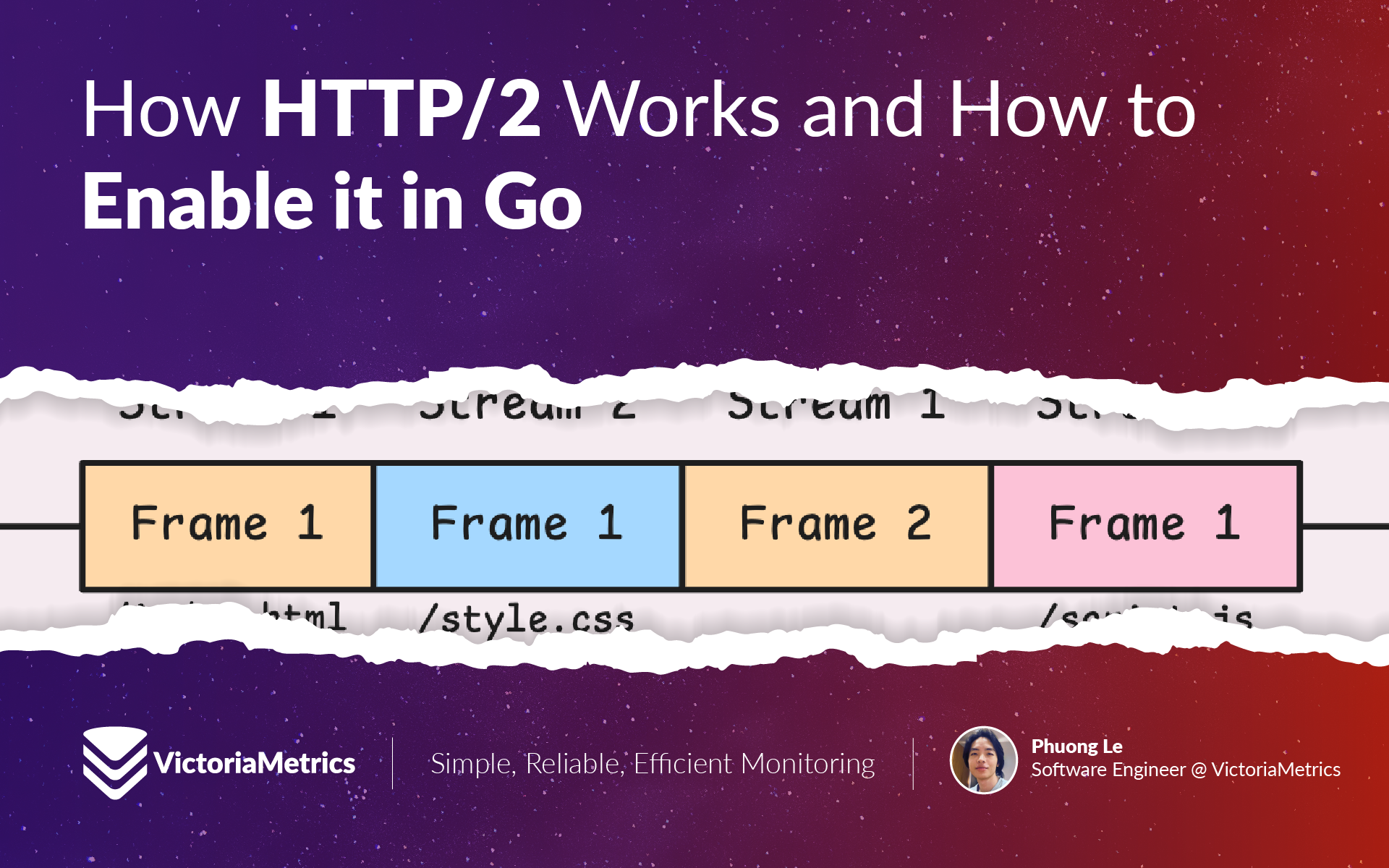
How HTTP/2 Works and How to Enable It in Go
HTTP/2 solves head-of-line blocking at the application layer by multiplexing multiple streams over a single TCP connection. While HTTP/1.1 requires requests to be processed sequentially, HTTP/2 allows parallel processing through independent streams, each with its own ID. The Go standard library supports HTTP/2 out of the box when using HTTPS, and with some configuration, it can work over plain HTTP too
Why does this new W3C specification matter for the decentrazlized Web
This video explain what FedCM is and why it can be a turning point if we want more Sigle Sign On diversity on the web
The W3C At Twenty-Five — Smashing Magazine
The W3C celebrated its 25th anniversary on the 1st of October 2019. In this article, Rachel Andrew explains how the W3C works and shares her “Web Story” to explain why the Web Standards process is so vitally important for everyone to have an open web platform where they can share their stories and build awesome things for the web together.
WWW
Even though HTTP is a simple protocol and the basic HTML is a simple format, the current standards are bloated and only a few web browser engines are able to support them at the commonly required level.
12 November 2025 | Isolated Web Apps - Current state and future direction | Calendar
The World Wide Web Consortium (W3C) is an international community where Member organizations, a full-time staff, and the public work together to develop Web standards.

P3P
The Platform for Privacy Preferences Project (P3P) is an obsolete protocol allowing websites to declare their intended use of information they collect about web browser users. Designed to give users more control of their personal information when browsing, P3P was developed by the World Wide Web Consortium (W3C) and officially recommended on April 16, 2002. Development ceased shortly thereafter and there have been very few implementations of P3P. Internet Explorer and Microsoft Edge Legacy were the only major browsers to support P3P. Microsoft has ended support from Windows 10 onwards. Internet Explorer and Edge [Legacy] on Windows 10 no longer support P3P as of 2016.[3] W3C officially obsoleted P3P on 2018-08-30.[4] The president of TRUSTe has stated that P3P has not been implemented widely due to the difficulty and lack of value.[5]
Working on HTML5.1
The World Wide Web Consortium (W3C) is an international community where Member organizations, a full-time staff, and the public work together to develop Web standards.
Why Did Google Choose To Implement gRPC Using HTTP/2?
Why Did Google Choose To Implement gRPC Using HTTP/2? Understand the story behind the design of gRPC and its mission. Background gRPC is an open-source high-performance RPC framework developed by …

Who Shapes Web Standards? Uncovering the Main Topics of Interest in the W3C