

SOFTER invites creative technologists and curious makers to join a new residency to design, build and demystify cyberdecks.
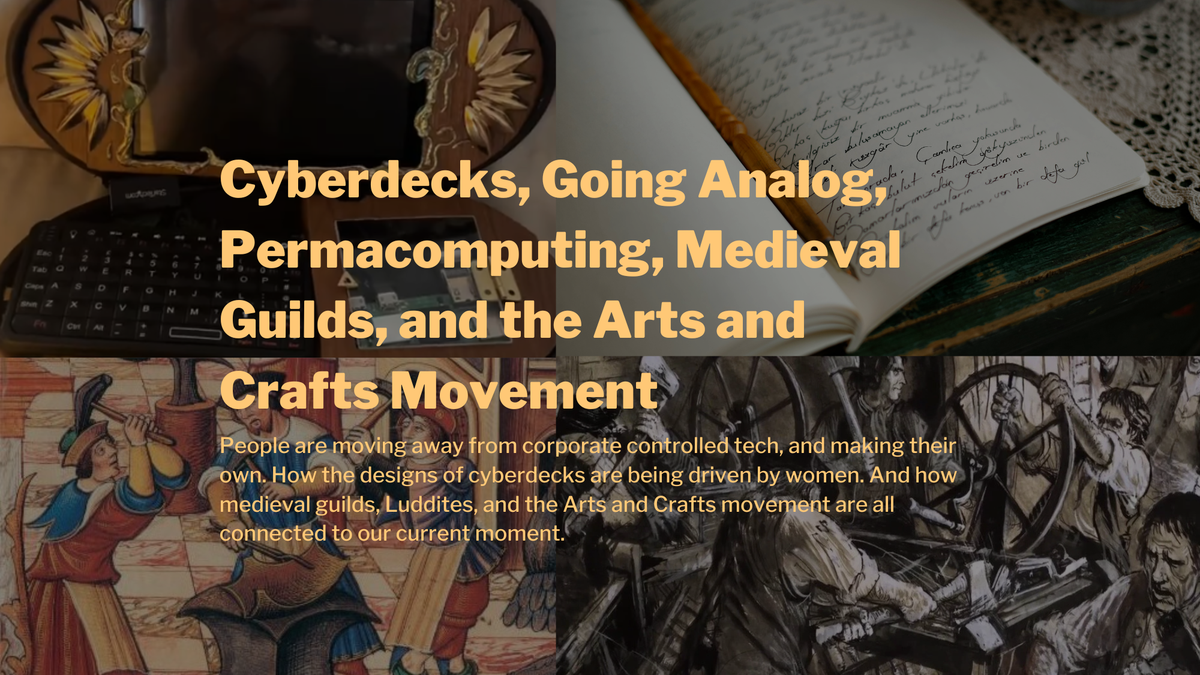
Cyberdecks, Going Analog, Permacomputing, Medieval Guilds, and the Arts and Crafts Movement
People are moving away from corporate controlled tech, and making their own. How the designs of cyberdecks are being driven by women. And how medieval guilds, Luddites, and the Arts and Crafts movement are all connected to our current moment.
softer computing club
a cozy community of humans and computers on the planet earth
Creative Technologists are moving from the margins to the center
Once an obscure job title, creative technology is becoming a new way of working, and a core capability inside modern product teams. Soon…
Muse: Designing a studio for ideas
Physical workspaces inspire a fast, fluid digital tool for creative thinking.
Architecture and the Internet: Designing places in cyberspace
Cyberspace, as the information space is called, has become accessible in the past decade through the World Wide Web. And although it can only be experienced through the mediation of computers, it is quickly becoming an alternative stage for everyday economic, cultural, and other human activities. As such, there is a potential and a need to design it according to place–like principles. Making places for human inhabitation is, of course, what architects, landscape architects, and town planners have been doing in physical space for thousands of years. It is curious, therefore, that Cyberspace designers have not capitalized on the theories, experiences, and practices that have been guiding physical place–making. While most 3D environments closely mimic physical spaces, they are, by and large, devoid of the essential characteristics that differentiate a ‘place’ from mere ‘space.’ And only rarely are they sensitive to, and take advantage of, the peculiarities of Cyberspace. We believe that this state of affairs is temporary, characteristic of early adoption stages of new technologies. As the Web matures, and as it assumes more fully its role as a destination rather than as means of communication, there will be a growing need to design it according to place–making principles. By looking at physical architecture as a case study and metaphor for organizing space into meaningful places, this paper explores the possibility of organizing Cyberspace into spatial settings that not only afford social interaction, but, like physical places, also embody and express cultural values. At the same time, because Cyberspace lacks materiality, is free from physical constraints, and because it can only be ‘inhabited’ by proxy, these ‘places’ may not necessarily resemble their physical counterparts.
Thoughts on Cyberpositionality: The Construction of Digital Communities in Digital Spaces, Damien Patrick Williams
I found Rebecca Monteleone, Martin Perez Comisso, and Elma Hajric’s “Cyberpositionality: Sociotechnical Location in the Digital Age” (2024) to be an extremely timely and important article which can…

"An approach to computing and sustainability inspired from permaculture" by Devine Lu Linvega
the new product designer (and why we’re getting it wrong)
Flipper One — we need your help
With Flipper One, we're reimagining what a Linux cyberdeck can be — it's a huge project. We're opening up the development process and asking the community for help.

Telepath: building a new kind of computer
So, we made a thing: Let’s back up: for as long as I can remember, I’ve been obsessed with computers, fascinated not just by what they can do but what they could become. Like many, I took my early inspiration from science fiction. I dreamed of someday having something like the Enterprise’s computer. And why not? Science fiction has always driven scientists, engineers, and inventors to create real things that change the world.
SF: A Birds of a Feather on Agentic Engineering
I'm Jesse. I make stuff. Software, hardware. Very occasionally, trouble.

under the hood
This week I’ve been thinking about what it’s like for a new generation to make things with computers. When we were talking in Berlin, Luce made a point that...

Thanks to AI-powered tools, coding is more accessible than ever, but that doesn’t mean builders have decentralized tech know-how. Grey Area is offering an online course called “Beyond Big Tech” for community builders and designers building alternative tech futures! Apply by September 24th

Beyond Big Tech: Building Alternative Futures for Personal Data and Infrastructure
grayarea.orgBarefoot Developers

Links about letting non-programmers solve their niche problems with personal vibe-coded software.
MCP Apps
A2UI

Gemini Canvas — write, code, & create in one space with AI

Claude Artifacts

Introducing Patchwork-26
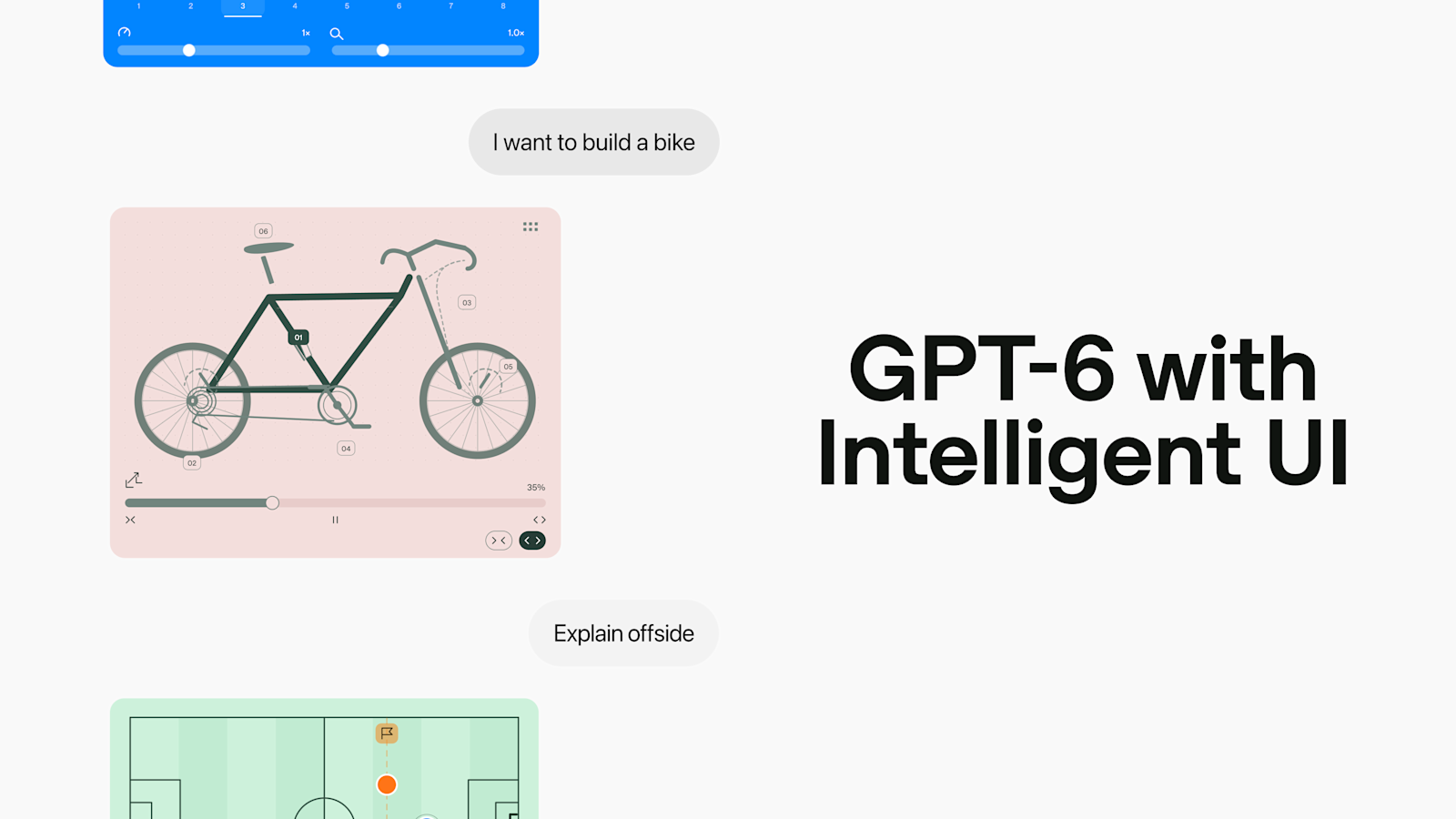
GPT-6 and Intelligent UI for everyone
