


We believe liberatory media should be as free as the future we struggle toward. We’ll do our best to collectively update and maintain the library and catalog. For now the catalog is updated occasionally, but films are added regularly.
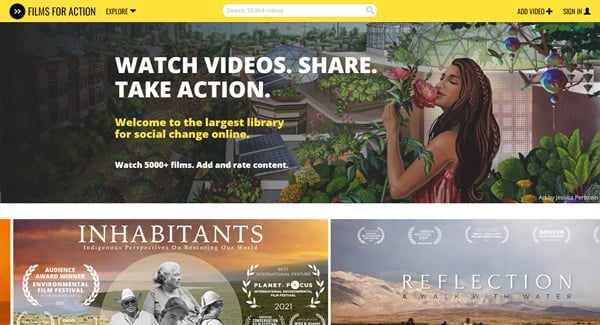
Films For Action: A Documentary Library for Changing the World
Browse and watch 6000+ documentaries and videos - 99% free. No ads. Submit films. Share with friends. Let's change the world together!
4,000+ Free Movies Online: Great Classics, Indies, Noir, Westerns, Documentaries & More | Open Culture
Watch 4,000+ quality movies online. Includes classics, indies, film noir, documentaries showcasing the talent of our greatest actors, actresses and directors. Open Culture, openculture.com

The Archive
The Economics of Sovereign Media: A Roadmap for AT Protocol | ATmosphereConf VODs
The talk will focus on (1) the structural shifts reshaping the media landscape & creator economy and provide a roadmap / suggestions for how the AT Protocol ecosystem & community can be best positioning to serve the needs of creators of all kinds (emphasis / focus here on independent creators) through this evolutio, while preserving their rights to sovereignty & ownership. The talk ideally touches on both cultural, economic and technical / infrastructural topics. Will be speaking in my capacity both as an artist and as an investor / student of media markets.

Small File Media Festival
An annual festival of sustainable, low-carbon experimental media. Small files travel light and prove cinema doesn't have to be big to be beautiful.

Unlocking the commons
"The most powerful and interesting media model will remain raising money from members who don't just permit but <em>insist</em> that the product be given away for free."

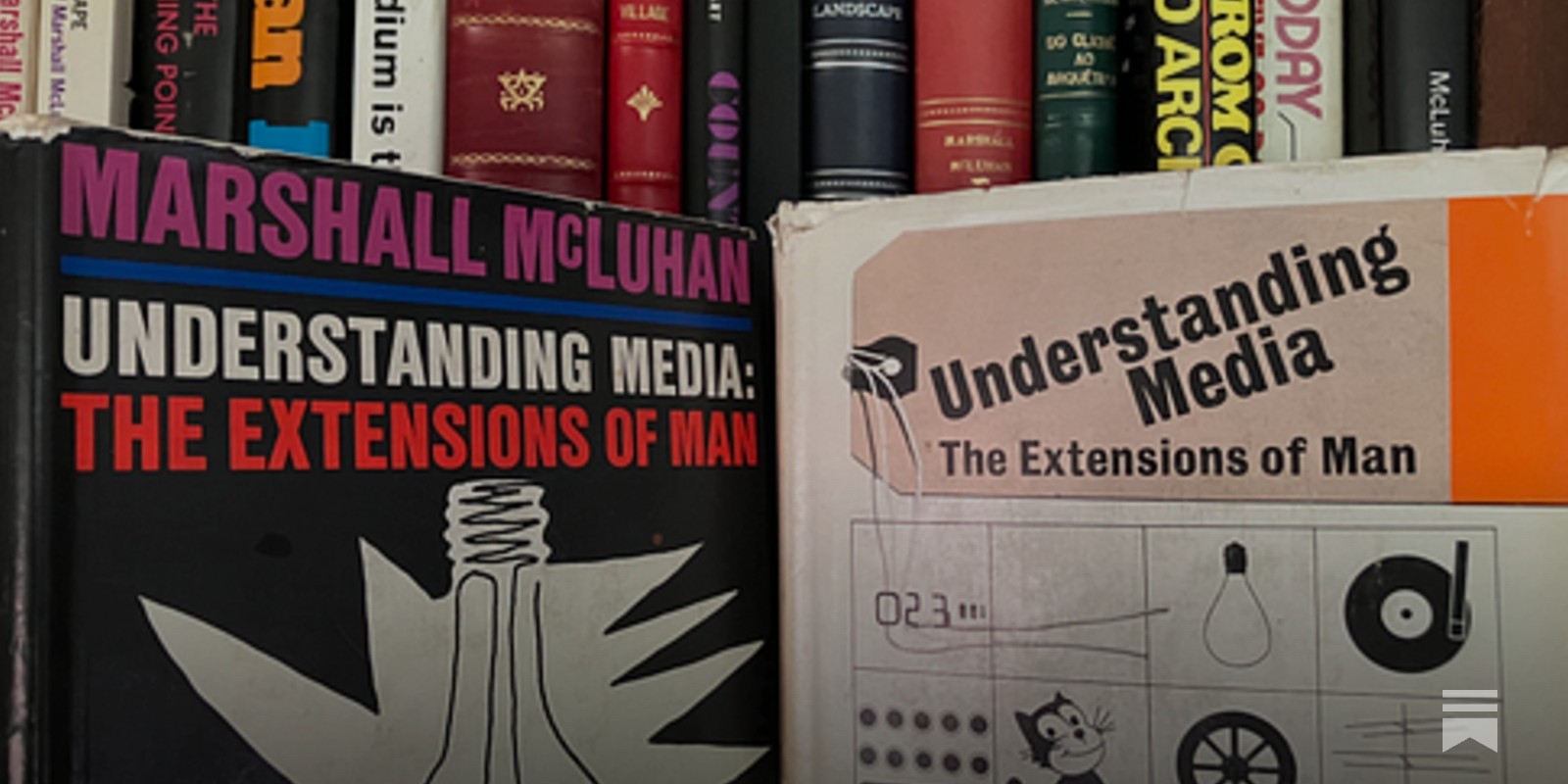
Reading, and Understanding Media
A guidebook, and poetry more than prose, Marshall McLuhan's 1964 work remains one of our best resources for exploring the nature and effects of new media. It's not an easy read, so I'm going to help.
Utopian media studies: Introduction
This introduction to the special issue ‘Utopian Media Studies’ sketches a framework for how media studies can become a site of utopian praxis, research and experimentation. It first addresses three apprehensions media scholars might have about the notion of utopian media studies and its appeal to a loaded concept like ‘utopia’. The introduction then outlines five sensibilities to explicate the nature and significance of this special issue’s contribution to the field: a utopian media studies must adopt an ecological approach to media; recognize and be invigorated by limits; work toward the technological liberation of time; connect imagination with practice; and emphasize and enable conditions for transmitting hope. Lastly, the introduction considers Ruth Levitas’s distinction between utopia’s archaeological, ontological, and architectural mode to map some of the concrete ways in which existing media studies research is doing utopian work that aligns with these sensibilities. In connecting work that operates in these modes with the various contributions to this special issue, the introduction reveals the utopian currents that already run through media studies as a discipline and opens up new conceptual and methodological approaches to studying and modeling digital utopias.
Utopian media studies: Introduction
This introduction to the special issue ‘Utopian Media Studies’ sketches a framework for how media studies can become a site of utopian praxis, research and experimentation. It first addresses three apprehensions media scholars might have about the notion of utopian media studies and its appeal to a loaded concept like ‘utopia’. The introduction then outlines five sensibilities to explicate the nature and significance of this special issue’s contribution to the field: a utopian media studies must adopt an ecological approach to media; recognize and be invigorated by limits; work toward the technological liberation of time; connect imagination with practice; and emphasize and enable conditions for transmitting hope. Lastly, the introduction considers Ruth Levitas’s distinction between utopia’s archaeological, ontological, and architectural mode to map some of the concrete ways in which existing media studies research is doing utopian work that aligns with these sensibilities. In connecting work that operates in these modes with the various contributions to this special issue, the introduction reveals the utopian currents that already run through media studies as a discipline and opens up new conceptual and methodological approaches to studying and modeling digital utopias.

The Sounds Resource
Archiving and preserving video game media since 2003!

Local-First Conf 2026
TV Tropes
TV Tropes, the all-devouring pop-culture wiki, catalogs and cross-references recurrent plot devices, archetypes, and tropes in all forms of media.

psyalysis
OpenMedia
OpenMedia works to keep the Internet open, affordable, and surveillance-free. We create community-driven campaigns to engage, educate, and empower people to safeguard the Internet.

Ricochet Media (@ricochetmedia.bsky.social)
Crowdfunded & independent, we practise public-interest journalism Send us tips and pitches ➡️ editor@ricochet.media Support us ➡️ https://ricochet.media/donate Subscribe to our newsletter➡️ https://shorturl.at/PsR42 Check us out! https://ricochet.media
