

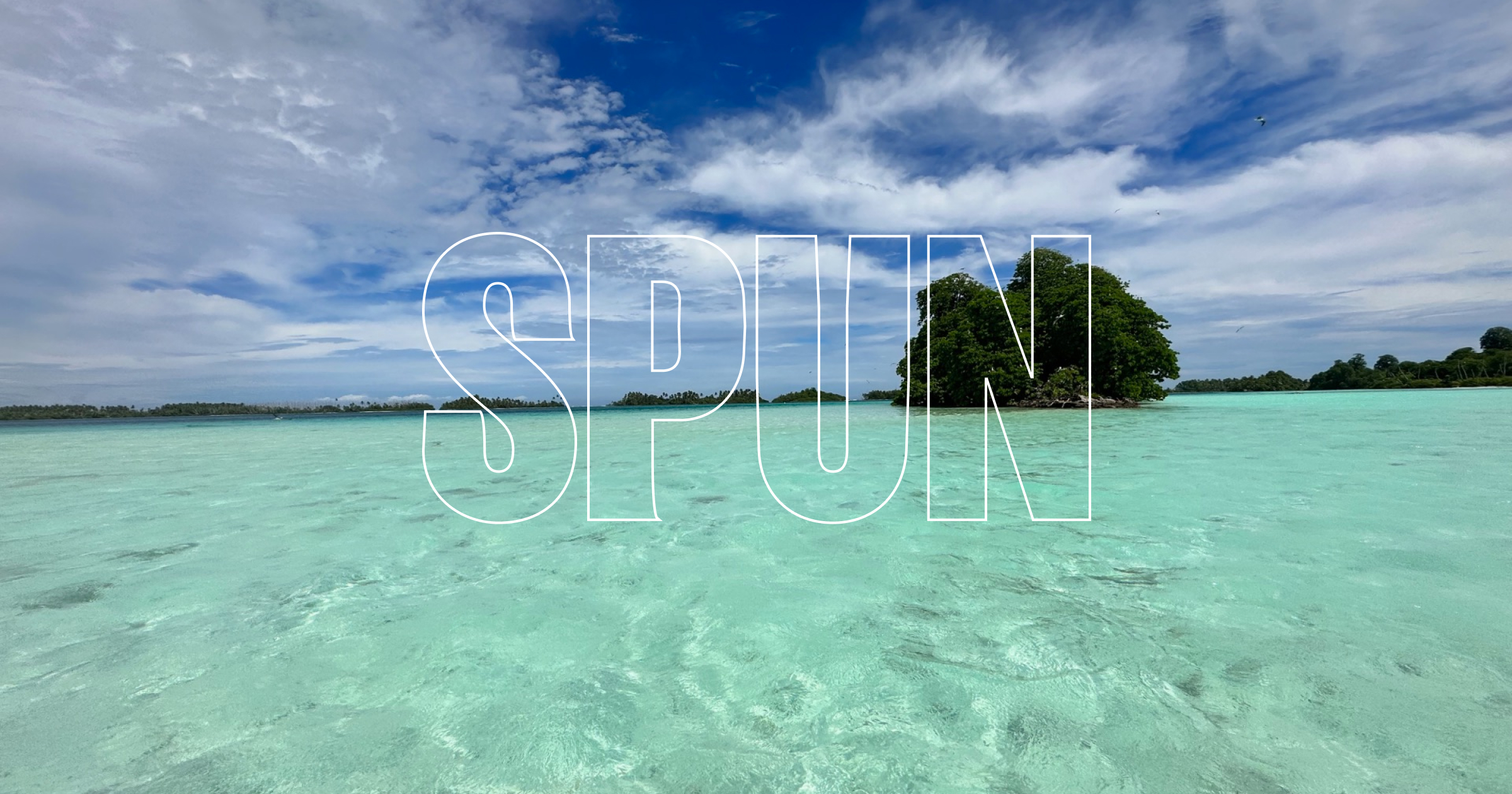
Palymra expedition report from SPUN.
https://aneeshsathe.com/the-viscous-frontier/
In May 1976 a Satawalese master navigator named Mau Piailug stood on the deck of a double-hulled Polynesian canoe in Honolua Bay, Maui, and prepared to sail to Tahiti. Sans compass, chronometer, and chart. The canoe was Hōkūleʻa, a replica of the voyaging craft that had carried Polynesians across the Pacific a thousand years earlier. Over the next thirty-four days Piailug would navigate her about two thousand three hundred nautical miles south-southeast to Papeete using the rising and setting positions of stars, the shape of ocean swells refracted off islands beyond the horizon, the colour of the water at dusk, and the behaviour of terns returning to land at evening.
Chronology and ecology of early islanders in the Philippines: The Mindoro Archaeology Project
The investigation and excavation of caves and rockshelters located at the southern end of Occidental Mindoro produced significant artefacts, data, and information related to the initial arrival and colonization of the Philippine archipelago by anatomically modern humans. The sites provided several indications for the increasing adaptation to maritime environments and delivered evidence for their behavioural and technological complexity. Mindoro lies along a direct route to reach the main islands of the Philippines coming from the Asian mainland via Borneo and Palawan. Since 2010, surveys conducted in the karstic regions of Ilin Island and Sta. Teresa, Magsaysay have mapped and explored over 40 caves and rockshelters. Particularly the sites of Bubog 1, Bubog 2, Cansubong 2 Cave, and Bilat Cave, have delivered cultural and biological materials that chronicle human habitation and adaptation to maritime and coastal environments over a period of 35–40,000 years. Early islanders in the region intensively foraged for molluscs and other marine invertebrates along the coast, employed different techniques to catch a variety of reef and pelagic fish as well as terrestrial animals, and were embedded in maritime networks with access to transfer routes, through which technology, information, and ideologies were disseminated over long distances and across Island Southeast Asia (ISEA) and possibly also reaching the Southeast Asian mainland. The results of the archaeological research in Mindoro contribute to our understanding of the processes of human island adaptation, complement ongoing research on the peopling of Southeast Asia, and enhance current knowledge of prehistoric subsistence strategies across the region.
The ASEAN National Flowers
From Brunei to Viet Nam, explore the official National Flowers of the SEAblings!
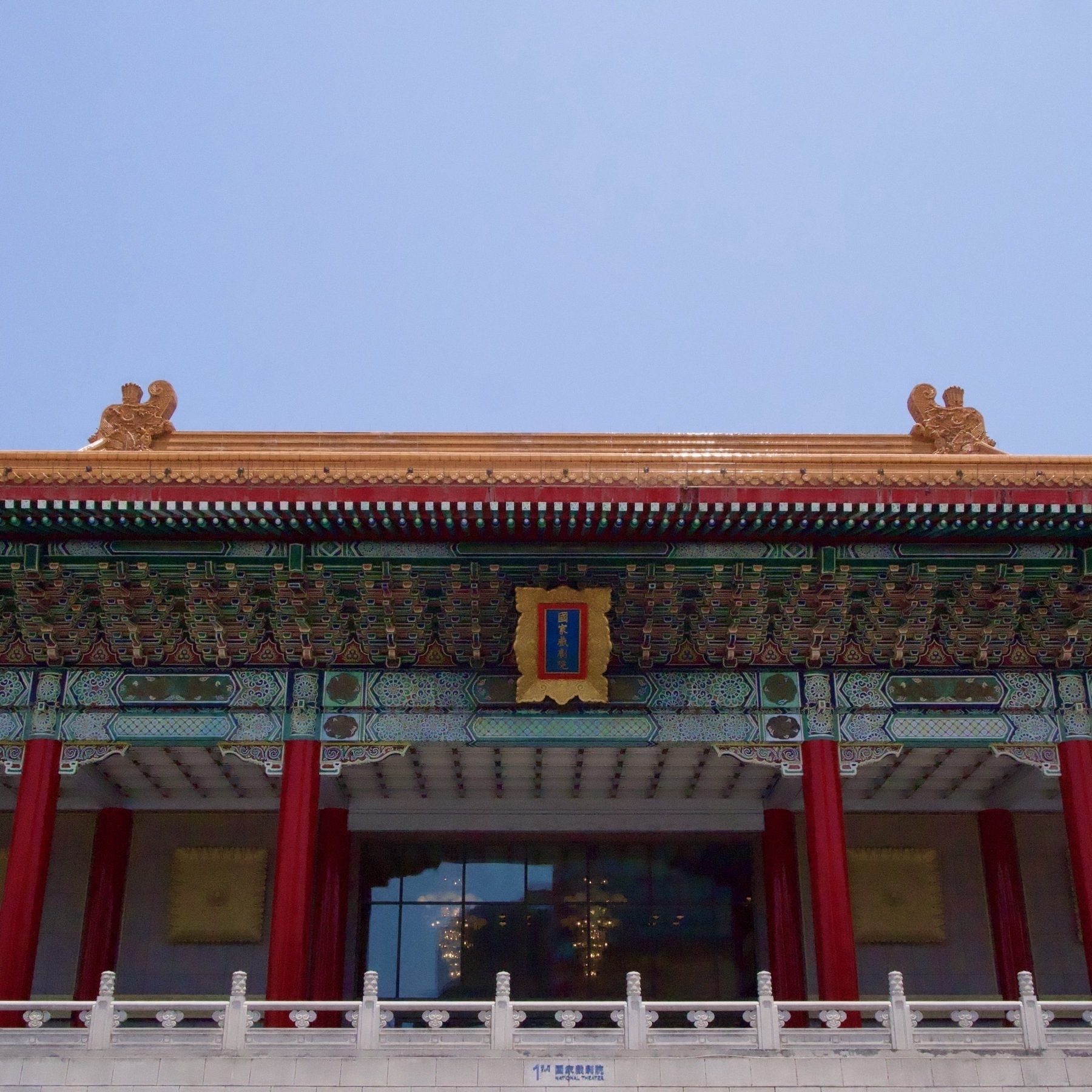
Taiwan Trip Report pt 3: Taipei
This post is part of a series. See the introduction here → Despite being the beginning of May Taipei was very warm. The sun …
The Corals That Shouldn’t Exist - bioGraphic
Beneath Miami’s skyscrapers, a colony of corals defies expectations—and offers insight into other undersea urban ecosystems.

What's new? - Sri's leaflets
Launching at.new - a new way to create atproto records and share drafts
About Coral | Coral
We believe that AI will help create a better world, but only when we explore, learn, and build it together.


PFAS Sampling Rates in Microporous Polyethylene Tube Samplers
<p><strong>Dataset Description</strong></p> <p> This dataset contains PFAS water concentrations measured using grab samples and PFAS accumulated in microporous polyethylene tube (MPT) passive samplers across five field campaigns. These data were used to reevaluate PFAS sampling rates for MPT passive samplers. An overview of sampling sites and sources of temperature data used in the reevaluation is also provided. </p> <p> The five field campaigns are labeled according to principal investigator and field site: </p> <ul> <li><strong>CG_RI</strong>: Christine Gardiner, Narragansett Bay, Rhode Island</li> <li><strong>JS_DU</strong>: Jarod Snook, Duluth, Minnesota</li> <li><strong>JS_ME</strong>: Jarod Snook, Maine</li> <li><strong>MD_CC</strong>: Matthew Dunn, Cape Cod, Massachusetts</li> <li><strong>MD_WE</strong>: Matthew Dunn, Westerly, Rhode Island</li> </ul> <p> For each field campaign, a README file is included that provides the information necessary to locate, interpret, and reuse the associated data. For studies conducted by Jarod Snook, raw data files are provided directly. </p> <p> Cleaned and compiled datasets are provided as <em>grab_samples.csv</em>, containing data from grab samples, and <em>pe_tube.csv</em>, containing data from MPT deployments, grab samples, and re-evaluated sampling rates. </p> <p> Compound and water type specific PFAS sampling rates derived from averaged values and multiple fitting approaches (linear, inverse linear, and exponential) are provided alongside reference sampling rate data from Australia and Spain in <em>parameters_fresh_salt.csv</em> and <em>parameters_ground.csv</em>, respectively. </p>

With appreciation for to @werd.io's foundational work on identifying the archipelagos and @tessa.germnetwork.com -- whose recent Leaflets on the future of social media are quite inspiring!

Everyone Fled the Feed for the Group Chat.
inputs-outputs.leaflet.pub