


UnitedHealth executives pressured clinical staff to follow an algorithm to cut off patients’ rehab care, leading to coverage decisions that may violate Medicare regulations.
Preparing Physicians for the Clinical Algorithm Era
The U.S. government recently took steps to ensure that clinical decision support algorithms are safe for clinical use. The next and larger step will be teaching physicians how to use the algorithms ...

Preparing Physicians for the Clinical Algorithm Era
The U.S. government recently took steps to ensure that clinical decision support algorithms are safe for clinical use. The next and larger step will be teaching physicians how to use the algorithms ...
Medical Algorithms Are Failing Communities Of Color
Medical algorithms routinely make decisions about patients’ health care, yet they are rife with bias. Health equity must be built into the development and deployment of these health algorithms.
UnitedHealth uses AI model with 90% error rate to deny care, lawsuit alleges
For the largest health insurer in the US, AI's error rate is like a feature, not a bug.

Police Remove Diabetes Experts From Conference for Distributing Critique of Trump Administration
Several of those escorted out were scheduled to present at the American Diabetes Association conference this weekend.

Choose to Lose: Health Plan Choices from a Menu with Dominated Option*
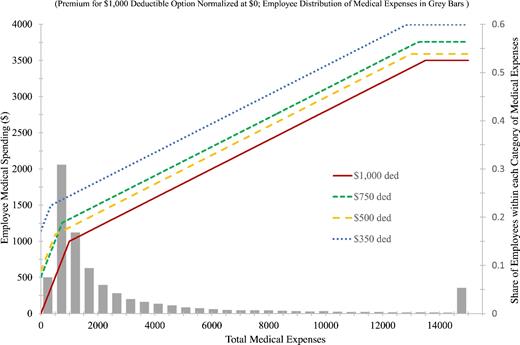
Abstract We examine the health plan choices that 23,894 employees at a U.S. firm made from a large menu of options that differed only in financial cost-sharing and premium. These decisions provide a clear test of the predictions of the standard economic model of insurance choice in the absence of choice frictions because plans were priced so that nearly every plan with a lower deductible was financially dominated by an otherwise identical plan with a high deductible. We document that the majority of employees chose dominated plans, which resulted in excess spending equivalent to 24% of chosen plan premiums. Low-income employees were significantly more likely to choose dominated plans, and most employees did not switch into more financially efficient plans in the subsequent year. We show that the choice of dominated plans cannot be rationalized by standard risk preference or any expectations about health risk. Testing alternative explanations with a series of hypothetical-choice experiments, we find that the popularity of dominated plans was not primarily driven by the size and complexity of the plan menu, nor informed preferences for avoiding high deductibles, but by employees’ lack of understanding of health insurance. Our findings challenge the standard practice of inferring risk preferences from insurance choices and raise doubts about the welfare benefits of health reforms that expand consumer choice.
Why Doctors Hate Their Computers
Digitization promises to make medical care easier and more efficient. But are screens coming between doctors and patients?

The Medium is the Message: How Non-Clinical Information Shapes Clinical Decisions in LLMs | Proceedings of the 2025 ACM Conference on Fairness, Accountability, and Transparency
There has been a growing interest in the HCI community to study Health, with particular focus in understanding healthcare practices and designing technologies to support and to enhance these practices. A majority of current health studies in HCI have ...

Can Consumers Make Affordable Care Affordable? The Value of Choice Architecture
Tens of millions of people are currently choosing health coverage on a state or federal health insurance exchange as part of the Patient Protection and Affordable Care Act. We examine how well people make these choices, how well they think they do, and what can be done to improve these choices. We conducted 6 experiments asking people to choose the most cost-effective policy using websites modeled on current exchanges. Our results suggest there is significant room for improvement. Without interventions, respondents perform at near chance levels and show a significant bias, overweighting out-of-pocket expenses and deductibles. Financial incentives do not improve performance, and decision-makers do not realize that they are performing poorly. However, performance can be improved quite markedly by providing calculation aids, and by choosing a “smart” default. Implementing these psychologically based principles could save purchasers of policies and taxpayers approximately 10 billion dollars every year.
How AI For Women’s Health Is Being Built Differently
Healthcare AI mirrors decades of gender bias. Women-led startups are rebuilding it to reduce misdiagnosis, dismissal, and fragmented care.

Kaiser nurses say surveillance of them is undermining healthcare – The Markup
Call center nurses at Kaiser Permanente said workplace surveillance tools and AI prioritize speed and cost savings over quality and safety.

The Oregon Health Insurance Experiment: Evidence from the First Year*
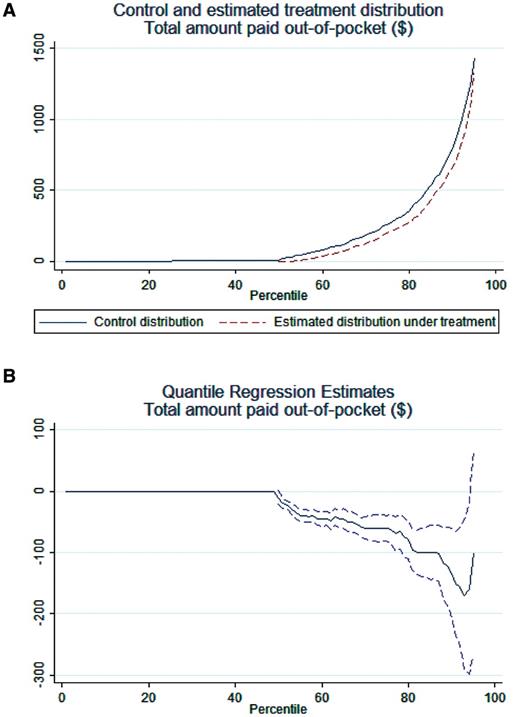
Abstract In 2008, a group of uninsured low-income adults in Oregon was selected by lottery to be given the chance to apply for Medicaid. This lottery provides an opportunity to gauge the effects of expanding access to public health insurance on the health care use, financial strain, and health of low-income adults using a randomized controlled design. In the year after random assignment, the treatment group selected by the lottery was about 25 percentage points more likely to have insurance than the control group that was not selected. We find that in this first year, the treatment group had substantively and statistically significantly higher health care utilization (including primary and preventive care as well as hospitalizations), lower out-of-pocket medical expenditures and medical debt (including fewer bills sent to collection), and better self-reported physical and mental health than the control group.
Prompting My Way Through Cancer
ChatGPT didn’t replace my care team, but it did make me a better patient.
Washington Post to cut one-third of all staff
The Washington Post cuts one-third of all staff across the company including "substantial newsroom reductions".

What if Doctors Stopped Prescribing Weight Loss?
Focusing on body size isn’t making people healthier. Some clinicians are trying a different approach

Doctor forced to apologise after AI makes 'scary' error about illegal drugs
Artificial Intelligence is listening to many people's medical appointments, but it is not always hearing things correctly.