


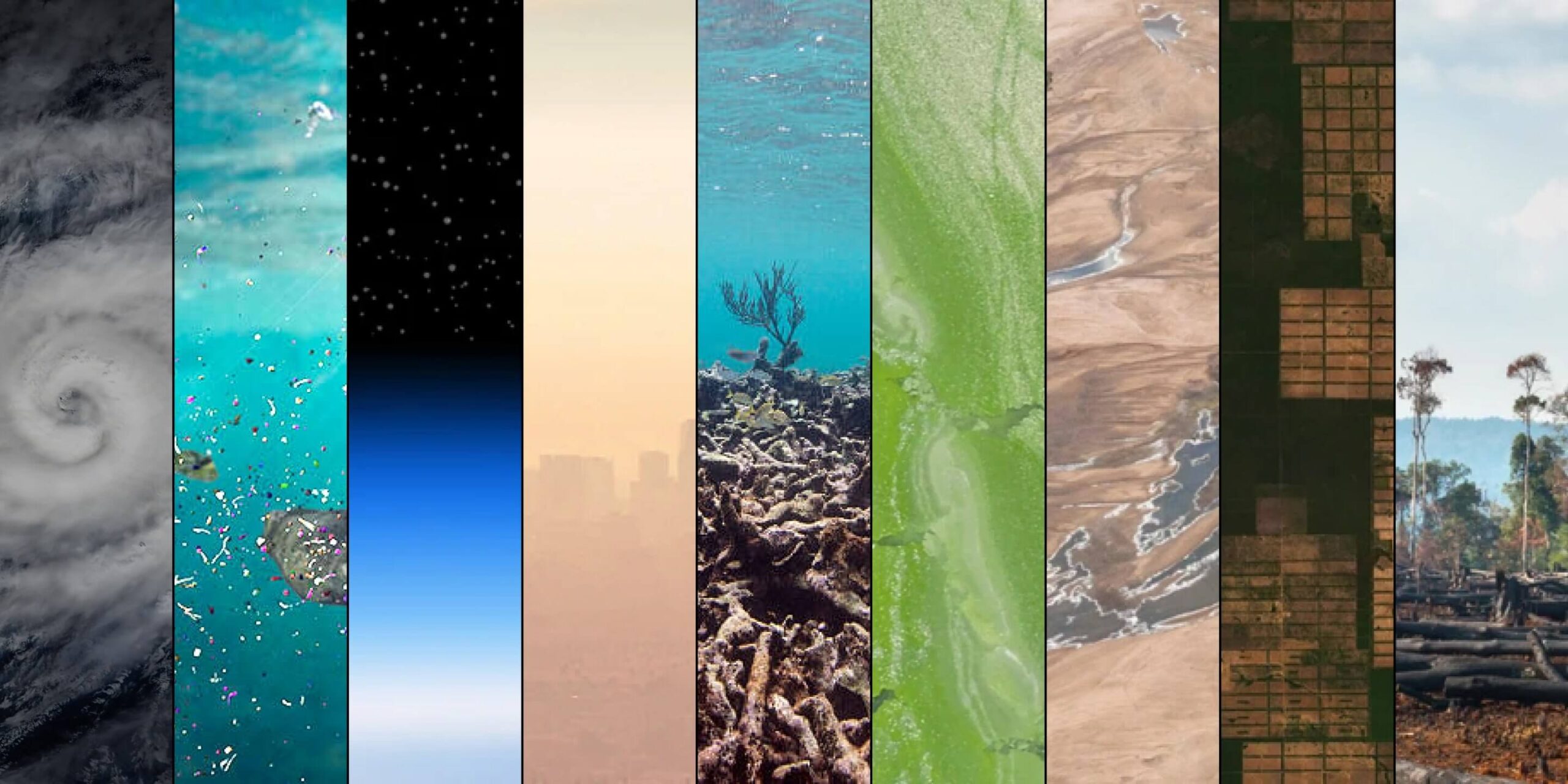
The planetary boundaries framework highlights the rising risks from human pressure on nine critical global processes that regulate the stability and resilience of the Earth
Johan Rockström: “Planetary Boundaries: Exceeding Earth’s Safe Limits” - The Great Simplification
Show Summary While the mainstream conversation about our planet’s future is heavily dominated by the topic of climate change, there are other systems

Planetary Boundaries - Planetary Health Check
We have breached 7 out of 9 Planetary Boundaries. The Planetary Health Check 2025 makes it clear: We have to act now.
Tipping Points - Planetary Health Check
Fragile regional systems with global consequences.

Manage derailment risks to avoid Hothouse Earth
The risk of a ‘Hothouse Earth’ trajectory has become increasingly prominent in debates about Earth system stability and climate overshoot. Existing analyses primarily focus on biophysical feedbacks that may amplify warming beyond direct anthropogenic forcing. We argue the concept has not previously incorporated how social destabilisation lowers the effective threshold at which biophysical tipping dynamics become self-sustaining, independently of further anthropogenic forcing and so undermines the capacity for planetary stewardship. We define ‘derailment risk’ as the possibility that escalating Earth system disruption weakens the social, political, and economic conditions required to sustain mitigation, adaptation, and ecological restoration. Such risks emerge when climate impacts contribute to a wide range of challenges, including debt crises, institutional erosion, political fragmentation, supply-chain instability, and declining public support for environmental action. These reinforcing feedbacks may reduce humanity’s capacity to respond even before biophysical tipping thresholds are crossed. We therefore extend the Hothouse Earth framework by incorporating social dynamics into the Earth system stability landscape. We propose a three-stage framework for assessing and managing derailment risks: conceptual mapping of socio-biophysical feedbacks; anticipatory resilience-building interventions; responsive governance strategies for periods of escalating instability. We conclude that planetary stewardship should prioritise maintaining and expanding collective agency under worsening Earth system stress.
Planetary Health Check
We have breached 7 out of 9 Planetary Boundaries.The Planetary Health Check 2026 makes it clear: We have to act now.

To survive the Chaoscene, we will need resilient communities | Aeon Essays
The climate crisis is here. In order to thrive in these dangerous and precarious times, we must build resilient communities
Interdependent Thoughts – by Ton Zijlstra
Still, many questions have global aspects. Our information networks, our trade routes, our dependencies are truly global. Because of it many of our issues, including climate emergencies, are global in both their roots and consequences. We all suffer from small earth syndrome these days, as I phrased it in 2010 at the SHiFT Conference, where everything anyone of us does reverberates around the world because we are continuously bumping into real global limits, Club of Rome style.
Earth on verge of five catastrophic climate tipping points, scientists warn
Humanity faces ‘devastating domino effects’ including mass displacement and financial ruin as planet warms

Planetary Lexicon: Key Terms in Earth System Science
Define 90+ terms in planetary science — from Anthropocene and tipping points to planetary boundaries and the ecosphere.

Whose growth in whose planetary boundaries? Decolonising planetary justice in the Anthropocene
Abstract This critical analysis examines the geopolitics of planetary environmental injustice and the imperative for systems change to address the intertwined crises of climate breakdown and unsustainable economic growth. Climate breakdown has heightened attention to uneven anthropogenic use and abuse of the planet's biosphere and common pool resources. Recent arguments by climate scholars suggest that various planetary boundaries have already been breached, resulting in dramatic and harmful socio‐ecological consequences. These trends raise crucial questions of equity and justice, especially concerning responsibilities and impacts. By centring Global South perspectives, prevailing ideologies promoting hyperconsumption, overproduction and waste are interrogated. The incommensurability of socioecological justice with ongoing unsustainable extractive and exploitative economic growth paradigms, which contribute to further transgressions of planetary boundaries, underscore the urgency of decolonising underlying colonial‐capitalist ideologies and practices. This entails a fundamental reformulation of paradigms to envision a more just and sustainable future, one that dismantles oppressive systems and advances justice‐oriented praxis. , Short Abstract The geopolitics of planetary environmental injustice demonstrates the need for systems change to address climate breakdown and unsustainable economic growth. By centring Global South perspectives, prevailing ideologies promoting hyperconsumption, overproduction and waste are interrogated, highlighting the incompatibility of socioecological justice with extractive and exploitative growth paradigms. The breaches of planetary boundaries and their harmful socio‐ecological consequences further underscore the urgency of decolonising colonial‐capitalist ideologies and practices, necessitating the fundamental reformulation of paradigms to envision a more just and sustainable future that dismantles oppressive systems and fosters justice‐oriented praxis.

Localized Resilience → Area → Sustainability
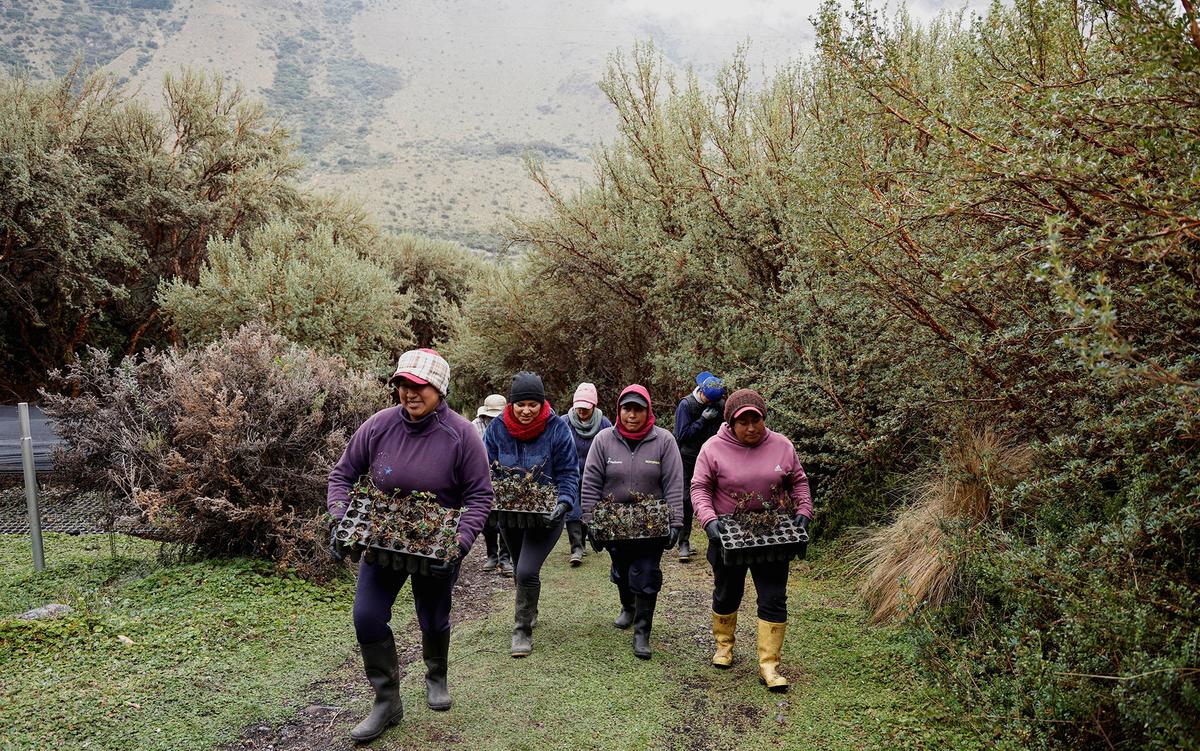
Definition → Localized Resilience refers to the capacity of a specific community or geographically defined system to anticipate, absorb, adapt to, and recover from disruptive shocks and stresses, such as climate events or economic downturns. This quality is characterized by strong internal social cohesion, diversified local economies, and decentralized resource systems, like local food production or microgrids.

Social tipping dynamics for stabilizing Earth’s climate by 2050 | PNAS
Safely achieving the goals of the Paris Climate Agreement requires a worldwide transformation to carbon-neutral societies within the next 30 y. Acc...

The Origins Of <br>‘Planetary Realism’ And <br>‘Whole Earth’ Thinking | NOEMA
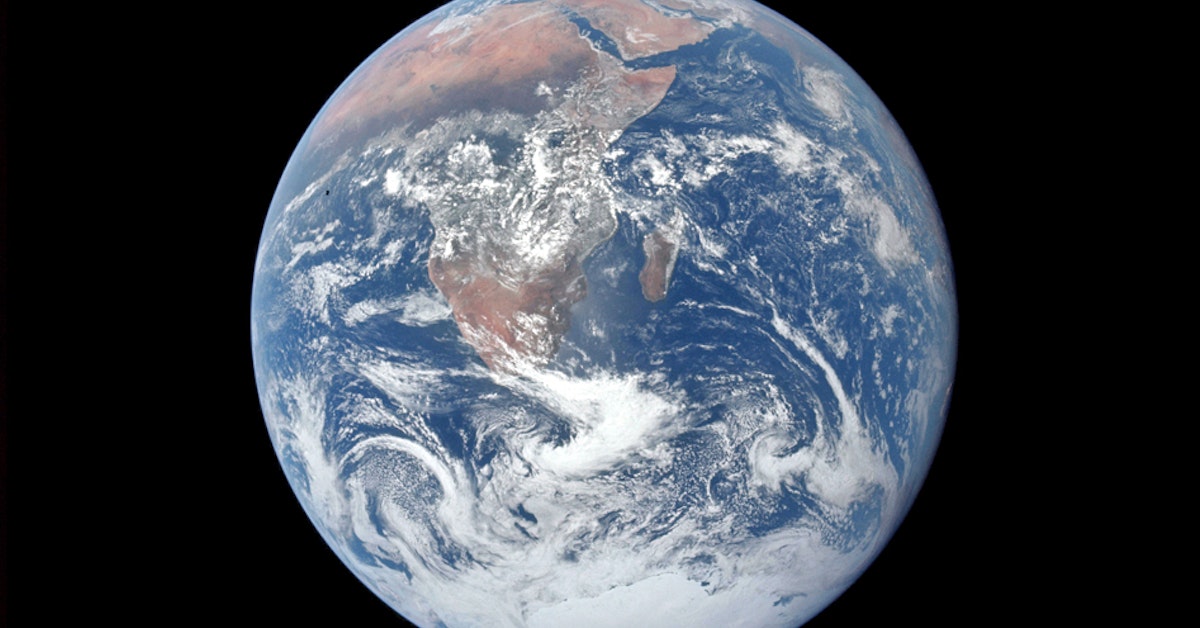
There is no escaping an interconnected world.
Deep Adaptation opens up a necessary conversation about the breakdown of civilisation
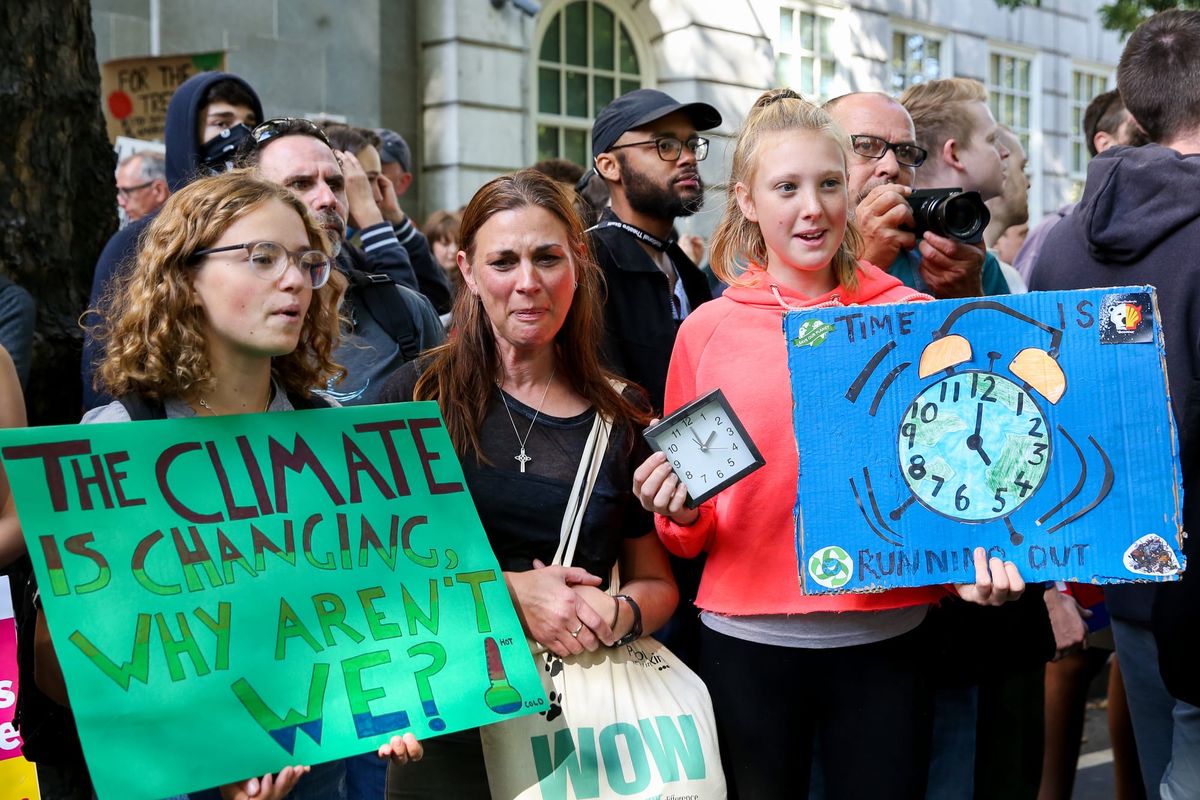
Many scientists say that societal collapse is now a likely outcome. We must prepare for this possibility and not deny its plausibility.
John Vervaeke: “The Meaning Crisis: Wisdom, Purpose, and the Search for Coherence” - The Great Simplification
The crises that our world is facing seem to be constantly growing, leading to enormous and devastating systemic effects across the globe.
I've been interested in understanding the distribution of PDSes and general 'ecosystem resilience' for a little bit now, and inspired by @billwpierce.co's talk at #ATmosphereConf I made a dashboard I hope can add to the conversation link: atproto.barn.city (served by my macmini so bear with me)
