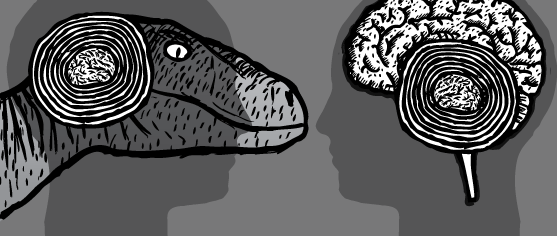
A reptile brain sits deep within us. How much of our behaviour comes from primal instinct? 20 page comic on supernormal stimuli and 'reptile brains'.
The sentient cell: the cellular foundations of consciousness
"All species, extant and extinct, from the simplest unicellular prokaryotes to humans, have an existential consciousness. Without sentience, the first cells that emerged some 4 billion years ago would have been evolutionary dead-ends, unable to survive in the chaotic, dangerous environment in which life first appeared and evolved. In this book, Arthur Reber's theory, the Cellular Basis of Consciousness (CBC), is outlined and distinguished from those models that argue that minds could be instantiated on artificial entities and those that maintain consciousness requires a nervous system. The CBC framework takes a novel approach to classic topics such as the origin-of-life, philosophy of mind, the role of genes, the impact of cognition, and how biological information is processed by all species. It also calls for a rethinking of a variety of issues including the moral implications of the sentient capacities of all species, how welfare concerns need to be expanded beyond where they currently are, and critically, how all life is intertwined in a coordinated cognitive ecology. The Sentient Cell explores this revolutionary model, which updates the standard neo-Darwinian framework within which current approaches operate and examines the underlying biomolecular features that are the likely candidates for the "invention" of consciousness and outline their role in cellular life." --


Superheros are Reactionary | The Paper Pilot
The Paper Pilot's digital garden of thoughts on philosophy, politics, and sociology
Rethinking Norm Psychology
Norms permeate human life. Most of people’s activities can be characterized by rules about what is appropriate, allowed, required, or forbidden—rules that are crucial in making people hyper-cooperative animals. In this article, I examine the current cognitive-evolutionary account of “norm psychology” and propose an alternative that is better supported by evidence and better placed to promote interdisciplinary dialogue. The incumbent theory focuses on rules and claims that humans genetically inherit cognitive and motivational mechanisms specialized for processing these rules. The cultural-evolutionary alternative defines normativity in relation to behavior—compliance, enforcement, and commentary—and suggests that it depends on implicit and explicit processes. The implicit processes are genetically inherited and domain-general; rather than being specialized for normativity, they do many jobs in many species. The explicit processes are culturally inherited and domain-specific; they are constructed from mentalizing and reasoning by social interaction in childhood. The cultural-evolutionary, or “cognitive gadget,” perspective suggests that people alive today—parents, educators, elders, politicians, lawyers—have more responsibility for sustaining normativity than the nativist view implies. People’s actions not only shape and transmit the rules, but they also create in each new generation mental processes that can grasp the rules and put them into action.


Ramin Saadat, Reasoning: From Biological Foundations to the Hidden Thread of Shared Understanding - PhilArchive
This paper investigates the nature and origins of human reasoning by synthesizing insights from classical philosophy, evolutionary biology, and contemporary neuroscience. Moving beyond the Aristotelian definition of zoon logon echon, which ...

Thinking through other minds: A variational approach to cognition and culture
The processes underwriting the acquisition of culture remain unclear. How are shared habits, norms, and expectations learned and maintained with precision and reliability across large-scale sociocultural ensembles? Is there a unifying account of the mechanisms involved in the acquisition of culture? Notions such as “shared expectations,” the “selective patterning of attention and behaviour,” “cultural evolution,” “cultural inheritance,” and “implicit learning” are the main candidates to underpin a unifying account of cognition and the acquisition of culture; however, their interactions require greater specification and clarification. In this article, we integrate these candidates using the variational (free-energy) approach to human cognition and culture in theoretical neuroscience. We describe the construction by humans of social niches that afford epistemic resources called cultural affordances. We argue that human agents learn the shared habits, norms, and expectations of their culture through immersive participation in patterned cultural practices that selectively pattern attention and behaviour. We call this process “thinking through other minds” (TTOM) – in effect, the process of inferring other agents’ expectations about the world and how to behave in social context. We argue that for humans, information from and about other people's expectations constitutes the primary domain of statistical regularities that humans leverage to predict and organize behaviour. The integrative model we offer has implications that can advance theories of cognition, enculturation, adaptation, and psychopathology. Crucially, this formal (variational) treatment seeks to resolve key debates in current cognitive science, such as the distinction between internalist and externalist accounts of theory of mind abilities and the more fundamental distinction between dynamical and representational accounts of enactivism.
How we learn social norms: a three-stage model for social norm learning
As social animals, humans are unique to make the world function well by developing, maintaining, and enforcing social norms. As a prerequisite among these norm-related processes, learning social norms can act as a basis that helps us quickly coordinate with others, which is beneficial to social inclusion when people enter into a new environment or experience certain sociocultural changes. Given the positive effects of learning social norms on social order and sociocultural adaptability in daily life, there is an urgent need to understand the underlying mechanisms of social norm learning. In this article, we review a set of works regarding social norms and highlight the specificity of social norm learning. We then propose an integrated model of social norm learning containing three stages, i.e., pre-learning, reinforcement learning, and internalization, map a potential brain network in processing social norm learning, and further discuss the potential influencing factors that modulate social norm learning. Finally, we outline a couple of future directions along this line, including theoretical (i.e., societal and individual differences in social norm learning), methodological (i.e., longitudinal research, experimental methods, neuroimaging studies), and practical issues.

Donald Hoffman: Reality is an Illusion - How Evolution Hid the Truth | Lex Fridman Podcast #293
Lectures on Perception: An Ecological Perspective
Lectures on Perception: An Ecological Perspective addresses the generic principles by which each and every kind of life form—from single celled organisms (e.g., difflugia) to multi-celled organisms (e.g., primates)—perceives the circumstances of their living so that they can behave adaptively. It focuses on the fundamental ability that relates each and every organism to its surroundings, namely, the ability to perceive things in the sense of how to get about among them and what to do, or not

Headlong: a microharness for persistent agents
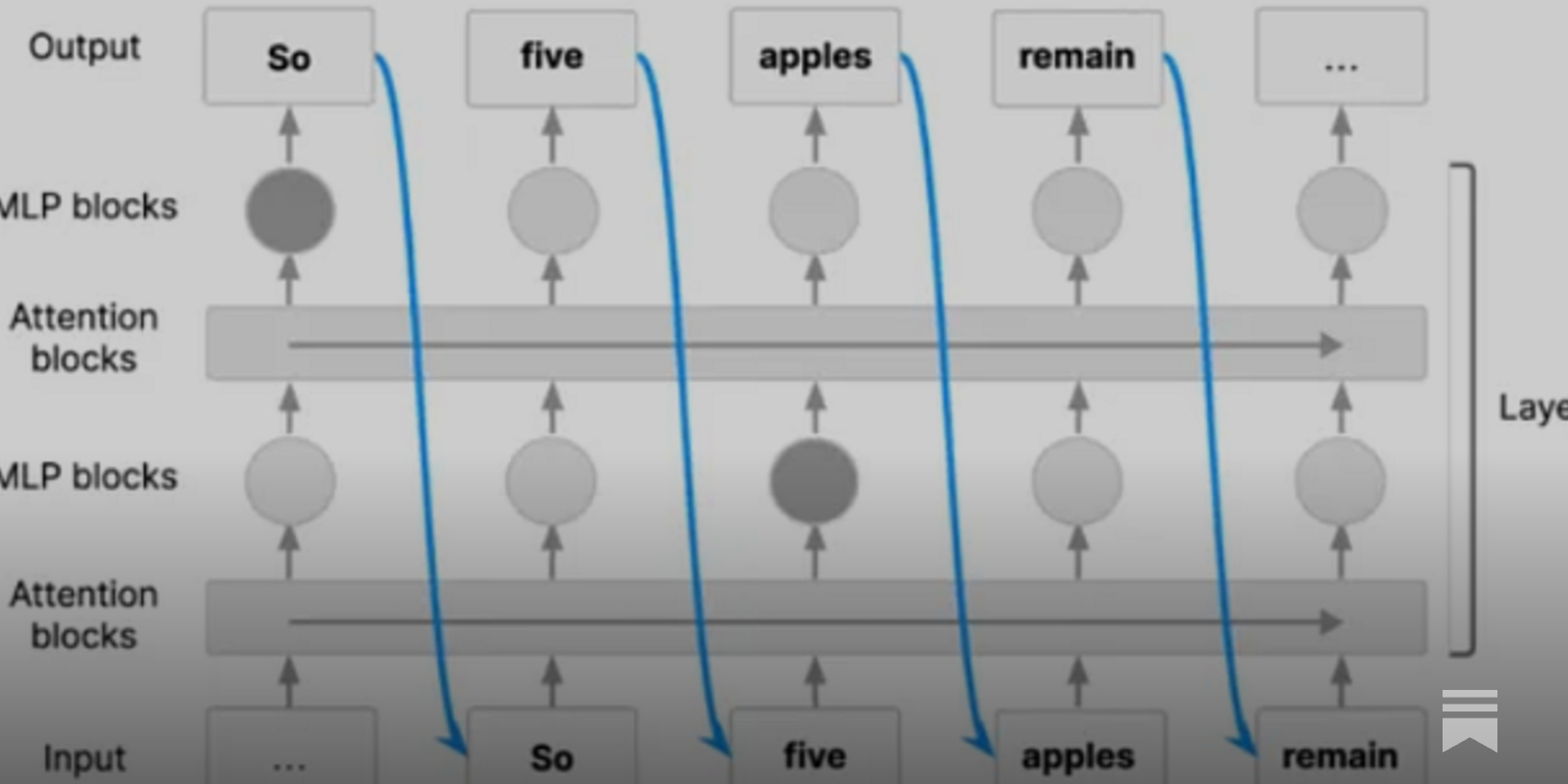
Self-guided agents that think continuously


Technological Approach to Mind Everywhere: An Experimentally-Grounded Framework for Understanding Diverse Bodies and Minds
Synthetic biology and bioengineering provide the opportunity to create novel embodied cognitive systems (otherwise known as minds) in a very wide variety of chimeric architectures combining evolved and designed material and software. These advances are disrupting familiar concepts in the philosophy of mind, and require new ways of thinking about and comparing truly diverse intelligences, whose composition and origin are not like any of the available natural model species. In this Perspective, I introduce TAME-Technological Approach to Mind Everywhere-a framework for understanding and manipulating cognition in unconventional substrates. TAME formalizes a non-binary (continuous), empirically-based approach to strongly embodied agency. TAME provides a natural way to think about animal sentience as an instance of collective intelligence of cell groups, arising from dynamics that manifest in similar ways in numerous other substrates. When applied to regenerating/developmental systems, TAME suggests a perspective on morphogenesis as an example of basal cognition. The deep symmetry between problem-solving in anatomical, physiological, transcriptional, and 3D (traditional behavioral) spaces drives specific hypotheses by which cognitive capacities can increase during evolution. An important medium exploited by evolution for joining active subunits into greater agents is developmental bioelectricity, implemented by pre-neural use of ion channels and gap junctions to scale up cell-level feedback loops into anatomical homeostasis. This architecture of multi-scale competency of biological systems has important implications for plasticity of bodies and minds, greatly potentiating evolvability. Considering classical and recent data from the perspectives of computational science, evolutionary biology, and basal cognition, reveals a rich research program with many implications for cognitive science, evolutionary biology, regenerative medicine, and artificial intelligence.

Principles of Minimal Cognition: Casting Cognition as Sensorimotor Coordination
Within the cognitive sciences, cognition tends to be interpreted from an anthropocentric perspective, involving a stringent set of human capabilities. Instead, we suggest that cognition is better explicated as a much more general biological phenomenon, allowing the lower bound of cognition to extend much further down the phylogenetic scale. We argue that elementary forms of cognition can already be witnessed in prokaryotes possessing a functional sensorimotor analogue of the nervous system. Building on a case-study of the Escherichia coli bacterium and its sensorimotor system, the TCST-system, we home in on the characteristics of minimal cognition, and distinguish it from more basic forms of ontogenetic adaptation. In our view, minimal cognition requires an embodiment consisting of a sensorimotor coupling mechanism that subsumes an autopoietic organization; this forms the basis of the growing consensus that the core of cognition revolves around sensorimotor coupling. We discuss the relevance of our interpretation of minimal cognition for the study of cognition in general
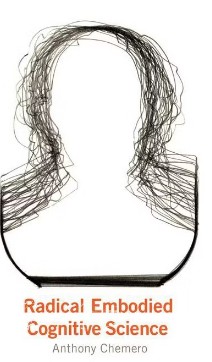
562 – Ecological Cognition III: Radical Embodied Cognitive Science (part 1)
562 Continuing the journey in understanding the Ecological approach to cognition by looking at Tony Chemero’s book: Radical Embodied Cognitive Science. Conceptualizing cognition in terms of agent-environment dynamics instead of computation and representation. What is RECS, and where did these ideas come from?Download link