


Transforming society together

Fab City Prototypes — Designing and making for the real world
This article is the extract of the proposal submitted by the Fab City global initiative to the European Commission call for Circular…
Circling Back
Reflections on Sarafu, xDai, Gnosis, Circles UBI, Circles v2, and a shared movement toward community-governed commons.

Design principles for long-lived circular organization: An Ostromian perspective
Circular organizational templates such as holacracy and sociocracy have gained popularity. In such organizations, all members have rights to participate in decision-making. Which factors enable such organizations to sustain their circular form? We investigate 18 highly diverse circular organizations to answer this question. Our findings show that Elinor Ostrom’s design principles for avoiding the tragedy of the commons may also explain circular organizations’ longevity. With regard to their relevance, we sort these principles into three groups: indispensable, queasy, and quite unproblematic principles. Our main theoretical contribution is to show that circular organizations can be understood as commons, and thus to make research on the governance of commons fruitful for the design of circular organizations. We show that implementing circular forms has to mind especially the queasy design principles of monitoring, graduated sanctions, conflict resolution mechanisms, and balancing individual contributions and rewards.
Commoning as a Transformative Social Paradigm | David Bollier
Every so often I am invited to write a piece that in effect answers the question, “Why the commons?” I invariably find new answers to that question each time that I re-engage with it. My latest attempt is an essay, “Commoning as a Transformative Social Paradigm,” which I wrote for the Next System Project as part of its series of proposals for systemic alternatives.
Computational Public Space
Concentric Groups, Knowledge Bridges and Epistemic Communities
vs Elitism, Celebrity and Oligarchy This article is part of a series: ‘Stigmergy: Systems of Mass Collaboration’. Note: Concentric circles relate to sound amplification – the voic…


Flânerie without Politics: The Middle-Class Fetishization of the City
The middle-class spectacle of urban decay.

Building Roundabout: A Pro-Social Platform for Local Communities
A conversation with the team behind New_ Public's Roundabout.
.png)
Third Places as Mini-Cosmopolitans - Surfing Modernity
What happens to identity in times of movement and change? In my second post, I proposed the importance of cultivating a third space that is not dependent on…
A City in Common: A Framework to Orchestrate Large-scale Citizen Engagement around Urban Issues
As part of the Digital Library's transition to Open Access, new features for researchers are available in the Premium Edition. Click here to learn more.

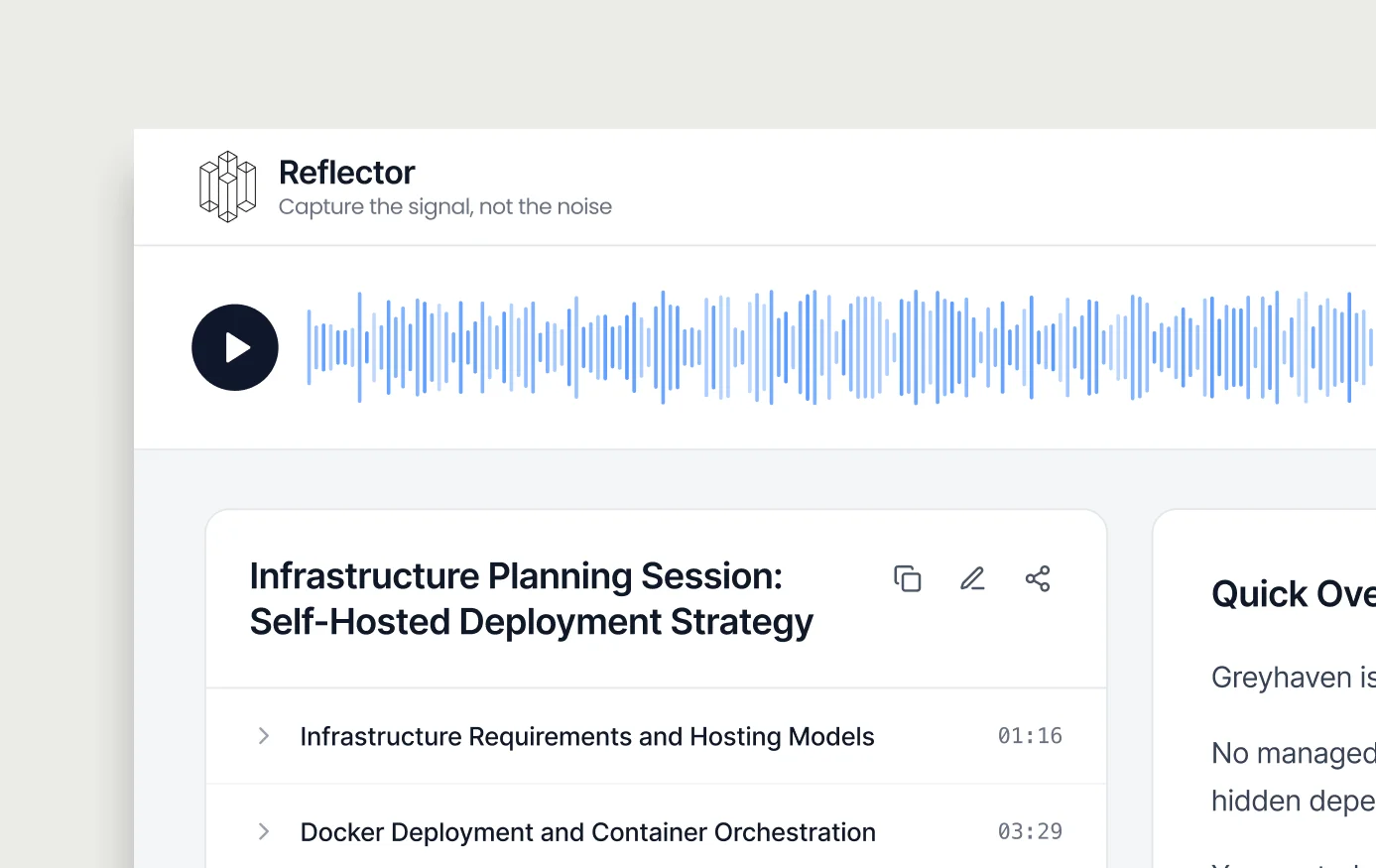
Reflector: Infrastructure for Meetings, by Greyhaven
Most organizations run on meetings. Strategy gets debated there. Decisions get made there. Context lives there. And yet...
A City Is Not a Computer: Other Urban Intelligences
<strong>A bold reassessment of "smart cities" that reveals what is lost when we conceive of our urban spaces as computers</strong> Computational models of urbanism—smart cities that use data-driven planning and algorithmic administration—promise to deliver new urban efficiencies and conveniences. Yet these models limit our understanding of what we can know about a city. <i>A City Is Not a Computer</i> reveals how cities encompass myriad forms of local and indigenous intelligences and knowledge institutions, arguing that these resources are a vital supplement and corrective to increasingly prevalent algorithmic models. Shannon Mattern begins by examining the ethical and ontological implications of urban technologies and computational models, discussing how they shape and in many cases profoundly limit our engagement with cities. She looks at the methods and underlying assumptions of data-driven urbanism, and demonstrates how the "city-as-computer" metaphor, which undergirds much of today's urban policy and design, reduces place-based knowledge to information processing. Mattern then imagines how we might sustain institutions and infrastructures that constitute more diverse, open, inclusive urban forms. She shows how the public library functions as a steward of urban intelligence, and describes the scales of upkeep needed to sustain a city's many moving parts, from spinning hard drives to bridge repairs. Incorporating insights from urban studies, data science, and media and information studies, <i>A City Is Not a Computer</i> offers a visionary new approach to urban planning and design.