Links are to the VSM basic test and the VSM advanced test.Aim of the guide: This VSM guide serves as a quick and practical resource for understanding and applying the Viable System Model in organizational analysis and design. It should help to spread the powerful knowledge of management cybernetics.
The Fractal Organisation Manual: How to diagnose & design organisations using the Viable System Model | SCiO - Systems and Complexity in Organisation
RRP: £12.99; Paperback: 192 pp; Publisher: SCiO; ISBN 979-8250847018
The Fractal Organisation Manual: How to diagnose & design organisations using the Viable System Model
In a world of increasing turbulence, the need has never been greater for knowing how to build systems capable of maintaining their viability when all around them is change. This is a follow up to the Fractal Organization published by Wiley almost twenty years ago. It provides practical guidance ...

Complexity and Strategy | HackerNoon
I struggled with how to think about complexity through much of my career, especially during the ten years I spent leading Office development. Modeling complexity impacted how we planned major releases, our technical strategy as we moved to new platforms, how we thought about the impact of new technologies, how we competed with Google Apps, how we thought about open source and throughout “frank and open” discussions with Bill Gates on our long term technical strategy for building the Office applications.
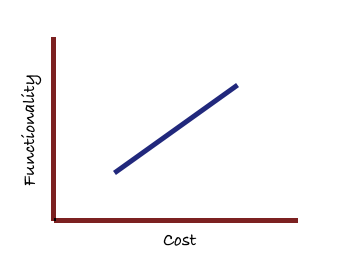
Test-Driven Approaches to Software Engineering with Large Language...
Tests increasingly participate in the decisions made by large language models and software engineering agents. They specify intended behavior, guide program construction and repair, select...

Dynamical Systems Group | Complex Systems, Engineered
Systems engineering firm that operationalizes emerging technology for high-reliability organizations. Scientific Computing, MBSE, Systems Integration.
Why embracing complexity is the real challenge in software today
In the midst of industry discussions about productivity and automation, it’s all too easy to overlook the importance of properly reckoning with complexity.

Twenty | #1 open source CRM
The #1 open source CRM for modern teams. Modular, scalable, and built to fit your business.
A distributed systems reliability glossary
A list of key concepts for building and testing reliable distributed systems, with basic definitions and deep references.

Habits of High-Functioning Teams
I often struggle to explain what it means to be part of a high-functioning software team. Sure, there are mountains of literature, and an entire genre of LinkedIn thought leadership that professes all kinds of guidelines and heuristics about what makes teams work, but in my experience, it’s hard to internalize these ideas and follow someone else’s model if you’ve never seen what good looks like.
Reporting on the Development of a Web-Based Prototype Dashboard for Construction Design Managers, Achieved through Design Science Research Methodology (DSRM)
Construction Design Management (DM) involves the coordination of design processes and activities to ensure quality project design, yet it involves many challenges. This study reports on a collaborative Knowledge Transfer Partnership (KTP) project with a Case Study Organization (CSO) that tackled several issues faced by construction design managers. Employing a design science research methodology (DSRM), qualitative analysis of semi-structured interviews with purposefully identified design managers uncovered real-world concerns around design co-ordination and performance monitoring. To address these concerns, a web-based design management prototype dashboard was developed using typical project data to aid in the management of design coordination, task prioritization, and reporting functionalities. The web-based Design Management prototype dashboard enhances design management productivity in construction firms by monitoring design production, assessing designer performance trends, and focusing on Technical Queries (TQs) and Requests for Information (RFIs). Digitalizing selected design management processes improves efficiency and productivity. The visual reporting of the dashboard enables design production monitoring at project and portfolio levels, assesses trends in designer performance, and maintains focus on TQs and RFIs. Demonstrating how web-based Design Management dashboards can enhance productivity, this study emphasizes practical solutions derived from employing a design science research methodology. The development and application of the web-based dashboard contribute to the growing evidence that employing design science research methodology in construction can yield tangible solutions to address real-world construction concerns.

Enosis Solutions - Software Development and Testing Services
We design, build, test, modernize, and scale software across the entire product lifecycle, combining deep technical expertise with an AI-accelerated build process.

The Fractal Organization
The world of management is in crisis - the old remedies no longer work and organizations are failing at an increasing rate. Although many talk of 'joined up thinking', few offer practical guidance on how to achieve this in organizations. <b><i>The Fractal Organization</i></b> sets down the practical implications of a well tested systemic approach to building organizations that are capable of surviving and flourishing in these turbulent times. <p>"An excellent read…Many organizations fail at the mercy of their own ignorance. The author has done an excellent job in making ‘the science of effective organization’ accessible to management, providing them with a new knowledge to deal with the uncertainties that the markets place upon them."<br /><b>Stephen J. Brewis, Business Architect, British Telecom</b></p> <p>"...one of the most interesting, thorough and rigorous guides to management that I have ever read, … introduces new insights in every chapter… carries a credibility which acts as a counterbalance to the sometimes difficult message which he conveys which is that a lot of mainstream management practice is at best ineffective and at worst downright destructive. I would recommend this book to anyone interested in management or systems thinking."<br /><b>Penny Marrington</b>, <b>Course Chair, Systems Group, Open University</b></p> <p>"In my opinion this book manages to present sound academic theory that is relevant and helpful to the practitioner in the business. I experienced several A-HA moments."<br /><b>Pauline Marsh, Strategy Director, CS&S International, BAE SYSTEMS</b></p> <p>"The insights of the Viable System Model have been open only to a select few for much too long. Hoverstadt has gone furthest in bringing these ideas to a wider audience…Management books have too often been serious but not practical, or practical but not serious. This book is both brilliantly serious and practical, and often entertaining too."<br /><b>Professor Peter Kawalak, Manchester Business School</b></p> <p>"Integrates mainstream management ideas with the systems ideas underpinning the VSM, and flows and reads well. As a starting point for developing understanding of the VSM in today's world this book improves greatly on all books that have gone before, I would certainly recommend it to colleagues, clients, and students."<br /><b>Dr. Robin Asby, Course Chair, Communication and Systems, Open University</b></p>
The Skill of Org Design
Building effective organisations is a remarkably useful, if rare, skill. This is what it looks like, what it consists of, and how to tell if someone has it.
Advancing Systems Analysis Program
ASA advances systems analysis as a meta-level approach to understand and govern complex socio-environmental systems. The overall objective is to increase realism, relevance, and agility of systems analysis. How? By harvesting new opportunities provided, in particular, by • New sources of data and methods to convert data into knowledge • Novel modelling approaches and underlying theories enabled by increased computational capabilities • Innovation through transfer of methods across disciplines and expansion of system boundaries • Continuous horizon scanning to identify novel matches between methodologies and applications across all thematic areas of IIASA • Enhanced transdisciplinary research
Adopt and scale Team Topologies: platform-as-a-product, templates, more. — Team Topologies - Organizing for fast flow of value
Accelerate value with Team Topologies: measure cognitive load, define team boundaries, apply inverse Conway, readiness assessments, and more for fast delivery.

Design Cybernetics
This book offers practical guidance for cybernetic processes of design and innovation. It also develops theoretical principles. The authors use accessible, non-technical language, which will help a wide range of readers gain knowledge of this important field.