


This article examines community-driven adult environmental learning in a volunteer watershed stewards program. We look for evidence of elements that portray steps toward “concientización”—the proce...
ICPA - ICPA 2026
Welcome to the 2026 International Conference on Perception and Action (ICPA). This year, we meet in Omaha, Nebraska, bringing the international ecological psychology community together in a setting that reflects a growing culture of research and innovation.ICPA brings together scholars from around the world who study perception and action as inseparable, mutually constraining processes grounded in organism–environment relations. The program features work spanning affordances, perceptual learning, coordination and control, development, social interaction, ecological design, and methodological innovation.The conference is designed to support sustained dialogue across theoretical, empirical, and applied perspectives—welcoming diverse viewpoints and participants from across institutions, disciplines, and countries. We invite you to join us for a week of scientific exchange and community building as we continue to advance ecological approaches to understanding behavior in real-world contexts.
DIY Infrastructure Building for Power – Esther Han Beol Jang
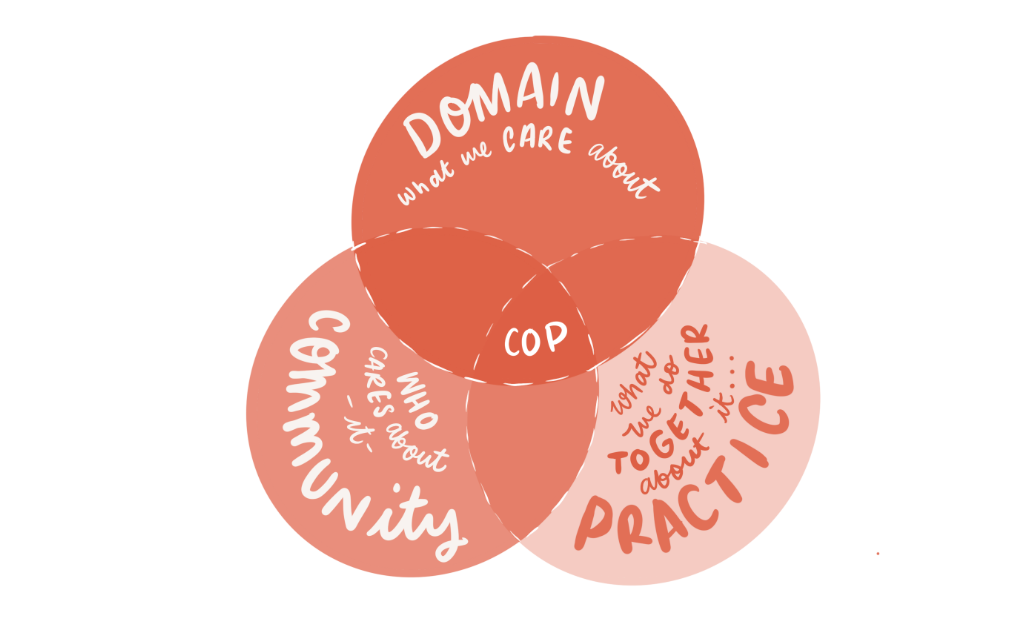
Wait… whats a Community of Practice?
“Learning is not merely the acquisition of knowledge by individuals. It is a process of social participation.” A slightly bastardised…
Why Do We Call It Participatory Science? | Smithsonian Environmental Research Center
Combining Social Science and Environmental Health Research for Community Engagement
Social science-environmental health (SS-EH) research takes many structural forms and contributes to a wide variety of topical areas. In this article we discuss the general nature of SS-EH contributions and offer a new typology of SS-EH practice that situates this type of research in a larger transdisciplinary sensibility: (1) environmental health science influenced by social science; (2) social science studies of environmental health; and (3) social science-environmental health collaborations. We describe examples from our own and others’ work and we discuss the central role that research centers, training programs, and conferences play in furthering SS-EH research. We argue that the third form of SS-EH research, SS-EH collaborations, offers the greatest potential for improving public and environmental health, though such collaborations come with important challenges and demand constant reflexivity on the part of researchers.
How can citizen science reduce psychological distance to science? Insights from three projects in contested environmental contexts
Citizen science (CS) is a participatory mode of knowledge production, enabling non-scientific actors to contribute to and sometimes contest scientific agendas and interpretations, making it a way to bridge science and society. This paper examines how that potential unfolds by analysing the individual perspectives of citizen scientists through the lens of Psychological Distance to Science (PSYDISC). Drawing on three case studies of contested environmental CS, we identify which contextual aspects of CS shape citizen scientists' experiences of social, spatial, temporal, or hypothetical distance to relevant science, and how these experiences may relate to trust. Our findings underscore the role of science communication as both a channel for dissemination, and as a constitutive element of participatory research; crucial for reducing psychological distance and enabling socially robust knowledge production, especially in contested, policy-relevant science settings.
Connecting Research with Community - Civic Innovation Lab
Welcome to Civic Innovation Lab, where we drive social impact through collaborative solutions and empower communities. Join us in fostering sustainable development, co-creating initiatives, and advancing inclusive governance for a better future.

Home - Coastal Watershed Institute
Protecting marine and terrestrial ecosystems through scientific research and local community, place-based partnerships
Assessing nature's contributions to people
Recognizing culture, and diverse sources of knowledge, can improve assessments , A major challenge today and into the future is to maintain or enhance beneficial contributions of nature to a good quality of life for all people. This is among the key motivations of the Intergovernmental Science-Policy Platform on Biodiversity and Ecosystem Services (IPBES), a joint global effort by governments, academia, and civil society to assess and promote knowledge of Earth's biodiversity and ecosystems and their contribution to human societies in order to inform policy formulation. One of the more recent key elements of the IPBES conceptual framework ( 1 ) is the notion of nature's contributions to people (NCP), which builds on the ecosystem service concept popularized by the Millennium Ecosystem Assessment (MA) ( 2 ). But as we detail below, NCP as defined and put into practice in IPBES differs from earlier work in several important ways. First, the NCP approach recognizes the central and pervasive role that culture plays in defining all links between people and nature. Second, use of NCP elevates, emphasizes, and operationalizes the role of indigenous and local knowledge in understanding nature's contribution to people.

Developmental Spaces: Cultural incubators for a time of transformation | Conscious Communities
The whitepaper. Rosie Bell, Boaz Feldman and Rufus Pollock, September 2025.
Home | Hypha
We cultivate collective growth and meaningful livelihoods through learning and building technologies together.

Human Adults and LLMs as Scientists: Who Benefits from Active Exploration?
A long-standing finding in the causal learning literature is that adults struggle to identify conjunctive causal rules, where an effect requires the simultaneous presence of multiple causes, while...

Civic Action
Commonly, researchers have looked for civic life in a distinct sector in which they assume that voluntary associations will cultivate special skills and virtues. Gathering together many challenges to this approach, and using ethnographic cases of housing advocacy and youth civic engagement projects, the authors reconceptualize “the civic” as civic action and show how patterned scene styles shape it. Doing so reveals patterns of action in complex organizations that may span institutional sectors. The authors show how researchers can locate scene styles, and with an extensive literature review, they portray several common styles and suggest that different civic styles often lead to different outcomes.
Consensus
Peter Gelderloos Consensus A New Handbook for Grassroots Social, Political and Environmental Groups 2006

Atmosphere Adult Community Development Projects by SweetBee

Babesky (by Bee 🐝) — Semble
NSFW Networking by @sweetbee.vip

Women with Opinions™️ in Sex Work & Porn
