


Building on and extending existing research, this article proposes a 4-phase model of interest development. The model describes 4 phases in the development and deepening of learner interest: trigg...
The Imperfectionist: Interest is everything
Interest is everything Each time I sit down to choose a topic for this newsletter, there’s a moment when my self-important inner judge – who loves to involve himself in such mat...
‘Find Your Passion’ Is Awful Advice
A major new study questions the common wisdom about how we should choose our careers.

Don’t change the subject
Many creatives know this phenomenon: They start a new project on a promising topic with excitement, but when they can’t come up with an original idea instantly — they lose interest. They come to th…
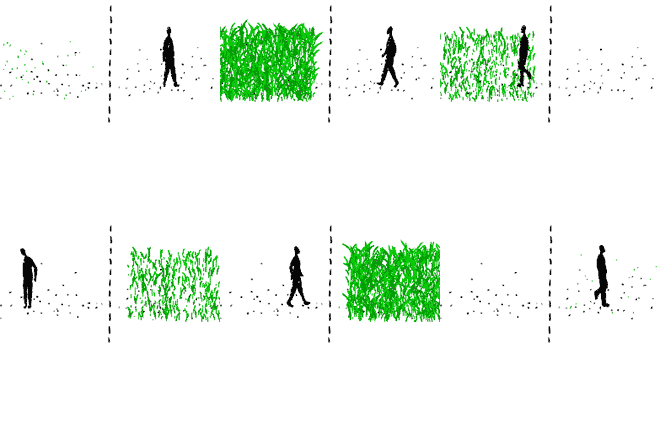
Introducing Nested Learning: A new ML paradigm for continual learning
Ali Behrouz, Student Researcher, and Vahab Mirrokni, VP and Google Fellow, Google Research

AIDA model | Marketing | Research Starters | EBSCO Research
<p>The AIDA model is a marketing framework that outlines the stages consumers typically go through when making a purchasing decision: Attention, Interest, Desire, and Action. Developed in the late 19th century by American marketer Elias St. Elmo Lewis and later refined by Edward Strong in the 1920s, this model aims to guide marketers in capturing potential buyers' attention and leading them toward a purchase. </p> <p>In the Attention stage, marketers employ engaging strategies to attract consumers, often using eye-catching visuals or intriguing information. Next, the Interest stage focuses on maintaining that attention through memorable content or relatable messaging. The Desire stage demonstrates how a product or service fulfills the consumer's needs, often using persuasive techniques like testimonials or demonstrations. Finally, the Action stage prompts the consumer to make a purchase, providing clear instructions on how to proceed.</p> <p>While the AIDA model remains relevant, marketers today may adapt it to incorporate new elements, such as Retention or Satisfaction, reflecting the evolving digital landscape and consumer behavior. Overall, the AIDA model serves as a foundational tool for understanding consumer engagement and facilitating effective marketing strategies.</p>


Of Digital Streams, Campfires and Gardens
Building personal learning environments across the different time horizons of information consumption
Guide to Incrementals/Appeal to Developers | The Paper Pilot
The Paper Pilot's digital garden of thoughts on philosophy, politics, and sociology
(PDF) The Four-C Model of Creativity: Culture and Context
PDF | In this chapter, we highlight the Four-C Model of creativity, which traces creative development from mini-c (personal creativity) to little-c... | Find, read and cite all the research you need on ResearchGate

Equity in K-12 STEM Education
Science, technology, engineering, and mathematics (STEM) live in the American imagination as promising tools for solving pressing global challenges and enhancing quality of life. Despite the importance of the STEM disciplines in the landscape of U.S. political, economic, and social priorities, STEM learning opportunities are unevenly distributed, and the experiences an individual has in STEM education are likely to vary tremendously based on their race, ethnicity, socio-economic class, gender, and a myriad of other factors. Equity in K-12 STEM Education: Framing Decisions for the Future approaches equity in STEM education not as a singular goal but as an ongoing process that requires intentional decision-making and action toward addressing and disrupting existing inequities and envisioning a more just future. Stakeholders at all levels of the education system - including state, district, and school leaders and classroom teachers - have roles as decision-makers who can advance equity. This consensus study report provides five equity frames as a guide to help decision-makers articulate short- and long-term goals for equity and make decisions about policy and practice.

Designing Games to Learn
As I've been writing this series of newsletters on learning and video games, there's been a spectre lurking in the background. Video games and education. Edutainment.
V_labs 4 Phases: Explore
The explore phase uncovers concrete venture opportunities by analyzing markets, customer needs, trends, and corporate capabilities for validation.
The Buffett Formula: Going to Bed Smarter Than When You Woke Up
Learn how Warren Buffett and Charlie Munger turn curiosity into insight. Discover how interest-driven learning builds understanding and reveals hidden opportunities.

Imagining your future projects is holding you back.
There is no book. There is only Idea Debt.

Participatory Action Research

A bunch of us are learning about how to convene and facilitate Participatory Action Research. This is an unorganized reading list of the best resources, references, etc we can find to school up on frameworks and approaches.
ParticipatoryEcosystem

Ronen Tamari (@ronentk.me)
