


Despite their absence within dominant policy discourses, radical ideas for structurally reforming information and communication systems are proliferating. This article begins to explore and synthes...
The Problem of the Media: U.S. Communication Politics in the Twenty-First Century | JSTOR
The symptoms of the crisis of the U.S. media are well-knowna decline in hard news, the growth of info-tainment and advertorials, staff cuts and concentration…
Reimagining American public media: A key infrastructure for local journalism
As the state of U.S. local journalism continues to deteriorate, contributing to growing news deserts and the proliferation of mis- and disinformation, alternative models for sustaining local news are increasingly paramount. One such alternative to the failing commercial model that deserves more attention, we argue, is the American public media system. While less robust than its international counterparts, the U.S. public media system tends to be less reliant on market support, less subject to commercial pressures, and more devoted to a universal service mission. This study explores to what extent the American public media system may serve to lessen the severity of the local journalism crisis. Drawing on interviews and conversations with two dozen public media practitioners and analysts, our research examines how public media could be reimagined and repurposed to better serve local information needs. We conclude that a renewed investment in the existing system in tandem with structural reforms presents a possible pathway towards a more sustainable future for local news.
The politics of ‘platforms’
Online content providers such as YouTube are carefully positioning themselves to users, clients, advertisers and policymakers, making strategic claims for what they do and do not do, and how their place in the information landscape should be understood. One term in particular, ‘platform’, reveals the contours of this discursive work. The term has been deployed in both their populist appeals and their marketing pitches, sometimes as technical ‘platforms’, sometimes as ‘platforms’ from which to speak, sometimes as ‘platforms’ of opportunity. Whatever tensions exist in serving all of these constituencies are carefully elided. The term also fits their efforts to shape information policy, where they seek protection for facilitating user expression, yet also seek limited liability for what those users say. As these providers become the curators of public discourse, we must examine the roles they aim to play, and the terms by which they hope to be judged.
The Case for Digital Public Infrastructure
The introduction of new media technologies invariably brings about potent social and economic shifts. We are well into one of those shifts as the advent of the consumer internet has destabilized existing models of news production and distribution and enabled new hegemons to establish massive and powerful businesses. Two decades into this shift, societies are asking difficult questions about whether internet technologies and the business models that accompany them are dangerous for our citizens and our democracies.
Shifts in U.S. Social Media Use, 2020–2024: Decline, Fragmentation, and Enduring Polarization
The social media ecosystem appears to be in flux. Twitter’s rebranding to X has come to symbolize a broader reorganization of online publics – political reshuffling, user attrition, and uncertainty over the role of legacy platforms. Simultaneously, the shift from text-based, networked feeds toward algorithmically curated, short-form video has accelerated, with TikTok setting the pace for the wider ecosystem [18, 14, 16]. At the same time, everyday communication increasingly migrates from large, open networks to semi-private spaces such as group chats and messaging apps. Commentators describe a digital public sphere in transition: smaller, more fragmented, less dominated by traditional social networking sites, and rise of more broadcast-oriented forms of media – with some even suggesting that we are seeing the beginning of the end of the social media era.
The Rise of the Right-Wing Media Machine
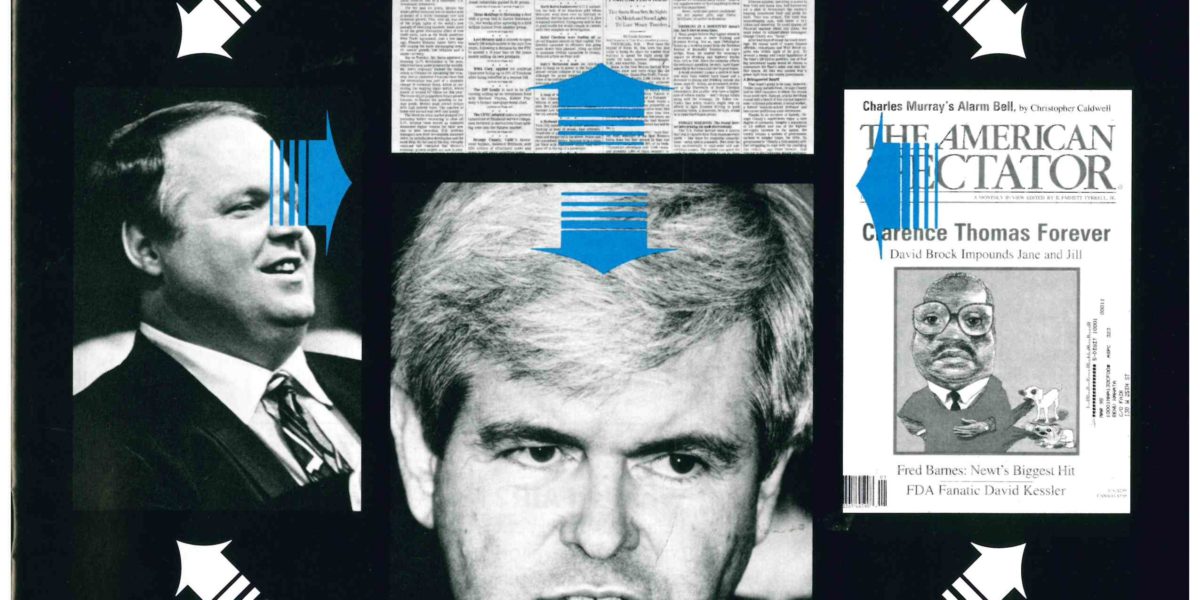
This conservative media machine now rivals—and may well surpass—the power and the influence of the old-line press. It holds sway over much of the national agenda, deciding which ideas and...
The Rise of the Right-Wing Media Machine
This conservative media machine now rivals—and may well surpass—the power and the influence of the old-line press. It holds sway over much of the national agenda, deciding which ideas and...
The Substackerati
Did a newsletter company create a more equitable media system—or replicate the flaws of the old one?

Towards a Post-Social Media Studies
For two decades, "social media" has been the master lens through which scholars have understood digital communication—an era defined by user-generated content, networked publics, and participatory culture. That era is drawing to a close. This paper argues that three interrelated dynamics are dissolving the social media paradigm: an algorithmic shift from social-graph-based to interest-based recommendation, which is remaking the active "user" into a passive "viewer"; the generative AI revolution, which is replacing user-generated content with synthetic media and decoupling platforms from any dependence on human participation; and an exodus from public platforms toward private, closed spaces. Together, these dynamics are giving rise to three distinct post-social formations: algorithmically governed broadcasting platforms, semi-private spheres and micro-communities, and AI-mediated communication as a new media form in its own right. Understanding this transformation demands a fundamental reorientation of the field—new conceptual tools that move beyond networked publics and participatory culture, new methods suited to synthetic and ephemeral media environments, and renewed attention to the political stakes of communication systems that no longer require human participation.
About Europe MédiaLab
By 2040, Europe will have a stronger and more independent media ecosystem. European journalists and media organisations will be fairly supported and sustainably funded, and European social media platforms will play a central role in how citizens access news and information. These platforms will prioritise trustworthy journalism, respect users’ privacy, and reduce the spread of […]
It’s Not 2006 Anymore; The Useful, Vernacular Institution; What Is Free Our Feeds, Anyway?
This issue explores emerging alternatives to centralized social media platforms and the institutional forms that might support them. The newsletter connects reflections from the ATMosphere Conference…
Social Media Is Now Parasocial Media
When practitioners used the term “social media” to describe the internet tools that emerged in the mid-aughts, they were giving a name to the kinds of platforms and protocols that allowed people to socialize with friends and communities of interest by using digital technologies. Twenty years later, users of social media are far more likely to scroll than post – and the content that they consume is often strategically produced and algorithmically curated. In this essay, I argue that the very essence of social media has changed. To more effectively interrogate what we are witnessing, we need to stop presuming that these tools are “social media” and begin recognizing that they are now “parasocial media.” Doing so raises new questions about digitally mediated sociality, not to mention the politics and governance of these platforms.
We’re in the middle of a perfect storm for rollback of the “open web” and burgeoning online surveillance
Looking at fallout of the KOSA hearings today — and subsequent commentary — I remain optimistic for the development of social technology & communication but I’m beginning to think the ope…

The Dark Forest Theory of the Internet
Why the dark forests of the internet — podcasts, newsletters, and other private channels — are growing, and why might that pose a problem