


An open science journal publishing evidence-based research in the toxicological and human environmental health sciences, investigating how environmental exposur
Delayed discovery, dissemination, and decisions on intervention in environmental health: a case study on immunotoxicity of perfluorinated alkylate substances
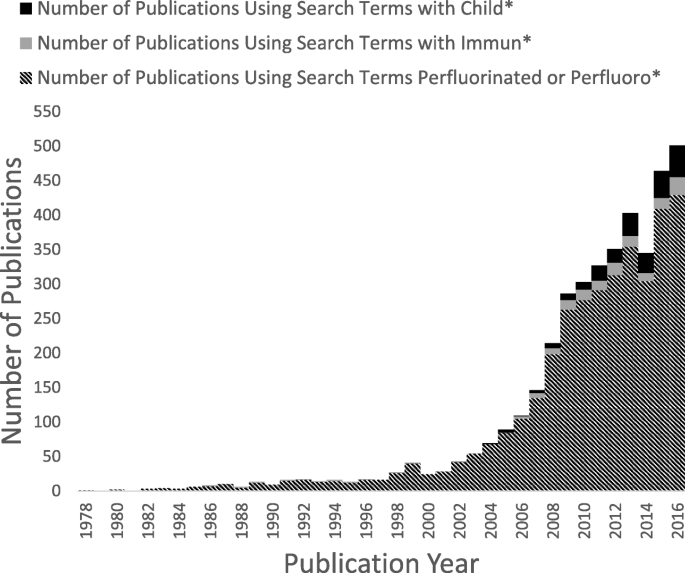
Identification and characterization of environmental hazards that impact human health must rely on the best possible science to inform and inspire appropriate public health intervention. The perfluorinated alkylate substances (PFASs) are persistent emerging pollutants that are now being recognized as important human health hazards. Although the PFASs have been produced for over 60 years, academic research on environmental health aspects has appeared only in the most recent 10 years or so. In the meantime, these persistent chemicals accumulated in the global environment. Some early studies e.g., on population exposures and toxicity, were not released to the public until after year 2000. Still, the first PFAS risk assessments ignored these reports and relied on scant journal publications. The first guidelines and legal limits for PFAS exposure, e.g., from drinking water, were proposed 10 years ago. They have decreased substantially since then, but remain higher than suggested by data on human adverse effects, especially on the immune system, that occur at background exposure levels. By now, the best-known PFASs are being phased out, and related PFASs are being introduced as substitutes. Given the substantial delays in discovery of PFAS toxicity, in dissemination of findings, and in regulatory decisions, PFAS substitutes and other persistent industrial chemicals should be subjected to prior scrutiny before widespread usage.
Environmental epidemiology in a crossfire
Two tendencies have emerged in environmental epidemiology that hamper the translation of research findings into prevention of environmental hazards. One is the increased focus on highlighting weaknesses of epidemiology research that is clearly meant to explain away the research conclusions and weaken their possible implications for interventions to control environmental hazards. Another is the voluminous amount of information sharing that involves a substantial amount of misinformation, as part of the ongoing infodemic. In this light, the appearance of the catalogue of doubt-raising strategies, indeed the worst practices of scientific inference, is good news. Collected under the auspices of the International Network for Epidemiology in Policy, it serves to illustrate the range of possible (and impossible) forms of critique that may be raised on behalf of vested interests or other groups who for some reason disagree with the epidemiological conclusions. We believe that this systematic list will be useful in our field and help to identify critiques of policy options that are hidden and sometimes suppressed in weighing the epidemiological evidence.
Nature is expanding Registered Reports to all the fields in which we publish
Registered Reports improve the credibility of scientific claims by rewarding big questions, sound methods and solid analyses. They need to become a standard tool in research.

Fabricated citations: an audit across 2·5 million biomedical papers
Scientific literature depends on the integrity of its references. Each reference implicitly asserts that a verifiable source exists and supports the claims being made. When references point to non-existent studies, readers, reviewers, and policy makers are unable to evaluate the evidence.
evidence.guide
Evidence intelligence platform: dashboards, docs, and tooling for trustworthy research quality.
Emerging contaminants: A One Health perspective
Environmental pollution is escalating due to rapid global development that often prioritizes human needs over planetary health. Despite global efforts to mitigate legacy pollutants, the continuous introduction of new substances remains a major threat to both people and the planet. In response, global initiatives are focusing on risk assessment and regulation of emerging contaminants, as demonstrated by the ongoing efforts to establish the UN’s Intergovernmental Science-Policy Panel on Chemicals, Waste, and Pollution Prevention.

Timescales of developmental toxicity impacting on research and needs for intervention
Abstract Much progress has happened in understanding developmental vulnerability to preventable environmental hazards. Along with the improved insight, the perspective has widened, and developmental toxicity now involves latent effects that can result in delayed adverse effects in adults or at old age and additional effects that can be transgenerationally transferred to future generations. Although epidemiology and toxicology to an increasing degree are exploring the adverse effects from developmental exposures in human beings, the improved documentation has resulted in little progress in protection, and few environmental chemicals are currently regulated to protect against developmental toxicity, whether it be neurotoxicity, endocrine disruption or other adverse outcome. The desire to obtain a high degree of certainty and verification of the evidence used for decision‐making must be weighed against the costs and necessary duration of research, as well as the long‐term costs to human health because of delayed protection of vulnerable early‐life stages of human development and, possibly, future generations. Although two‐generation toxicology tests may be useful for initial test purposes, other rapidly emerging tools need to be seriously considered from computational chemistry and metabolomics to CLARITY ‐ BPA ‐type designs, big data and population record linkage approaches that will allow efficient generation of new insight; epigenetic mechanisms may necessitate a set of additional regulatory tests to reveal such effects. As reflected by the Prenatal Programming and Toxicity ( PPTOX ) VI conference, the current scientific understanding and the timescales involved require an intensified approach to protect against preventable adverse health effects that can harm the next generation and generations to come. While further research is needed, the main emphasis should be on research translation and timely public health intervention to avoid serious, irreversible and perhaps transgenerational harm.

Psychopolitical Anaphylaxis: Steps Towards a Metacosmics
A scholar led open access publishing collective
Evidence Tool : Nature-based Solutions Evidence Tool |
Nature-based Solutions Initiative
Active Monitoring of Oxytocin Research Evidence
Active Monitoring of Oxytocin Research Evidence (AMORE) is a platform for living meta-analyses in oxytocin research.

Toxins and Health Impacts: Health Effects of 9/11 - WTC Health Program
This online exhibition, developed by the World Trade Center (WTC) Health Program in partnership with the David J. Sencer CDC Museum, examines the ongoing health effects linked to 9/11 exposures and the emergence of WTC-related health conditions. It also explores the events and advocacy that established the WTC Health Program and research achievements that have led to improvements in medical treatment and knowledge.
The “Anthropocene”
Human activities are exerting increasing impacts on the environment on all scales, in many ways outcompeting natural processes. This includes the manufacturing of hazardous chemical compounds which are not produced by nature, such as for instance the...

