

What’s stopping higher education from reaching its full potential? In this episode of Radical Cooperation, Dr. Michael Horowitz sits down with Dr. Beronda Montgomery—biologist, author of Lessons from Plants, and former Vice President for Academic Affairs and Dean at Grinnell College—to unpack why silos persist in colleges and universities, and how those divisions hold institutions […]
This big university system is embracing AI. Students and faculty aren't all on board
The California State University system offers an early look at what happens when an administration commits to a technology that its own community isn't convinced will improve education.

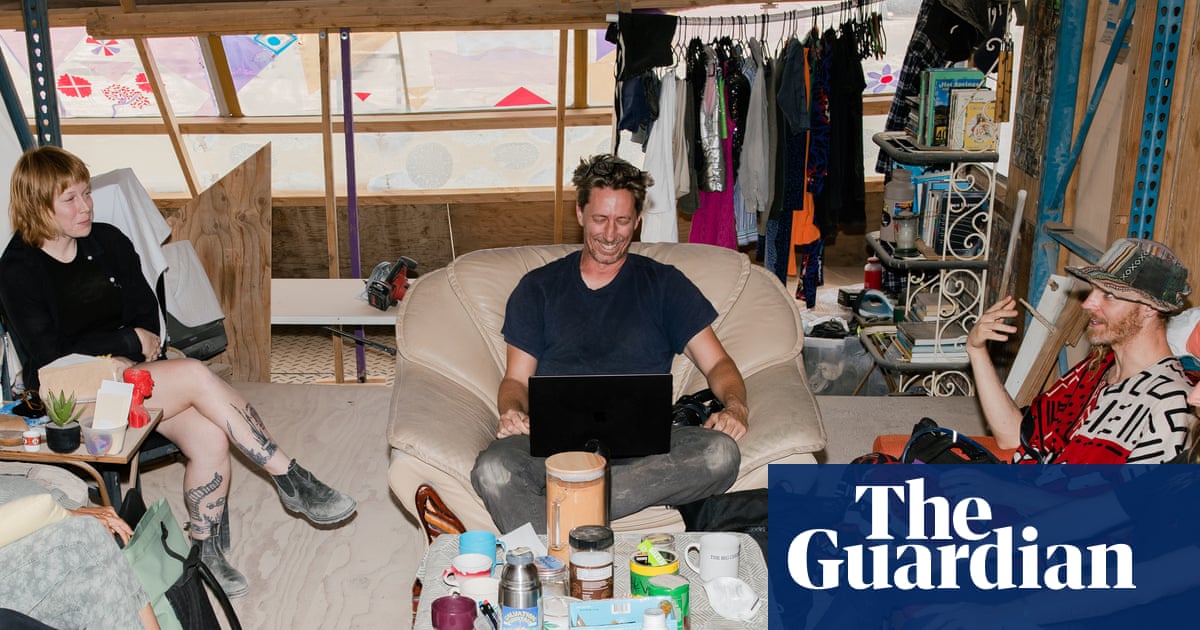
No tuition, no grades, no power grid: why are people flocking to a ‘college’ in the middle of the desert?
Two hundred miles from LA, an off-grid community with roots in Burning Man offers an unorthodox educational experience – is Mars College the future?
Opinion | Silicon Valley Is Bracing for a Permanent Underclass - The …
archived 30 Apr 2026 15:40:29 UTC

Alternative Universities: Speculative Design for Innovation in Higher Education
Imagining the universities of the future.How can we re-envision the university? Too many examples of what passes for educational innovation today—MOOCs especially—focus on transactions, on questions of delivery. In Alternative Universities, David J. Staley argues that modern universities suffer from a poverty of imagination about how to reinvent themselves. Anyone seeking innovation in higher education today should concentrate instead, he says, on the kind of transformational experience universities enact. In this exercise in speculative design, Staley proposes ten models of innovation in higher education that expand our ideas of the structure and scope of the university, suggesting possibilities for what its future might look like. What if the university were designed around a curriculum of seven broad cognitive skills or as a series of global gap year experiences? What if, as a condition of matriculation, students had to major in three disparate subjects? What if the university placed the pursuit of play well above the acquisition and production of knowledge? By asking bold "What if?" questions, Staley assumes that the university is always in a state of becoming and that there is not one "idea of the university" to which all institutions must aspire. This book specifically addresses those engaged in university strategy—university presidents, faculty, policy experts, legislators, foundations, and entrepreneurs—those involved in what Simon Marginson calls "university making." Pairing a critique tempered to our current moment with an explanation of how change and disruption might contribute to a new "golden age" for higher education, Alternative Universities is an audacious and essential read.

Thread by @AustenAllred: "This is a tweetstorm about things that have surprised me having started a school, coming from a non-educational background 1. Students’ brai […]"
Thread by @AustenAllred: "This is a tweetstorm about things that have surprised me having started a school, coming from a non-educational bacents’ brains are broken by our existing system. We’ve been reworked purely for extrinsic reward and forgotten […]"

Hypothesis | The #1 Social Annotation Tool for Higher Education
Hypothesis is the leading social annotation platform trusted by 300+ institutions to boost student engagement, comprehension, and critical thinking — seamlessly integrated into your LMS.

Who Asked For This? - Cal Newport
Last week, Elizabeth Lopatto published an insightful article in The Verge. It boasted an intriguing title: “Silicon Valley has forgotten what normal people want.” “Within ... Read more
Understanding GenAI and Campus Expectations | Center for Teaching & Learning
Academic Lexicon & Feature expansion · Issue #119 · singi-labs/sifa-workspace
Summary Together with #ATScience, we see a huge opportunity for academics to use open AT protocol to collaborate, protect and show their work. Sifa could help our by providing the functionality tha...
The Anti-Intellectualism of Silicon Valley Elites
I recently re-read Richard Hofstadter's Anti-Intellectualism in American Life, and now every time a reactionary Silicon Valley billionaire opens his mouth, I think about it. So I wrote about it for The Nation. Here's the column: On Instagram, there’s an activist named Brian Patrick (@pano.

FOURTH REPORT: Former Alpha School students speak out
“A science experiment that’s been framed as a school” - “pretty much a concentration camp” - “cool the first few months and then it just becomes shit”
Entering the Age of Networks - Of Souls & Silos
Institutions are out, networks are in. What are the consequences, the perils and the promise? Originally published in The Orange County Register, March 5, 2015 Everyone’s interested in human networks these days. How to make them work, how to structure…

Once you understand that this is a model of science written by non-scientists who hate universities but love venture capital and redirecting money to political allies, everything makes a lot more sense. nytimes.com/2026/07/22/us/politics/trump-…

Trump’s Plan for Science: More Money for A.I., Less for Universities
www.nytimes.comRemarkable how over a decade ago @michaelnielsen.bsky.social pointed the way towards solving long standing issues plaguing science to this day (issues that are all the more relevant in the age of AI mediated science)

Ronen Tamari
This is why @atproto.science is so relevant rn This compilation of essays indicates that scientists are most frustrated by insufficient “community tools and resources... Essential infrastructure for sharing, maintaining and building on existing work and data is also badly underdeveloped." >
During the 1980s and 1990s, networks of evangelists and venture capitalists fused technological boosterism with reactionary social ideals. Our video of the week examines the deep roots of Silicon Valley's shift toward the right. Featuring @beccalew.bsky.social at @westernu.ca buff.ly/ydgntnc
Science Nonprofit Leaders

People leading nonprofits involved in the science infrastructure/ecosystem/tool-building
We live in a golden age of biology. So why are people still dying from disease? Because discovery and development move slower than they should. Today, we’re partnering with Incyte to change… | Samuel G. Rodriques | 491 comments

Ronen Tamari
Travis Rich

Kirstie Whitaker
Kari Jordan, Ph.D.
Daniela Saderi

