


I think we can all agree that nobody seems to be taking the business of governing ourselves terribly seriously. I say we can all agree on this because I think we all know that Donald Trump is a der…
An Open Letter to the UK Government: Reconsider the Online Safety Act
To the Prime Minister, Members of Parliament, and the Secretary of State for Science, Innovation and Technology,
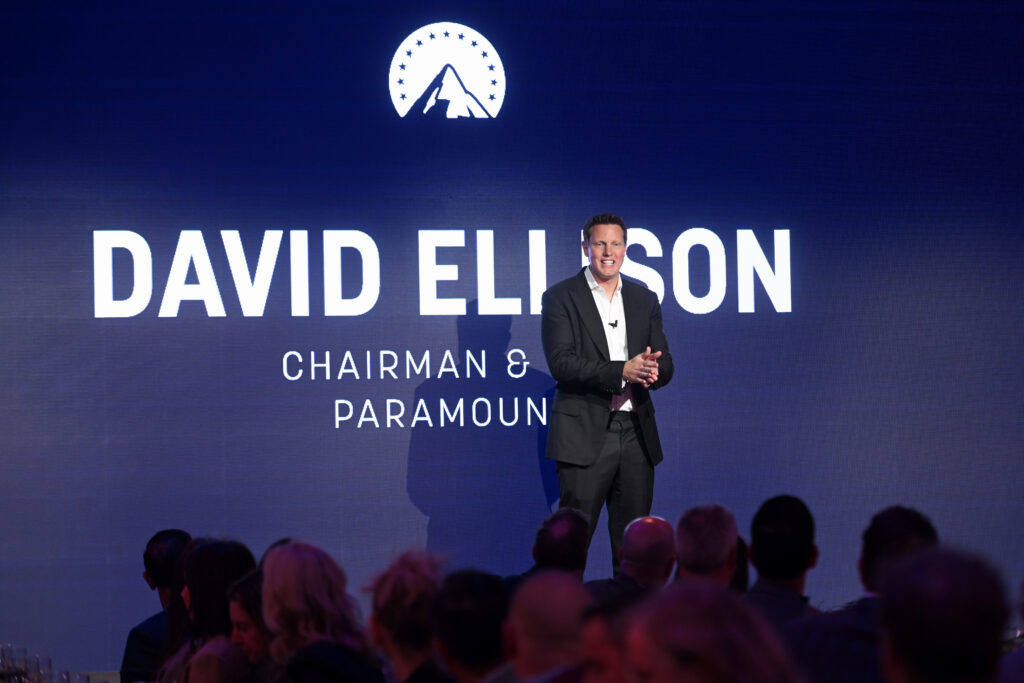
My open letter to David Ellison
You argued that the American people have misjudged you — that they are wrong about what is in your heart and mind. I want to be clear: I don't care what you think or feel. What I care about is your actions.
Opinion | I Am Part of the Resistance Inside the Trump Administration (Published 2018)
I work for the president but like-minded colleagues and I have vowed to thwart parts of his agenda and his worst inclinations.

Addressing the community regarding the "No Politics" rules
640 votes, 94 comments. Hello, everyone. As some of you may know, I'm u/Aspect-Infinity , and I've been a moderator here for a while now. On behalf…
The Great Realignment: Why the New Right Is Here to Stay
The re-election of Donald Trump has illustrated in spectacular fashion the extent to which politics all over the world is in a state of continual flux. Old political configurations and parties are under unprecedented strain, with new forces, particularly on the hard right, challenging the status quo everywhere. Rejecting stale analyses based on moralistic panics about 'populism' or social media, political commentator Steve Davies shows how we are going through a deep-seated process of realignment rooted in underlying structural trends. We are transitioning, he argues, from an era where the key political division was over the economic structure of society to one where the primary division is between a vision rooted in national identity and sovereignty, and an essentially post-national cosmopolitanism. This change upends the ideological and electoral alliances that have structured our political systems for decades. No-one who wishes to truly understand the crises currently roiling the political status quo can afford to miss this stunning panoramic analysis of how this process works and how it is playing out across the world, from the USA and Germany to Argentina and India, and beyond.

Regime Change: Inside the Imperial Presidency of Donald Trump
INSTANT #1 NEW YORK TIMES BESTSELLER “Regime Change is exceptional. It transcends its genre...the book is packed with news that will stay news...This is reporting of consequence.” —David Remnick, The New Yorker “A flabbergasting feat of political reporting.” —Tina Brown “Riveting and richly textured...What the authors add is the vivid detail that makes these events feel actual. They wrest reality itself back from the distorted world of entertainment, illusion, fantasy, and denial that Trump has generated around himself. It is this flood of provocation, atrocity, self-dealing, and fabrication that makes Haberman and Swan’s counternarrative so vital.” —Fintan O’Toole, The New York Times A riveting, intimate, and revelatory account of the most radical and consequential presidency of our time.From the two reporters who have covered him more closely than perhaps anyone else over the past decade comes this definitive portrait of Donald Trump in the White House. Regime Change covers the first year of Trump’s second presidency—a term liberated from every constraint that defined his first. The generals who once told him “no” are gone, and the lawyers who remain have learned to pick their battles. His administration has flouted court orders and he has claimed powers that Congress once checked. What remains is a President willing to take enormous risks that have upended global markets and toppled heads of state; an imperial President operating almost entirely on instinct alone. Based on hundreds of interviews and unprecedented reporting from deep within the administration’s most closely guarded rooms, Regime Change takes the reader inside the Situation Room and into the secret Oval Office deliberations that have launched a new war in the Middle East and seen Trump seal the border, surge National Guard troops into cities, and send immigration agents into deadly clashes with protestors. Maggie Haberman and Jonathan Swan bring us behind the scenes of a presidency that has transformed the culture, turned the Justice Department into an agent of retribution against the President’s enemies and the office itself into a brazen vehicle for profit. They reveal a second term propelled by a historical irony that Trump himself has come to understand: that the indictments, the convictions, the assassination attempts, and four years of exile made him not weaker but far more powerful, more vengeful, and more willing to gamble than any President in modern history. This is the story of how Trump has used that power, who has tried to stop him, and why nearly all of them have failed. It is also the story of something American journalists are more accustomed to chronicling in distant capitals than in their own: a President who has fundamentally altered the nature of the office he holds—and, with it, how the rest of the world understands American power. It is an account of Regime Change right here in America—a landmark real-time history of a modern presidency like no other.
Everyone is a Strategist and No One is a Writer
From politics to culture, we face a crisis of cleverness and a society addicted to marketing
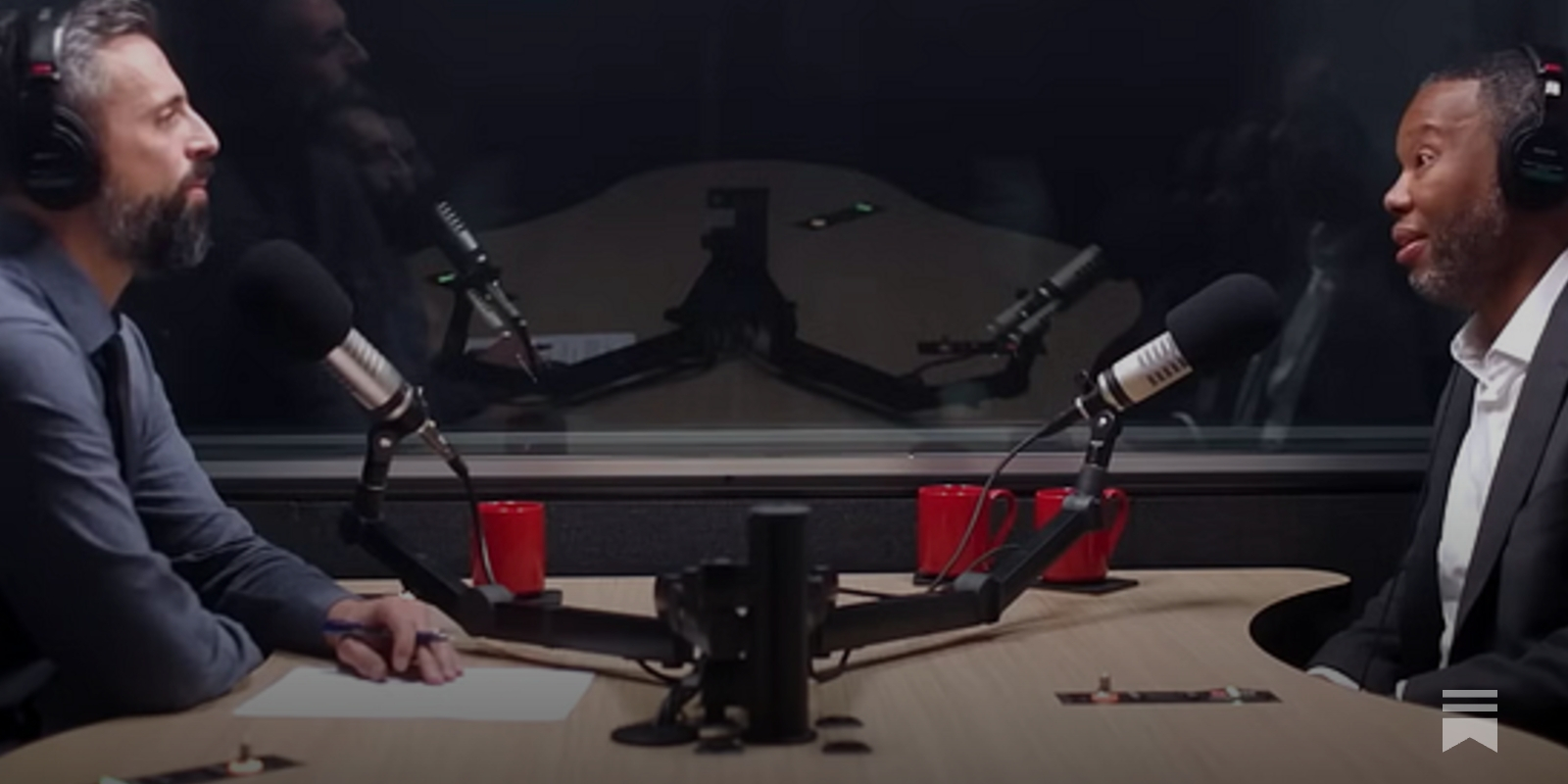
Everyone is a Strategist and No One is a Writer
From politics to culture, we face a crisis of cleverness and a society addicted to marketing
Building on the Fight Oligarchy Tour: It’s Time to Reboot America
A Call for a Big-Tent Movement
Jonathan Stray (@jonathanstray180913)
Thank you for this. As someone who's been involved in bridge-building for a while (and peace building, which is what this is called internationally) I have some thoughts. The main thing I want to get across is this: it's important to understand what the goals of bridge-building are and aren't. For example, the goal is not to promote progressive politics. That's the job of progressives. The goal is to have a functioning democracy where conflicts are resolved without violence or destruction. There are many ways to support this this, as the Burgesses have documented (see https://www.betterconflictbulletin.org/p/53-roles-that-make-democracy-work) I think you are right that the Trump administration presents a clear danger to our democracy. I also think that this message has been shouted from the rooftops for years, and it did not prevent him from winning a fair election. I don't see why shouting it louder will be successful now. And I do think the left has some responsibility for this situation, which will have to be acknowledged before anyone on the right will be willing to collaborate across political difference. Minimally, I think many of the responses to Trump's polarizing actions were themselves polarizing when they didn't have to be -- an own goal. In my view, this happened because most people are not trained to think about conflict the way that professional peace builders are. The problem, as I see it, is that Trump can get away with dismantling democracy because far too many people are so angry that they support him. If this analysis is correct, the the winning strategy -- winning in the sense of democracy-preserving, not progressive-politics-advancing -- is for "us" to unite with "them" to against authoritarianism and corruption. This strategy is sometimes called "repolarization." The goal is to change the axis of conflict, not to remove or suppress conflict. This view has been explicitly expressed by, among others, political scientist Jennifer McCoy, whom I recently interviewed (https://www.betterconflictbulletin.org/p/repolarize-to-depolarize) For more on this strategy, from the progressive viewpoint, see also: Shikha Dalmia’s keynote at the recent “Liberalism for the 21st Century” conference Liberals Need Moral Clarity, Not Moral Purity, in Their Struggle Against Authoritarianism https://www.theunpopulist.net/p/liberals-need-moral-clarity-not-moral john a. powell's paper discussing how bridging and racial justice activism relate Overcoming Toxic Polarization: Lessons in Effective Bridging https://lawandinequality.org/article/overcoming-toxic-polarization/ Thanks for writing, and thanks for reading.

How America Made Donald Trump Unstoppable
Donald Trump is no ordinary con man. He's way above average — and the American political system is his easiest mark ever.

Decentralized advocacy | Patrick Singletary | Offprint
How serious are we about AT Protocol / DID ?

A Letter on Justice and Open Debate
July 7, 2020 The below letter will be appearing in the Letters section of the magazine’s October issue. We welcome responses at letters@harpers.org Our cultural institutions are facing a moment of trial. Powerful protests for racial and social justice are leading to overdue demands for police reform, along with wider calls for greater equality and […]

New York Times Sign On Letter | GLAAD
From LGBTQ and allied leaders and organizations Join 100+ organizations and leaders in calling on the New York Times to improve their coverage of transgender people, click here. 4/22/2026 - Mother of Transgender Teen Confronts New York Times Leadership about Inaccurate, Weaponized Reporting of Transgender People: “What Steps Are You Taking to be Accountable?” 6/5/2025
The Good, The Bad, And The Stupid In Meta’s New Content Moderation Policies
When the NY Times declared in September that “Mark Zuckerberg is Done With Politics,” it was obvious this framing was utter nonsense. It was quite clear that Zuckerberg was in the proce…