


The Metric Is Not the Mission is a ten-part examination of how Big Tech moved from building and expanding the open internet to increasingly shaping it around its own metrics, incentives and as…
The Metric Is Not The Mission: When The Reckoning Reaches The Courts
The Metric Is Not the Mission is a ten-part examination of how Big Tech moved from building and expanding the open internet to increasingly shaping it around its own metrics, incentives and as…
The Open Internet is Dead. What Comes Next?
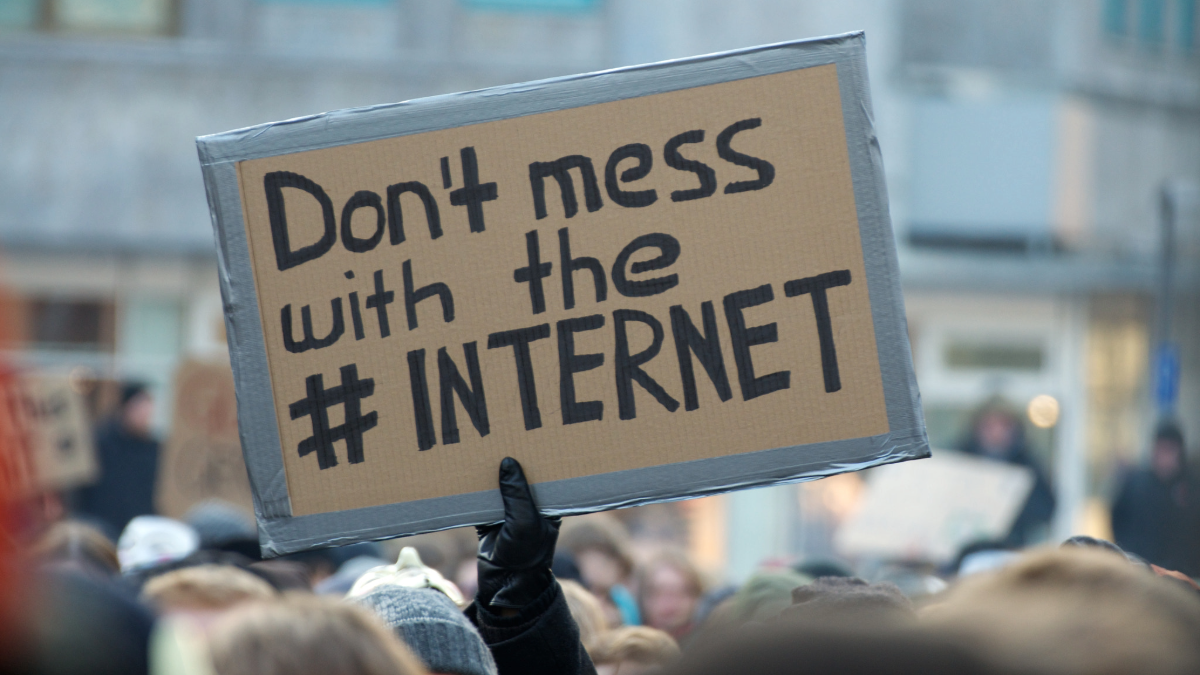
Justin Hendrix spoke to Mallory Knodel and Burcu Kilic about their recent essay, titled "Big Tech Redefined the Open Internet to Serve Its Own Interests."
About Us
Around the world, building the internet’s operating system—and a better way to work. In a world of tech companies fighting for growth at any cost, imagine one that gives away its most successful pr…

The Last Mile
Living without the Internet is a reality for the vast majority of people on the Earth. With Facebook and Google treating connection speeds and bandwidth like disposable cutlery, you can hardly guess why they’re having such a terrible time continuing to grow their userbase around the world. The problem is the infrastructure isn’t available. The “last mile,” as it is often referred to, is sub-par in most parts of the world.
Press Release
Achieving universal, meaningful Internet connectivity by 2030 could require an investment of USD 2.6 trillion to USD 2.8 trillion at current prices, according to the Connecting Humanity Action Blueprint released today by the International Telecommunication Union (ITU) – the UN agency for digital technologies – and the Communications, Space & Technology Commission (CST) of the Kingdom of Saudi Arabia.

Seize the Means of Computation - ProMarket
To regain internet autonomy from Big Tech companies, lower switching costs with legislation that allows new services to subvert network effects and encourage adversarial interoperability. Too often, our discussion of Big Tech’s dominance starts and ends with a simplistic account of network-effects-driven inevitability, as though the winner-take-all market we have today could not have been […]

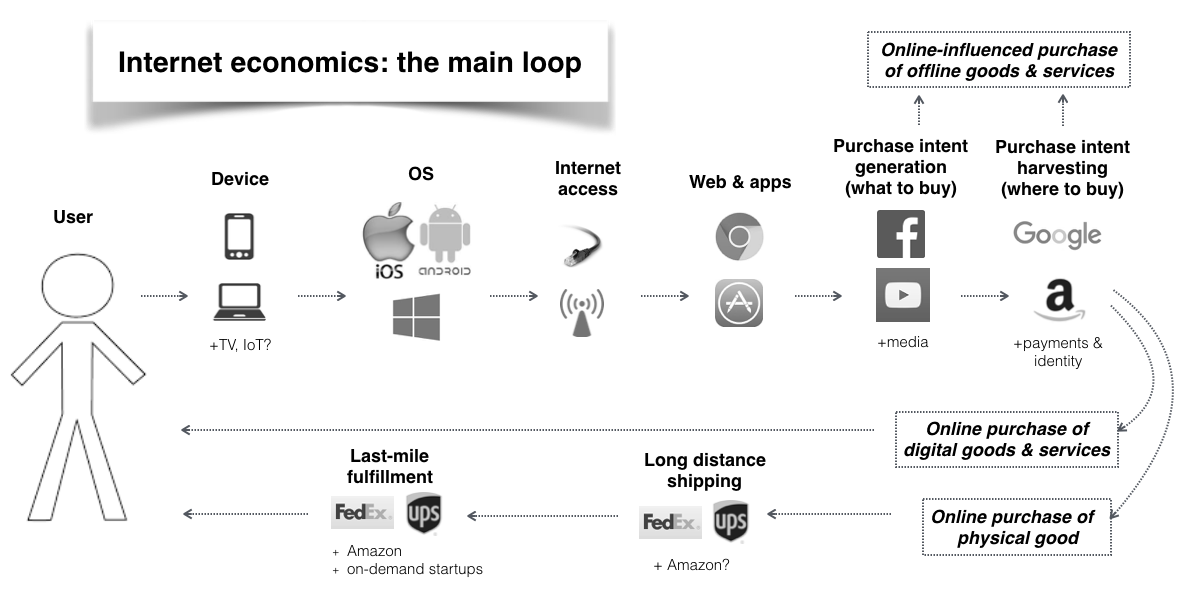
The Internet Economy
We are living in an era of bundling. The big five consumer tech companies — Google, Apple, Facebook, Amazon, and Microsoft — have moved far…
The New Deal for the Open Source Community
Building the Economic Layer to our Digital Infrastructure
The one and future internet
The internet has become inextricably entangled into our economies, cultural and social lives. We stand on the brink of the next technological revolution, in which the internet of things transforms ...

An Internet Worth Living In — The Aimworthy Project
We spend a substantial part of our lives online. The design of those spaces shapes how we feel, how we treat one another, and what kinds of communities we can build.

The End of the Revolutionary Internet
The revolutionary internet is over, and we don’t have much to show for it. A new start is out there, somewhere.
Reclaim the internet: Mozilla’s rebrand for the next era of tech | The Mozilla Blog
Mozilla isn’t just another tech company — we’re a global crew of activists, technologists and builders, all working to keep the internet free, op

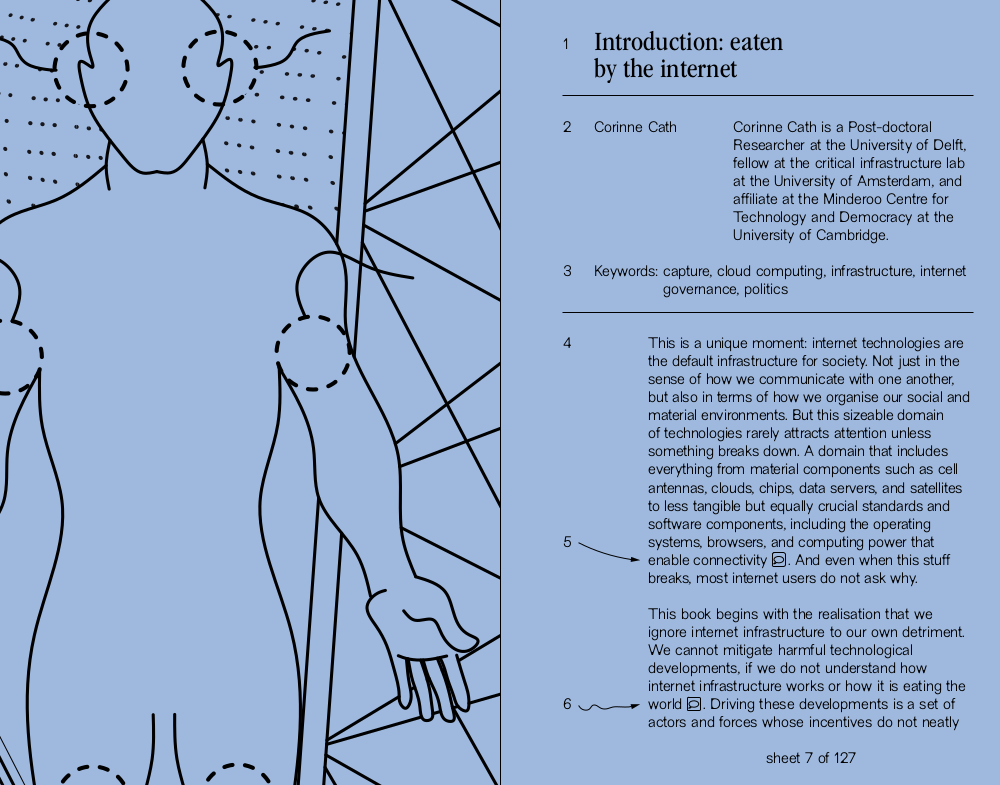
Eaten by the Internet
This book makes internet infrastructure visible as a force of political power, which is transforming the social world, from the bottom up—through fifteen chapters contributed by a global set of researchers, activists, and techies. We are living a unique moment: internet technologies are the default infrastructure for society, not just how we communicate but also how we organise our social life, politics, and economy, all the way down to our material environments, like cities. Our world is eaten by the internet. This means that those who control the internet control the bounds of public speech, economic production, social cohesion, and politics, making its infrastructure a core political terrain in the networked age. The book’s chapters cover a wide set of topics, spanning from the global politics of content moderation by internet infrastructure to the colonialism inherent in the race to plug the moon, from the harms wrought by blockchain companies in rural America to the particularities of online censorship across Asia. The chapters take on thorny topics, discussing power consolidation in the advertisement and cloud industry, the role of internet infrastructure in the war in Ukraine, and tech’s environmental impact—amongst others. In doing so, this book roots contemporary technology debates in the politics of internet infrastructure and urges us to ask how can we ensure our infrastructures sustain us, rather than consume us?
We're Building the New Internet | About Tailscale
Learn about Tailscale as a company and our mission: to remove the overhead and complexity of building a trusted, secure network.
Power and the Internet - Schneier on Security
All disruptive technologies upset traditional power balances, and the Internet is no exception. The standard story is that it empowers the powerless, but that’s only half the story. The Internet empowers everyone. Powerful institutions might be slow to make use of that new power, but since they are powerful, they can use it more effectively. Governments and corporations have woken up to the fact that not only can they use the Internet, they can control it for their interests. Unless we start deliberately debating the future we want to live in, and the role of information technology in enabling that world, we will end up with an Internet that benefits existing power structures and not society in general...
The internet has evolved to foster a fatal expectation: that the things we depend on every day are free. They aren't, but we're allowed to pretend they are with the help of ad-driven business models. The real cost is substantial, and can be measured in time, money, relationships, health, and more.

Fund Your Internet
fundyourinternet.org