


An MIT Technology Review series investigates how AI is enriching a powerful few by dispossessing communities that have been dispossessed before.
An MIT Technology Review Series: AI Colonialism
An investigation into how AI is enriching a powerful few by dispossessing communities that have been dispossessed before.
Artificial Intelligence in the Colonial Matrix of Power
Drawing on the analytic of the “colonial matrix of power” developed by Aníbal Quijano within the Latin American modernity/coloniality research program, this article theorises how a system of coloniality underpins the structuring logic of artificial intelligence (AI) systems. We develop a framework for critiquing the regimes of global labour exploitation and knowledge extraction that are rendered invisible through discourses of the purported universality and objectivity of AI. Through bringing the political economy literature on AI production into conversation with scholarly work on decolonial AI and the modernity/coloniality research program, we advance three main arguments. First, the global economic and political power imbalances in AI production are inextricably linked to the continuities of historical colonialism, constituting the colonial supply chain of AI. Second, this is produced through an international division of digital labour that extracts value from majority world labour for the benefit of Western technology companies. Third, this perpetuates hegemonic knowledge production through Western values and knowledge that marginalises non-Western alternatives within AI’s production and limits the possibilities for decolonising AI. By locating the production of AI systems within the colonial matrix of power, we contribute to critical and decolonial literature on the legacies of colonialism in AI and the hierarchies of power and extraction that shape the development of AI today.

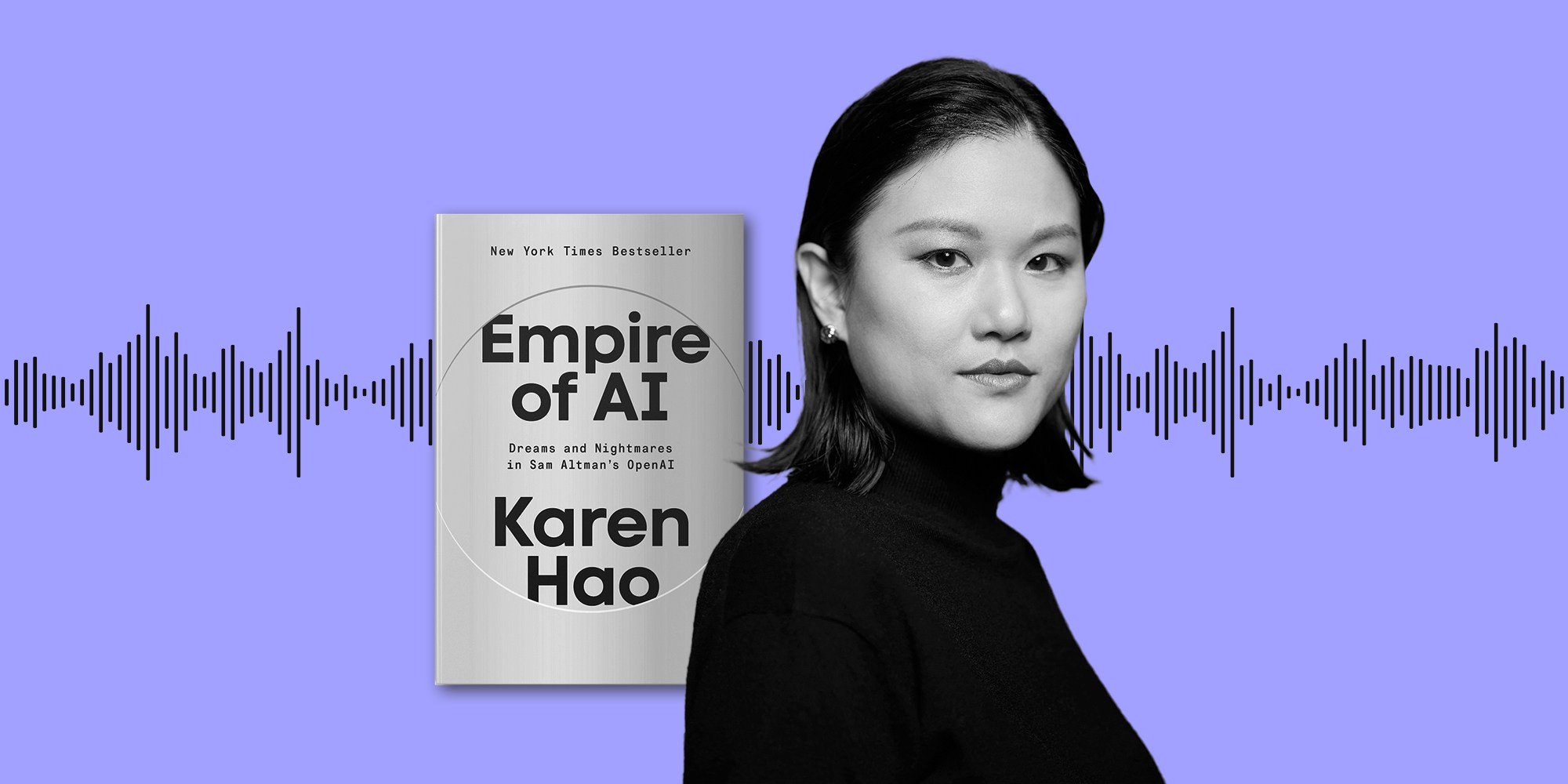
AI’s Imperial Agenda
“Empire of AI” author Karen Hao on how Silicon Valley’s young AI companies parallel colonial empires of old.
Inescapable AI — TechTonic Justice
The use of artificial intelligence, or AI, by governments, landlords, employers, and other powerful private interests restricts the opportunities of low-income people in every basic aspect of life: at home, at work, in school, at government offices, and within families. AI technologies derive from a lineage of automation and algorithms that have been in use for decades with established patterns of harm to low-income communities. As such, now is a critical moment to take stock and correct course before AI of any level of technical sophistication becomes entrenched as a legitimate way to make key decisions about the people society marginalizes.

Building Political Superintelligence
Amidst fears of dystopia, a blueprint for how we use AI to reinvent the way we govern ourselves

The Next Great Divergence: How AI could split the world again if we don’t intervene | Brookings
Michael Muthukrishna and Philip Schellekens argue that AI, like past general-purpose technologies, could drive a new global divergence unless deliberate action ensures its benefits are broadly shared rather than geographically concentrated.

“Colonial AI”: African Countries Seek Tech Sovereignty But Fear a New Digital Colonialism
Seydina Moussa Ndiaye is a member of the Global Partnership on Artificial Intelligence, working on a strategy with the African Union to address the risks and benefits of AI for the continent. African countries face the threat of “colonial AI,” says Ndiaye. “When we talk about colonialism historically, that involves the control of resources, the control of knowledge and the control of terms of exchange, and we see that in Africa when we talk about AI.”
Will AI spark a scientific renaissance — or a diffuse monoculture?
Artificial intelligence’s ability to enrich science will depend not only on model capability, but also on whether researchers, reviewers and funders reward originality over speed.

The Age of Wonders and Terrors
Twenty years ago, when the idea of AI taking over the world in our lifetimes still struck most of us as the unconstrained fantasy of those who knew too much science fiction and too little science, …

Large AI models are cultural and social technologies
Implications draw on the history of transformative information systems from the past , Debates about artificial intelligence (AI) tend to revolve around whether large models are intelligent, autonomous agents. Some AI researchers and commentators speculate that we are on the cusp of creating agents with artificial general intelligence (AGI), a prospect anticipated with both elation and anxiety. There have also been extensive conversations about cultural and social consequences of large models, orbiting around two foci: immediate effects of these systems as they are currently used, and hypothetical futures when these systems turn into AGI agents—perhaps even superintelligent AGI agents. But this discourse about large models as intelligent agents is fundamentally misconceived. Combining ideas from social and behavioral sciences with computer science can help us to understand AI systems more accurately. Large models should not be viewed primarily as intelligent agents but as a new kind of cultural and social technology, allowing humans to take advantage of information other humans have accumulated.
Rescuing Democracy From The Quiet Rule Of AI
Our gravest AI risk isn’t runaway superintelligence but our cultural readiness to surrender collective judgment to algorithmic systems.

The Sinister Valley: The dangerous deception behind the AI revolution
Behind the hype surrounding artificial intelligence lies a corporate agenda of exploitation, environmental destruction and evasion of accountability.

Our Approach to Artificial Intelligence
We are experimenting with using AI tools to extend our work as a small nonprofit, so that we can focus our time on reinforcing human connections, conversations, and communities that have eroded.

Human perspectives on AI · Global Voices
This GV Spotlight edition will explore how the use of, promotion of, and resistance to artificial intelligence is playing out for the Global Majority.
