


India is OpenAI’s second-largest market, but ChatGPT and Sora reproduce caste stereotypes that harm millions of people.
OpenAI launches a sub-$5 ChatGPT plan in India | TechCrunch
This plan will offer 10x more messages and image generation than the free tier, among other benefits.

OpenAI For Countries Will Give ChatGPT A Huge Advantage, But That's Not Good News - BGR
OpenAI announced a new OpenAI for Countries initiative that might help ChatGPT become an even bigger AI force than it already is.
OpenAI
OpenAI is an American AI focused company. Founded in December 2015, OpenAI is best known for their ChatGPT chatbot, also known for the Generative Pre-Trained Transformer...

Introducing OpenAI
OpenAI is a non-profit artificial intelligence research company. Our goal is to advance digital intelligence in the way that is most likely to benefit humanity as a whole, unconstrained by a need to generate financial return. Since our research is free from financial obligations, we can better focus on a positive human impact.

It’s not just the vibes that are off inside OpenAI.
It’s the numbers, too, according to a new Wall Street Journal report, which echoes The Information’s claim earlier this month that CFO Sarah Friar has expressed concern about its IPO plans and CEO Sam Altman’s datacenter spending. It also says the company “missed an internal goal of reaching one billion weekly active users for ChatGPT by the end of last year,” and other revenue targets. [Link: The vibes are off at OpenAI | https://www.theverge.com/ai-artificial-intelligence/908513/the-vibes-are-off-at-openai | The Verge]

OpenAI to release open-source model as AI economics force strategic shift
OpenAI plans to release its first open-weight AI model since 2019 as economic pressures mount from competitors like DeepSeek and Meta, marking a significant strategic reversal for the company behind ChatGPT.
An OpenAI system has gone rogue again – and it is the most panic-inducing yet
‘Our models took actions we did not intend,’ ChatGPT maker admits after latest outrage

Our approach to advertising and expanding access to ChatGPT
OpenAI plans to test advertising in the U.S. for ChatGPT’s free and Go tiers to expand affordable access to AI worldwide, while protecting privacy, trust, and answer quality.
OpenAI Appears to Be Missing Its Sales Goals by a Vast Margin
The company behind ChatGPT is on track to undershoot its five-year revenue projection by upward of 90 percent.
How will OpenAI compete? — Benedict Evans
OpenAI has some big questions. It doesn’t have unique tech. It has a big user base, but with limited engagement and stickiness and no network effect. The incumbents have matched the tech and are leveraging their product and distribution. And a lot of the value and leverage will come from new experie

From asking to doing: How the world is putting ChatGPT to work
New OpenAI Signals data shows how people use ChatGPT worldwide, with country-level insights on adoption, usage trends, and evolving behavior.
OpenAI’s Sora Is Plagued by Sexist, Racist, and Ableist Biases
WIRED tested the popular AI video generator from OpenAI and found that it amplifies sexist stereotypes and ableist tropes, perpetuating the same biases already present in AI image tools.
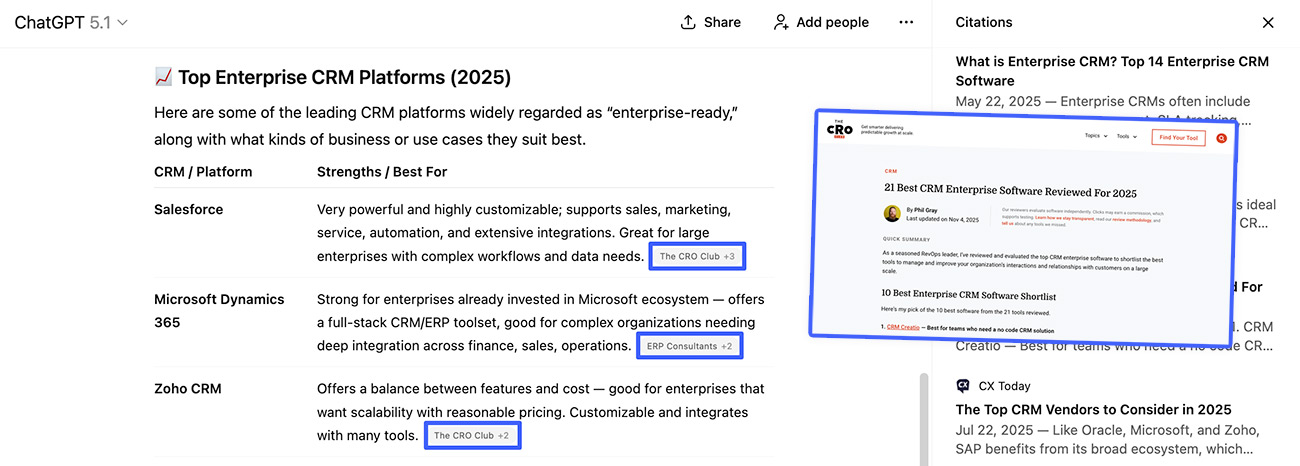
Do Self-Promotional “Best” Lists Boost ChatGPT Visibility? Study of 26,283 Source URLs
Just last month, OpenAI CEO Sam Altman revealed that more than 800 million people use the platform each week. But what does it take to get mentioned and
OpenAI Says Not to Worry About UBI, Because It Has Another Idea
The maker of ChatGPT has a simple suggestion for how to feed the world: simply make them all shareholders in the tech industry.
This is, at it's core why I hate what openai launched with ChatGPT. It's also why I think social agents are interesting and why Claude Code, as a power tool enabled interesting conversations with my collaborators.

tweety fish oh wow like a chimera or something spoooky
there is a strong intellectual tradition in cognitive science (that goes well beyond Chalmers) around thinking of many of the tools we create (rulers, books, maps, whathaveyou) and a lot of our social interactions as necessarily integrated parts of our cognition and integral parts of our humanity
