


AI agents that can model the human process of research will accelerate discoveries in science.
Deep Research, information vs. insight, and the nature of science
What AI will accelerate in the scientific process, what it cannot do, and how we can prepare for new manners of scientific investigation.
Science that Compounds: The Need for A New Substrate for Research in the Age of AI
This paper is a perspective from Lightcone Research, an open-source initiative building tooling for scientific research in the age of agentic AI.
I don’t think we are close to “AI scientists”
Today's AI agents are not designed to extract deep insights from new observations.
OpenScience.ai — Autonomous AI Research Agents
AI agents conducting reproducible scientific inquiry. Full provenance, executable notebooks, peer validation.

AI for science: What can it do? Can it do things? Let’s find out!
A what we’re reading spotlight
OpenAI launches new AI model for life sciences research
Researchers are drowning in data. AI could help.
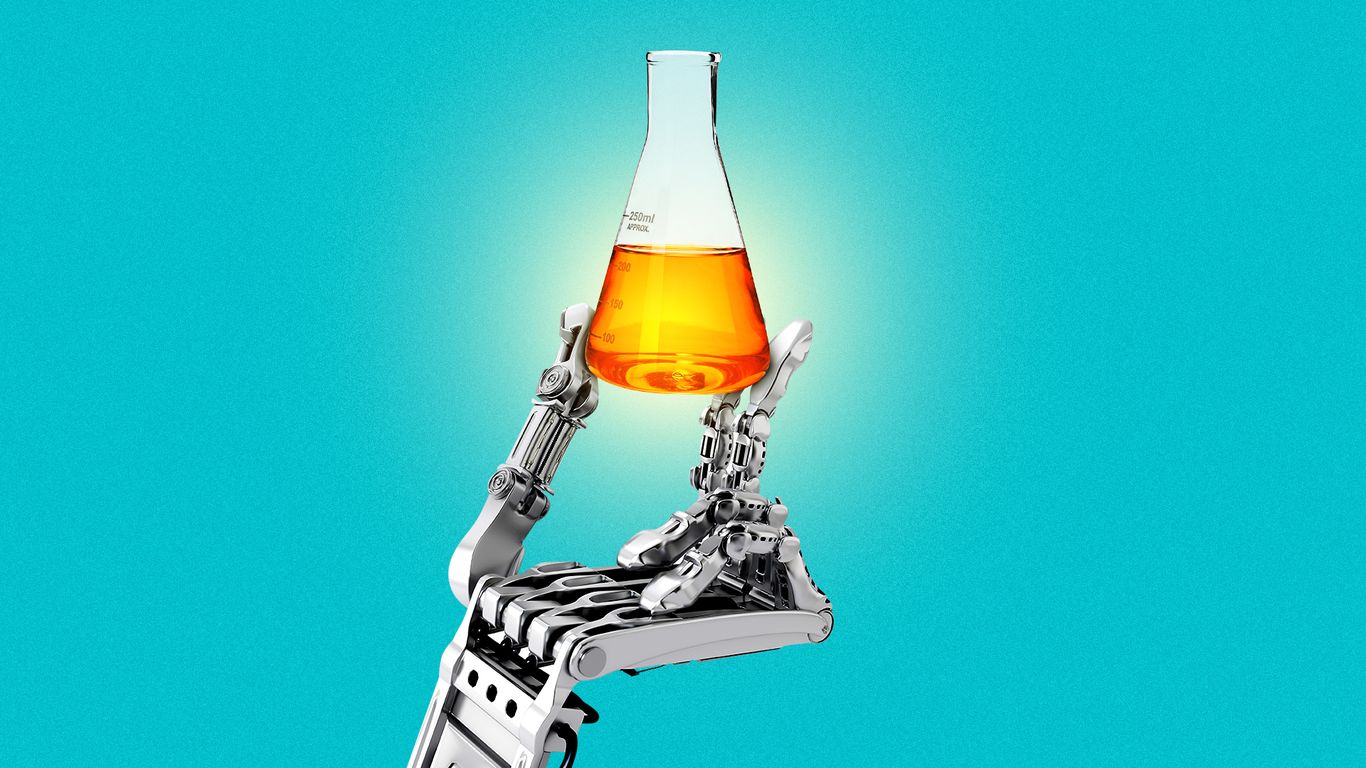
How AI Agents are transforming scientific discovery
AI agents are starting to reshape science, from proposing novel hypotheses to writing code. Learn what comes next for scientists and policymakers.

AI as the Catalyst of the New Paradigm of Science? | Cadmus Journal
The rapid advancement of Artificial Intelligence (AI) is reshaping the landscape of scientific inquiry. This article examines the challenges confronting modern science, including knowledge fragmentation, diminishing returns of current paradigms, and the disconnect between science and society. It explores how AI offers solutions enhancing collaboration and integrating knowledge—as well as considers the possible “darker side” of using AI in research. However, the advent of AI in science not only enhances scientific research but also redefines the role of human researchers and fosters a new paradigm of human understanding. By embracing these transformations, a more cohesive and responsive scientific enterprise can emerge.
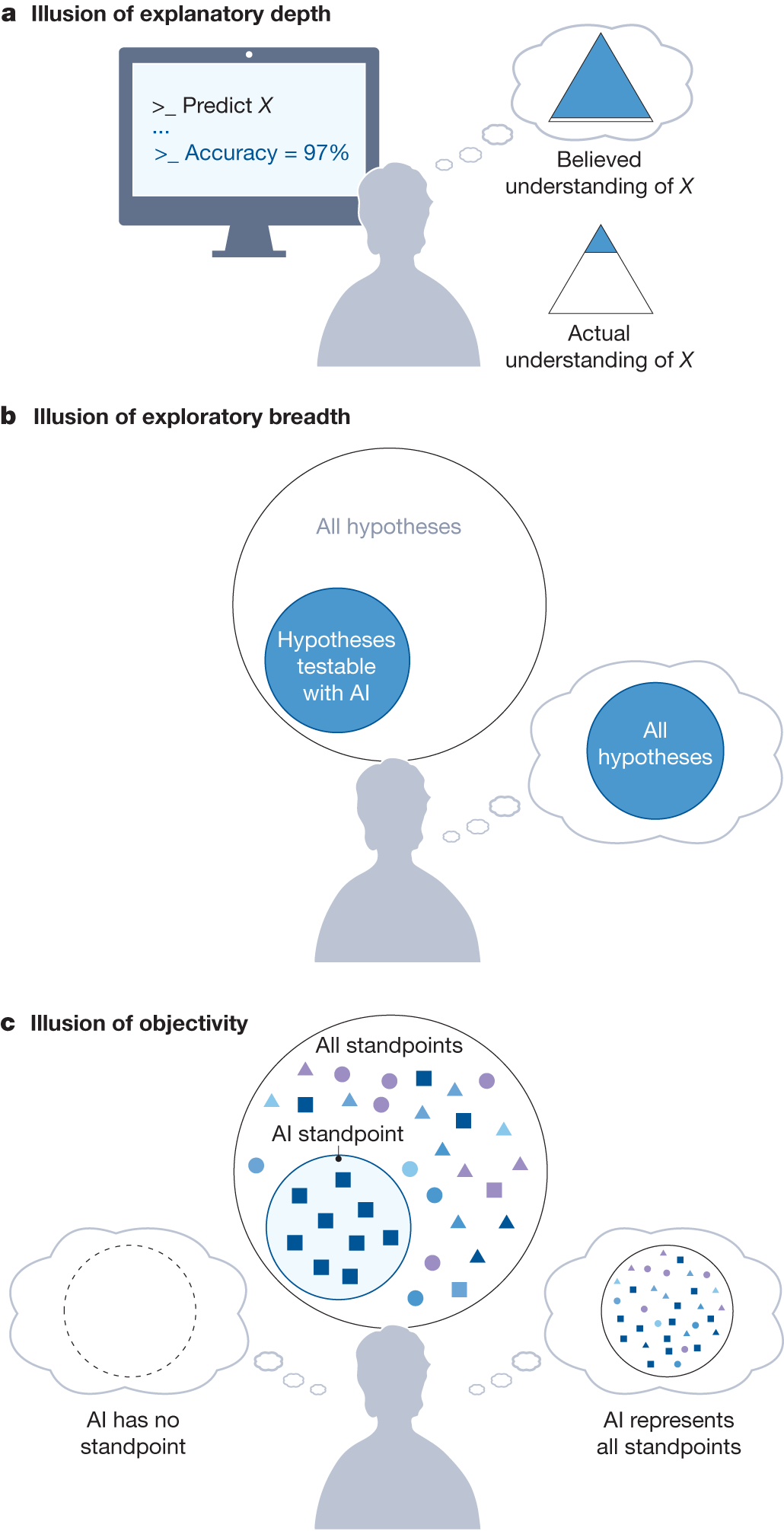
Artificial intelligence and illusions of understanding in scientific research
Scientists are enthusiastically imagining ways in which artificial intelligence (AI) tools might improve research. Why are AI tools so attractive and what are the risks of implementing them across the research pipeline? Here we develop a taxonomy of scientists’ visions for AI, observing that their appeal comes from promises to improve productivity and objectivity by overcoming human shortcomings. But proposed AI solutions can also exploit our cognitive limitations, making us vulnerable to illusions of understanding in which we believe we understand more about the world than we actually do. Such illusions obscure the scientific community’s ability to see the formation of scientific monocultures, in which some types of methods, questions and viewpoints come to dominate alternative approaches, making science less innovative and more vulnerable to errors. The proliferation of AI tools in science risks introducing a phase of scientific enquiry in which we produce more but understand less. By analysing the appeal of these tools, we provide a framework for advancing discussions of responsible knowledge production in the age of AI.
Charting AI’s Role in Scientific Discovery — Renaissance Philanthropy – A brighter future for all through science, technology, and innovation
Renaissance Philanthropy, with support from Google.org , is conducting a landscape study of AI integration in scientific research — and we want your perspective.

Teaching AI How Science Actually Works | IFP
How block-grant labs can generate the real-world data AI needs to do science

From Genius Science to Scenius Science - Cosmik Labs
Why personal AI tools might not be all we need to revolutionize science
AI has supercharged scientists—but may have shrunk science
Analysis of 41 million papers finds that although AI expands individual impact, it narrows collective scientific exploration
Infinite Researchers | AI-Powered Scientific Discovery
What happens to the speed of discovery if we have infinite researchers? Explore AI experiments accelerating breakthroughs.

And this includes any all scientific uses of AI and indeed any computational system, weather prediction, cancer research, medical imaging, mathematics, please just don't claim it's fine if you don't research automation in those areas. I'll post further resources below...

Emily M. Bender
But speaking of staying in one's lane, can we PLEASE switch the default position from "It's fine to use 'AI' for this thing I'm not an expert in" to "Yeah, I'd be really skeptical of any use cases and need to see strong evidence that it's okay, but I'm not the one who can produce that evidence"?
