


Tech Policy Press is a nonprofit media and community venture intended to provoke new ideas, debate and discussion at the intersection of technology and democracy. We publish opinion and analysis.
Language Models Trained on State Media Sources Launder Propaganda
Tech Policy Press is a nonprofit media and community venture intended to provoke new ideas, debate and discussion at the intersection of technology and democracy. We publish opinion and analysis.

The Rise of the Right-Wing Media Machine
This conservative media machine now rivals—and may well surpass—the power and the influence of the old-line press. It holds sway over much of the national agenda, deciding which ideas and...

Technocracy | The Paper Pilot
The Paper Pilot's digital garden of thoughts on philosophy, politics, and sociology
The Press Release Is Dead — Use This Instead – Mike Butcher
I’m QUITE TIRED of dealing with MILLIONS of tech entrepreneurs (these days there are a HELL of a lot of you) and (some) PR people who have ZERO clue how to pitch me/TechCrunch/the media. Their pitches are long-winded and rambling. They ask if they could ‘send some more information’. Listen, I have no idea if it’s interesting or not until you send it! Many just ask me out to lunch or coffee. (Thanks, but I prefer hanging out with my *actual friends*). Even worse, they haven’t read this post or seen my presentation on how to deal with tech media. [2021 update: This is a basic outline for super-early startups. If you want something for Post Series A / later stage startups go here].
Old Tricks, New Tech: How Legacy Media Capture Fuels Today’s Digital Authoritarianism
Marius Dragomir and Minna Aslama Horowitz discuss how digital authoritarianism is rising as states and Big Tech align, threatening independent media.

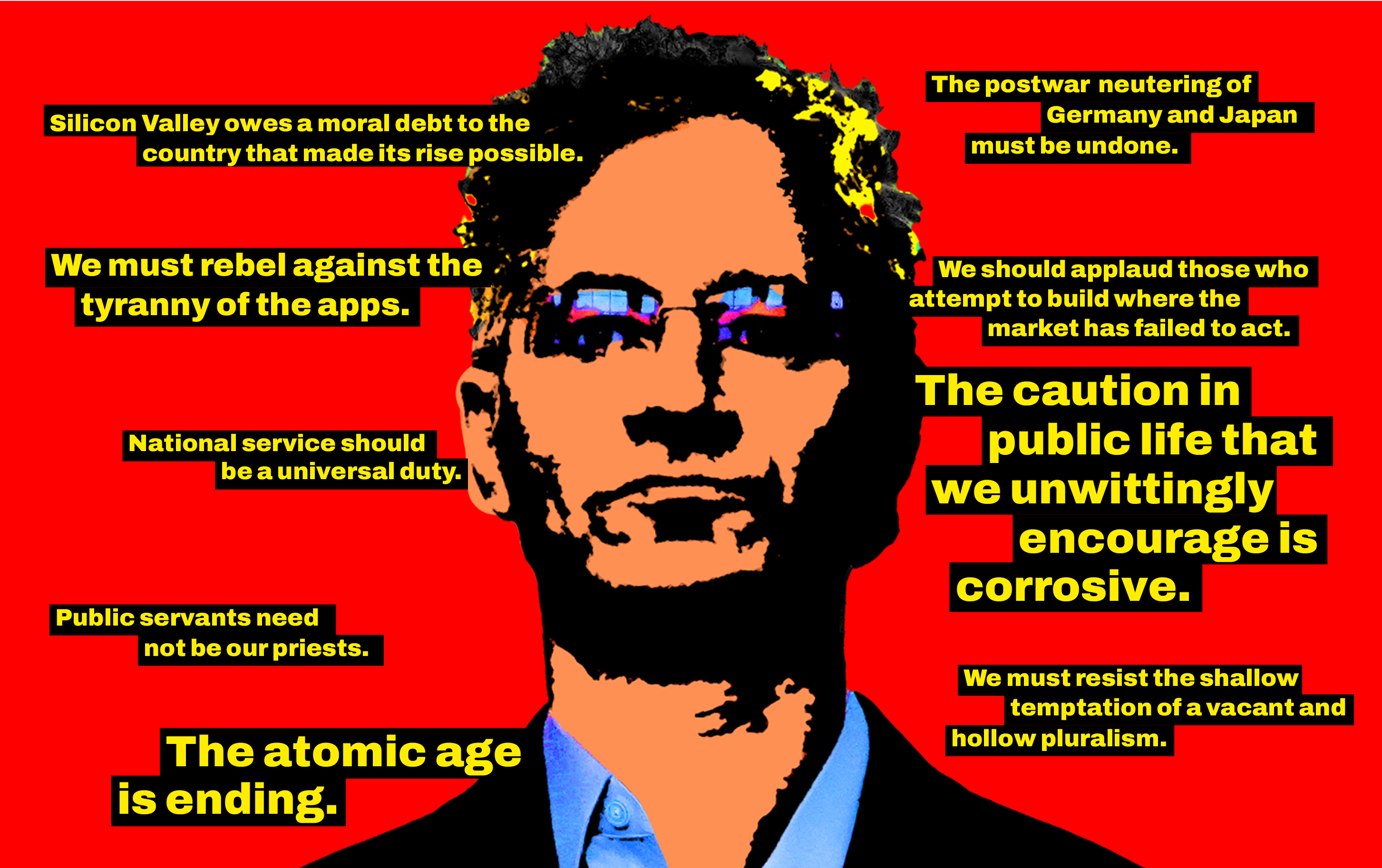
Palantir's social media manifesto is a blueprint for technofascism
The surveillance firm’s viral X post calls for hard power, conscription and the end of pluralism. AI expert and academic Mark Coeckelbergh on what happens when technology becomes the gateway to authoritarianism
Improving social media for democratic discourse
Social media have expanded opportunities for communication and political participation, but today's dominant platforms are optimized primarily for engagement and advertising revenue, contributing...

Fast Capitalism | Mavs Open Press Open Access Journals | University of Texas at Arlington
Fast Capitalism is an academic journal aimed at describing the current moment of capitalism. We publish peer reviewed scholarship and essays about the impact of rapid information and communication technologies on self, society and culture in the 21st century. Our authors examine how heretofore distinct social institutions, such as work and family, education and entertainment, have blurred to the point of near identity in an accelerated, post-Fordist stage of capitalism. This makes it difficult for people to shield themselves from subordination and surveillance. The working day has expanded; there is little down time anymore. People can 'office' anywhere, using laptops and cells to stay in touch. But these invasive technologies that tether us to capital and control can also help us resist these tendencies. People use the Internet as a public sphere in which they express and enlighten themselves and organize others; information technologies afford connection, mitigate isolation, and even make way for social movements. We are convinced that the best way to study an accelerated media culture and its various political economies and existential meanings is dialectically, with nuance, avoiding sheer condemnation and ebullient celebration. We seek to shape these new technologies and social structures in democratic ways. We look at technology, Artificial Intelligence (AI), global flows, political economy, culture and cultural studies, social theory, political theory, intersectionality, and the envionrment.
‘If we don’t fight back, we don’t have a future’: the journalist taking on the ‘tech fascists’ of Silicon Valley
As Elon Musk, Peter Thiel and their peers have grown richer and more influential, Gil Durán argues they have all but abandoned democracy – and found the perfect government to enable them

Media Capture Watch — Mapping Big Tech's Influence on Journalism
An interactive investigation into Big Tech and AI companies' funding relationships with journalism and media organizations.
Appropriating Technology | Public Sphere Project — Liberating Voices Pattern Language
Dematerialization, Participatory Design, Techno-Criticism, Intermediate Technologies, Users' IT Quality Network, Wholesome Design for Wicked Problems, Labor Visions, Community Inquiry, Tactical Media
The Risks of Industry Influence in Tech Research
Emerging information technologies like social media, search engines, and AI can have a broad impact on public health, political institutions, social dynamics, and the natural world. It is critical to develop a scientific understanding of these impacts to inform evidence-based technology policy that minimizes harm and maximizes benefits. Unlike most other global-scale scientific challenges, however, the data necessary for scientific progress are generated and controlled by the same industry that might be subject to evidence-based regulation. Moreover, technology companies historically have been, and continue to be, a major source of funding for this field. These asymmetries in information and funding raise significant concerns about the potential for undue industry influence on the scientific record. In this Perspective, we explore how technology companies can influence our scientific understanding of their products. We argue that science faces unique challenges in the context of technology research that will require strengthening existing safeguards and constructing wholly new ones.