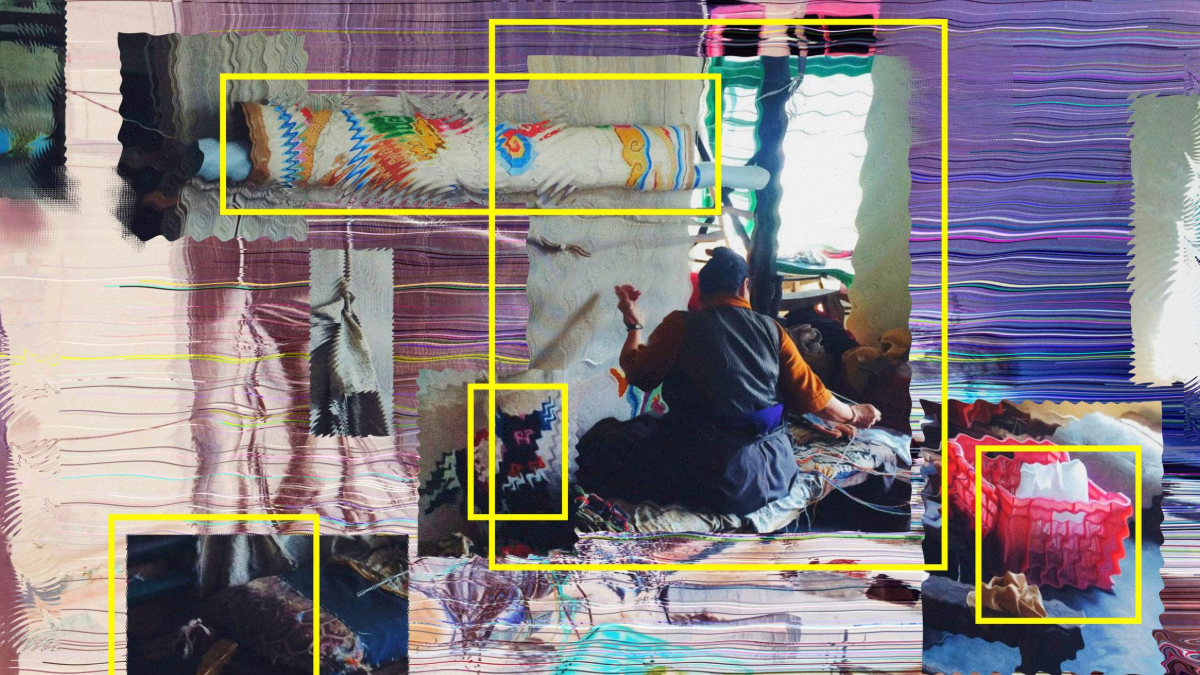
Tech Policy Press fellow James Ball asks, how should we interact with a technology designed to ‘speak’ with us on what appear to be human terms?
How to talk about "AI" without adding to the anthropomorphization
Emily M. Bender and Nanna Inie In our op-ed for Tech Policy Press ("We Need to Talk About How We Talk About 'AI'"), we made the case against the...
AI is An Ideology, Not A Technology
At its core, "artificial intelligence" is a perilous belief that fails to recognize the agency of humans.
Don't treat surface-level metaphors about AI as if they describe fundamental reality
Debates about whether AI is a “tool” or whether it’s wrong to “anthropomorphize” it often seem confused about what reality is made of

Anthropomorphism in AI: hype and fallacy
This essay focuses on anthropomorphism as both a form of hype and fallacy. As a form of hype, anthropomorphism is shown to exaggerate AI capabilities and performance by attributing human-like traits to systems that do not possess them. As a fallacy, anthropomorphism is shown to distort moral judgments about AI, such as those concerning its moral character and status, as well as judgments of responsibility and trust. By focusing on these two dimensions of anthropomorphism in AI, the essay highlights negative ethical consequences of the phenomenon in this field.

Anthropomorphism in AI: hype and fallacy
This essay focuses on anthropomorphism as both a form of hype and fallacy. As a form of hype, anthropomorphism is shown to exaggerate AI capabilities and performance by attributing human-like traits to systems that do not possess them. As a fallacy, anthropomorphism is shown to distort moral judgments about AI, such as those concerning its moral character and status, as well as judgments of responsibility and trust. By focusing on these two dimensions of anthropomorphism in AI, the essay highlights negative ethical consequences of the phenomenon in this field.
AI Science Fiction Versus Reality
The AI Researcher Who Just Quit Anthropic Says It’s ‘Crunch Time for Humanity’
Jacob Coxon talks to WIRED about the “mini Manhattan project” inside Anthropic, the problem with alignment, and why AI labs have just a few years left to make their systems safe.

AI as Social Technology: Astor Lecture by Professor Henry Farrell
AI as Social Technology: Astor Lecture by Professor Henry Farrell
Human scientists trounce the best AI agents on complex tasks
State-of-the-industry report finds that, despite the limitations of artificial-intelligence systems, researchers have embraced them.
What Does 'Human-Centred AI' Mean?
While it seems sensible that human-centred artificial intelligence (AI) means centring "human behaviour and experience," it cannot be any other way. AI, I argue, is usefully seen as a relationship between technology and humans where it appears that artifacts can perform, to a greater or lesser extent, human cognitive labour. This is evinced using examples that juxtapose technology with cognition, inter alia: abacus versus mental arithmetic; alarm clock versus knocker-upper; camera versus vision; and sweatshop versus tailor. Using novel definitions and analyses, sociotechnical relationships can be analysed into varying types of: displacement (harmful), enhancement (beneficial), and/or replacement (neutral) of human cognitive labour. Ultimately, all AI implicates human cognition; no matter what. Obfuscation of cognition in the AI context -- from clocks to artificial neural networks -- results in distortion, in slowing critical engagement, perverting cognitive science, and indeed in limiting our ability to truly centre humans and humanity in the engineering of AI systems. To even begin to de-fetishise AI, we must look the human-in-the-loop in the eyes.

What Does 'Human-Centred AI' Mean?
While it seems sensible that human-centred artificial intelligence (AI) means centring "human behaviour and experience," it cannot be any other way. AI, I argue, is usefully seen as a relationship between technology and humans where it appears that artifacts can perform, to a greater or lesser extent, human cognitive labour. This is evinced using examples that juxtapose technology with cognition, inter alia: abacus versus mental arithmetic; alarm clock versus knocker-upper; camera versus vision; and sweatshop versus tailor. Using novel definitions and analyses, sociotechnical relationships can be analysed into varying types of: displacement (harmful), enhancement (beneficial), and/or replacement (neutral) of human cognitive labour. Ultimately, all AI implicates human cognition; no matter what. Obfuscation of cognition in the AI context -- from clocks to artificial neural networks -- results in distortion, in slowing critical engagement, perverting cognitive science, and indeed in limiting our ability to truly centre humans and humanity in the engineering of AI systems. To even begin to de-fetishise AI, we must look the human-in-the-loop in the eyes.
Updates to Consumer Terms and Privacy Policy
Anthropic is an AI safety and research company that's working to build reliable, interpretable, and steerable AI systems.
The Consumer AI Revolution Won’t Be Technical. It’ll Be Emotional.
In technology, the obvious revolutions often come last.
70 years of AI hype
Quoting from Olivia Guest et al. (2025) "Against the Uncritical Adoption of AI Technologies in Academia."