

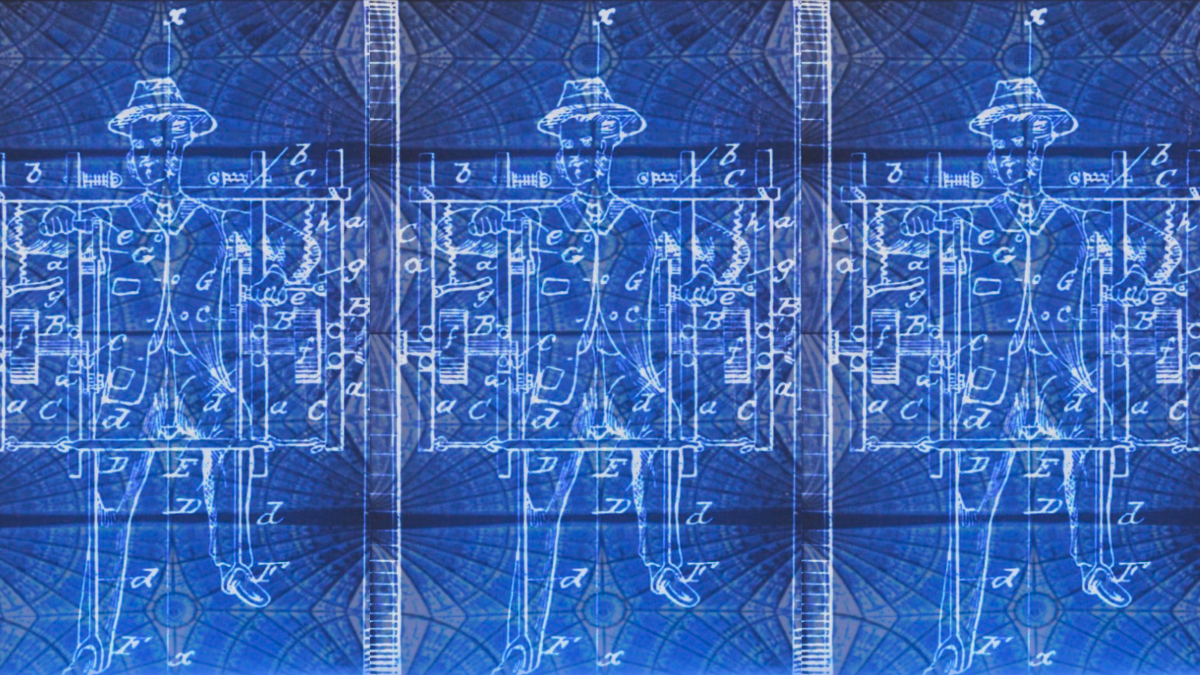
If we are to combat the AI industry’s push to build digital gods, we have to understand the ideology of the antihumanist project, writes Dr. Émile P. Torres.
The TESCREAL bundle: Eugenics and the promise of utopia through artificial general intelligence
The stated goal of many organizations in the field of artificial intelligence (AI) is to develop artificial general intelligence (AGI), an imagined system with more intelligence than anything we have ever seen. Without seriously questioning whether such a system can and should be built, researchers are working to create “safe AGI” that is “beneficial for all of humanity.” We argue that, unlike systems with specific applications which can be evaluated following standard engineering principles, undefined systems like “AGI” cannot be appropriately tested for safety. Why, then, is building AGI often framed as an unquestioned goal in the field of AI? In this paper, we argue that the normative framework that motivates much of this goal is rooted in the Anglo-American eugenics tradition of the twentieth century. As a result, many of the very same discriminatory attitudes that animated eugenicists in the past (e.g., racism, xenophobia, classism, ableism, and sexism) remain widespread within the movement to build AGI, resulting in systems that harm marginalized groups and centralize power, while using the language of “safety” and “benefiting humanity” to evade accountability. We conclude by urging researchers to work on defined tasks for which we can develop safety protocols, rather than attempting to build a presumably all-knowing system such as AGI.
AI agents pose untold risk to humanity. We must act to prevent that future | David Krueger
The pieces are falling into place for autonomous artificial intelligence. We must stop unregulated development

Ghost in the Machine | Full Documentary
ETCH
We believe technology should serve humanity and that human creativity is essential and irreplaceable. We support the ethical development and deployment of AI by funding protective technologies and translating research into real-world tools for creative communities.

Your Favorite Science YouTubers Are Wrong About AI, (e.g. SciShow, Kurzgesagt, and Kyle Hill )
The Age of Wonders and Terrors
Twenty years ago, when the idea of AI taking over the world in our lifetimes still struck most of us as the unconstrained fantasy of those who knew too much science fiction and too little science, …

Nathan J Robinson on Twitter / X
the correct take on the AI risks. not "godlike machine that decides to kill us all" but "machine that makes it much easier for humans to kill one another." from the very sensible @timnitGebru in Wired: https://t.co/wM0ucsN2no pic.twitter.com/vtHQ02my0G— Nathan J Robinson (@NathanJRobinson) September 13, 2026
Homo Deus by Yuval Noah Harari review – how data will destroy human freedom
It’s a chilling prospect, but the AI we’ve created could transform human nature, argues this spellbinding new book by the author of Sapiens
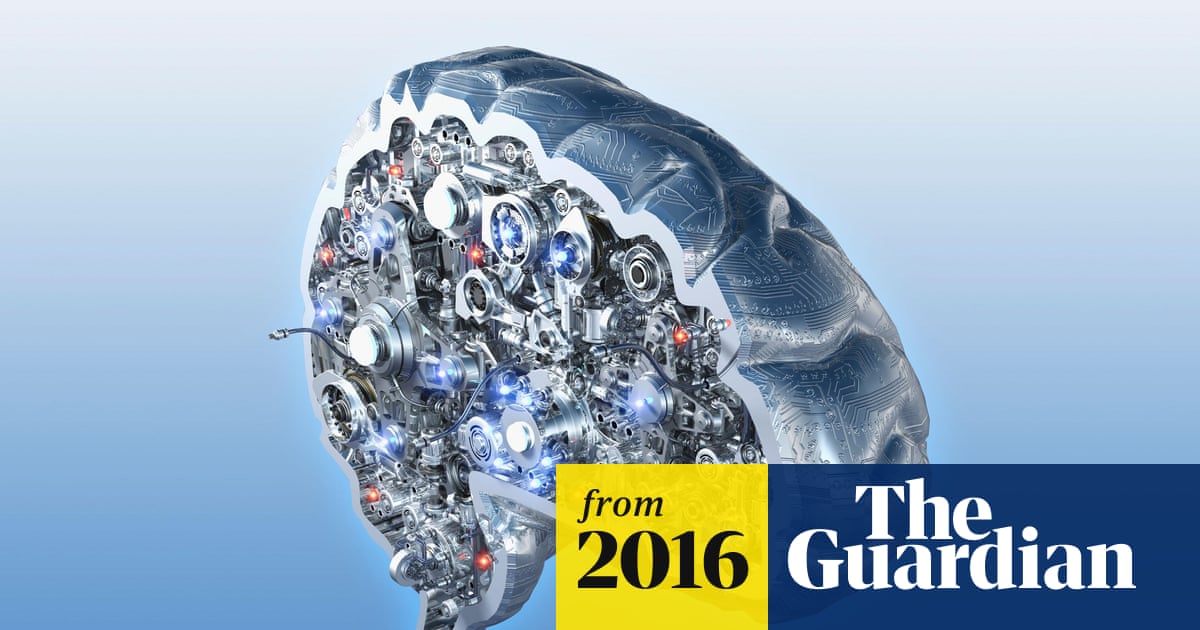
Sex, AI, and the Apocalypse - Ian Duncan
How a community devoted to thinking clearly incubated salvation stories, abusive experiments, race science, and an affection for autocracy, and why that history matters now that its alumni are asking for the public trust on AI.
The politics and possibilities of ‘AI could kill us all’
AI will not exterminate the human race. But what big tech really *is* doing is bad enough that the notion may help fuel the movement against it.
Justin Brannan on Twitter / X
Worst case AI scenario may not be all-powerful, ungovernable machines but a tiny group of all-powerful, ungovernable people. We ponder the sci-fi horror of civilization ending but should focus on the more plausible horror of a society divided into haves and have-nots, forever. https://t.co/5nrw7wwQSH— Justin Brannan (@JustinBrannan) October 20, 2026
AI, Decomputing and the Interregnum
This paper treats AI as diagnostic for the deeper changes taking place in the existing order of things. It uses AI's alignment with both the political economy and with the dualisms that underpin it, including race, gender and anthropocentrism, to highlight the nihilistic character of the current restructuring. AI's scaling and accelerationism are taken as examples of the wider tactics being invoked by hegemonic power to maintain control under changing conditions. From this perspective, the massive build-out of data centres isn't simply a seizure of energy resources but a manifestation of an aggressive and misogynist technopolitics. The paper argues that a liberal push for digital sovereignty doesn't interrupt these dynamics but plays into the hands of emerging technofascism. It proposes instead the prefigurative tactic of 'decomputing', which draws on degrowth, deautomatisation and a convivial approach to technology. It explores decomputing as a means to mitigate both material and relational harms and as a decisive turn towards infrastructuring the common good. The paper concludes that AI is the contradiction that reveals many others, not least the gap between claims to legitimacy and the actuality of destructive violence, and proposes an alternative technopolitics of reciprocity that prioritises care and sustainability.
The Techno-Religion at the Center of the A.I. Debate
Are those calling to slow down the development of artificial intelligence in a “doomsday cult,” as some critics say? Our reporter explains.

AI as Social Technology
Our debates about ‘AI’ grow out of 1990s science fiction. Back then, Vinge (1993) wrote essays and novels urging us to face up to the oncoming “Singularity”: a moment of rapid change that would fundamentally transform the human condition. On that day, AI would rapidly evolve from merely human-level intelligence, what some now call ‘artificial general intelligence’ (AGI), into something super-intelligent with its own interests and goals. Humanity would then either be casually eliminated by out-of-control machines, or humans would become as gods, with super-human servitors at our command.
"The forces that are now shaping AI are the same forces that turned the open internet into monopolistic platforms, converted peer-to-peer participation into precarious labor, and enclosed the digital commons. They are now threatening to capture and enclose thought itself." osf.io/preprints/socarxiv/qahd3_v1/
