

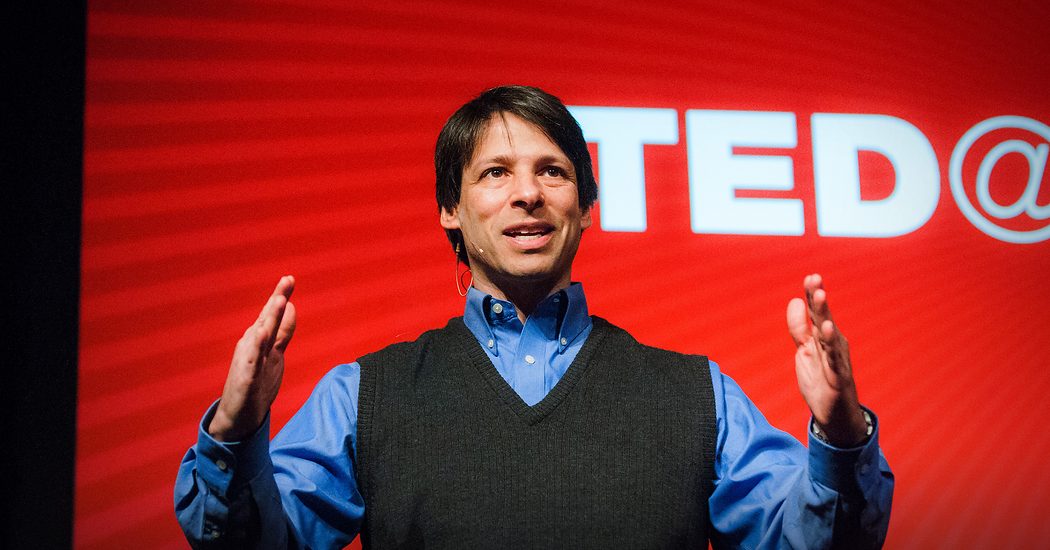
Someone always asks the math teacher, "Am I going to use calculus in real life?" And for most of us, says Arthur Benjamin, the answer is no. He offers a bold proposal on how to make math education relevant in the digital age.
Transforming Curriculum and Building Capacity in K–12 Data Science Education · Issue 4.4, Fall 2022
The recently released and updated Pre-K–12 Guidelines for Assessment and Instruction in Statistics Education (GAISE II; Bargagliotti et al., 2020) provides guidance as to how teachers can support the development of data literacy for all students in the pre-K–12 curriculum. However, to truly meet the vision of the GAISE II report and to support all students in developing data literacy for today’s societies, significant transformations need to be made to the educational system as a whole to build capacity for such development. In this article we discuss the current state of the K–12 curriculum focusing on the mathematics curriculum where statistics and data concepts are most frequently situated, presenting some challenges and exciting examples. We then discuss areas of need for capacity building that must come at all levels, including: K–12 school curriculum, K–12 teacher professional development, K–12 teacher preparation, statistics and data science education research, and policies. We also provide a set of recommendations for building capacity to develop the data literacy of all students through the teaching of data science and statistics concepts and practices in the K–12 mathematics curriculum to support democratic equity through engaged citizenship.

Artificial intelligence in mathematics education: The good, the bad, and the ugly
Integrating Artificial Intelligence [AI] into mathematics education offers promising advancements and potential pitfalls. Striking a balance between AI-driven developments and preserving core pedagogical principles is critical in the teaching and learning environment. AI has emerged as a transformative force in various fields, including education. In the realm of mathematics education, AI technologies offer a spectrum of potential benefits (including personalize instruction, adaptive assessment, interactive learning environments, and real-time feedback, among others) and challenges (such as lack of creativity and problem-solving skills, inability to explain reasoning, bias in data and algorithms, absence of emotional intelligence and data privacy and security concern etc). This conceptual study used autoethnography as the methodology and qualitative content approach to analyze data. The study discussed historical background of AI and considered ethical issues around AI. It was concluded that the journey to harness the full potential of AI in mathematics education requires careful navigation of the good, the bad, and the ugly aspects inherent in this technological evolution.
Terence Tao – Kepler, Newton, and the true nature of mathematical discovery
“And what those stories teach us about how AI will revolutionize math”
The End of Mathematics — Daniel Litt
I'm currently returning to Toronto from a summit on the future of mathematics, at OpenAI. Sebastian Bubeck asked me to talk a bit about the future we'd all like to avoid, where humans are mathematically disempowered. Jacob Tsimerman advised us to try to prioritize detail over correctness, and I have no doubt that I succeeded in deprioritizing correctness.

It Is Fun to Pretend That Hard Things Are Easy!
A new online math platform promises to teach math 4x faster. Here is how!
Learning to Learn: You, Too, Can Rewire Your Brain (Published 2017)
How an engineering professor who “flunked my way” through high school math and science went on to create the world’s most popular online course.

Mathematical Thinking Isn’t What You Think It Is | Quanta Magazine
The mathematician David Bessis claims that everyone is capable of, and can benefit greatly from, mathematical thinking.

Mathematics in the age of AI
An essay, based on a public lecture delivered at the 2026 International Congress of Mathematicians, on how the mathematical community might respond to the arrival of artificial intelligence tools that are capable of performing research-level mathematical tasks. Rather than debating the capabilities of such tools, we condition on the hypothesis that these capabilities will arrive, and examine instead a question that is orthogonal to it: what the goals and values of mathematical research actually are. The problem-solving component of mathematics is used as a case study.

Is AI the End of Math As We Know It? | Quanta Magazine
Mathematicians are facing the sudden shift with grief, anger, and a desperate search for fresh ideas: “If we don’t adapt, there’s just no more math in 50 years.”

Math Curriculum Review: MathAcademy
Math Academy is what happens when you build a math program without trying to make it cute. It's ruthlessly effective, occasionally frustrating, and probably the closest thing we have to a "truth in advertising" approach to math education. Math Academy will take your 4th grader all the way through university

What it Means to Be a Mathematician When AI Does the Math
Researchers debate motivation, purpose, and the field’s future

The Math Academy Way
The Math Academy Way Using the Power of Science to Supercharge Student Learning – Working Draft – Note: If you are reading this as a PDF, consider switching to the Google Doc which may contain new updates. Authored by Justin Skycak, advised by Jason Roberts. Ma...

Math Academy
Math Academy is an AI-powered, fully-automated online math-learning platform. Math Academy meets each student where they are via an adaptive diagnostic assessment and introduces and reinforces concepts based on each student’s individual strengths and weaknesses. The comprehensive UC approved and WASC accredited courses begin with 4th-grade math and continue through advanced university-level courses, including standard and integrated curriculum that meet both state and common core standards. The Math Academy pedagogy follows a mastery-based learning philosophy, leveraging cutting-edge cognitive learning theory such as distributed practice, interleaving, and mixed review layered on knowledge graph technology to achieve outsized results.
My Review on Math Academy after almost 1 year as a university student (15k + exp total)
GitHub - janaagaard75/calculus-exercises: Sheets with calculus exercises suitable for kids that are learning the first basic arithmetic operations.
Sheets with calculus exercises suitable for kids that are learning the first basic arithmetic operations. - janaagaard75/calculus-exercises
Math Academy
The Math Academy curriculum and pedagogy leverage cutting-edge cognitive learning theory. Why? Because it’s been studied extensively, backed up and proven to work. We aren’t providing edu-tainment. This isn’t enrichment. We teach math as if we were training a professional athlete or musician, or anyone looking to acquire a skill to the highest degree possible. This is real work for a student who is serious about learning math. We expect every student using our system to actually master the material, and do it efficiently and effectively.