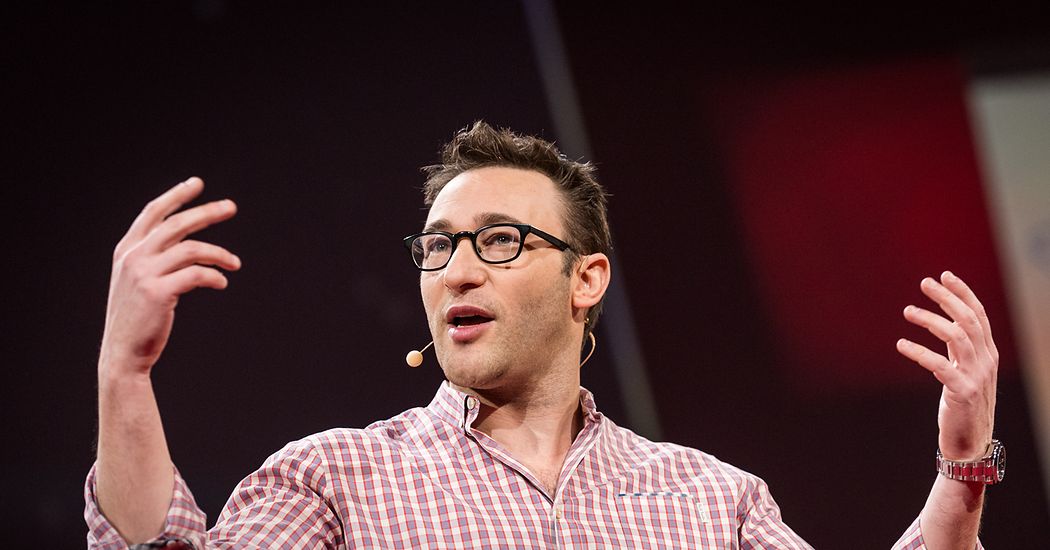
What makes a great leader? Management theorist Simon Sinek suggests, it's someone who makes their employees feel secure, who draws staffers into a circle of trust. But creating trust and safety -- especially in an uneven economy -- means taking on big responsibility.
Simon Sinek: Why Leaders Eat Last
In this in-depth talk, ethnographer and leadership expert Simon Sinek reveals the hidden dynamics that inspire leadership and trust. In biological terms, leaders get the first pick of food and other spoils, but at a cost. When danger is present, the group expects the leader to mitigate all threats even at the expense of their personal well-being. Understanding this deep-seated expectation is the key difference between someone who is just an “authority” versus a true “leader.” For more on this topic, check out Sinek’s latest book Leaders Eat Last: Why Some Teams Pull Together and Others Don’t now available for pre-order. About Simon Sinek A trained ethnographer and the author of Start With Why: How Great Leaders Inspire Everyone to Take Action, Simon Sinek has held a life-long curiosity for why people and organizations do the things they do. Studying the leaders and companies that make the greatest impact in the world and achieve a more lasting success than others, he discovered the formula that explains how they do it. Sinek’s amazingly simple idea, The Golden Circle, is grounded in the biology of human decision-making and is changing how leaders and companies think and act. His innovative views on business and leadership have earned him invitations to meet with an array of leaders and organizations, including Microsoft, Dell, SAP, Intel, Chanel, Members of the United States Congress, and the Ambassadors of Bahrain and Iraq. Sinek recently became an adjunct staff member of the RAND Corporation, one of the most highly regarded think tanks in the world. He also works with the non-profit Education for Employment Foundation to help create opportunities for young men and women in the Middle East region. He lives in New York, where he teaches graduate level strategic communications at Columbia University.

Psychological Safety Is A Leadership Choice
A strategic imperative for building a subculture of innovation
Leadership: Values
A question I get quite frequently is “What makes a good leader?” One of the most important aspects of a good leader is that they have values. This may at first sound noncontroversial, but we are surrounded today by leaders who do not have values or whose only values are to get rich personally or to be powerful (or both). Tech investors have been especially guilty of enabling charismatic leaders, and sometimes even non-charismatic but wildly successful ones, who are fundamentally hollow and wi...
Develop Strategic Thinkers Throughout Your Organization
It’s the single most important skill a leader needs.

How Simon Sinek’s TEDx fame made him think deeply about trust issues | TED Blog
Once Simon Sinek's TEDx talk took off, it had an unexpected side effect: he didn't know who he could trust. This led him to new research...
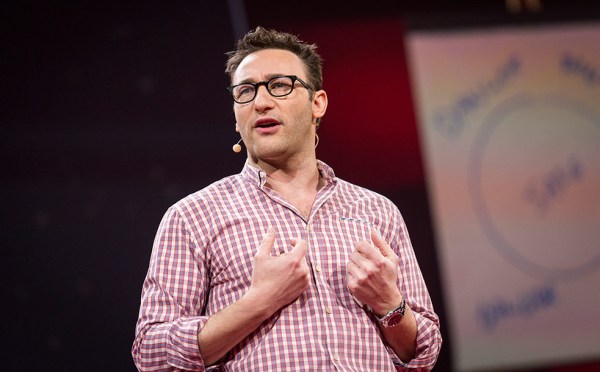
The surprising traits of good remote leaders
Strong in-person leadership skills don’t necessarily translate to being a good virtual leader. Instead, organisation and competency reign supreme.

Why the Most Productive People Don’t Always Make the Best Managers
Not every top performer makes for a good manager. In this piece, the authors argue that the difference between a good individual contributor and a good manager hinges on six key abilities: being open to feedback and personal change, supporting others’ development, being open to innovation, communicating well, having good interpersonal skills, and supporting organizational changes. The problem for most organizations is that they hope their new managers will develop these skills after being promoted, but that’s exactly when overwhelmed new managers tend to fall back on their individual contributor skill sets. Instead, the authors suggest that organizations should start developing these skills in all of their employees early on — after all, they’re useful for individual contributors, too.

Why Good Leaders Fail
The risk of sudden leadership failure can be headed off by early detection of challenges and better supports.

Which Way Do You Run? | Andreessen Horowitz
The difference between a good CEO and a great one? Trusting your gut and confronting your fears head on.

Emergent leadership: The trait that smart, innovative companies seek out in employees
Emergent leaders step up and lead when qualified but are comfortable in the background, too.

Want to Instantly Become a Better Leader? Science Says 3 Simple Habits Will Make You More Influential and Charismatic
Simple things you can immediately start doing, without changing your leadership style. (Or yourself.)

Who Can You Trust?
Reprint: R1403K Success in business unquestionably requires some willingness to cooperate through having faith in others. The question is how much faith and in whom? Decades of scientific research show that people’s accuracy in deciding if another can be trusted tends to be only slightly better than chance. But this isn’t because trustworthiness is completely unpredictable. It’s because the guidelines most of us use to make these predictions are flawed. We place too much emphasis on reputation and perceived confidence, ignoring the fact that human behavior is always sensitive to context and can often be better assessed by our own intuition. So when your company’s money and resources are on the line, how can you do a better job of gauging trustworthiness and thereby improve your likelihood of success? This article draws on emerging research to show how trustworthiness works and offers four points to keep in mind the next time you’re deciding whether or not to do business with a new partner: Integrity can vary, power does corrupt, confidence often masks incompetence, and it’s OK to trust your gut.
The Leadership Pendulum: How to Avoid the Extremes of Organizational Management
Movement leaders often err either on the side of passivity, for fear of replicating painful dynamics, or power-hoarding, for fear of sharing authority. Instead of swinging from one to the other side of the pendulum, we can cultivate balance–together.

(PDF) Leadership Failure in the Eyes of Subordinates: Perception, Antecedents, and Consequences *
PDF | Effective leaders and leadership behaviors and practices are well-researched areas in the domain of leadership and management. However,... | Find, read and cite all the research you need on ResearchGate

Leaders are responsible for culture and strategy. Everything else is secondary.
Are you focused on serving a need or building a product? The difference matters more than you think.
Trust is the most powerful currency in business | Fortune
A clear sense of ethics tells employees, clients, and members of your community that you care about a lot more than making money.