

.jpg)
From late-night host cancellations to removing LGBTQ+ history from government sites, politicians in both parties are contributing to the overwriting of the internet — a place where lots of queer and trans people first find community.
Republicans accused Facebook, Google and Twitter of bias. Democrats called the hearing ‘dumb.’
Facebook, Google and Twitter on Tuesday sought to defend themselves against accusations from Republican lawmakers that the tech giants censor conservative news and views during a congressional hearing that devolved into a political sniping match.

New study shows just how Facebook's algorithm shapes conservative and liberal bubbles
Research conducted at the height of the 2020 election reveals new details about how Facebook's algorithms handle political content. But it suggests there are no easy fixes to political polarization.

interfluidity » Consensus not censorship
We’ve become obsessed over the past few years with the problem of misinformation. And for good reason. “Flood the zone with shit” is now standard operating procedure for a variety of interests and factions. Groups who pretend to be above that kind of thing let confirmation bias do the same work, elevating conjectures they find convenient to believe far beyond the evidentiary basis for believing them, and transmuting concurrence among prestigious groups whose biases are aligned into “authority” to which they demand deferrence. Casual information consumers become divided into two camps, the “do your own research” types who imagine, mistakenly, that they are capable of seeing through all this (and so succumb to their own confirmation bias), and those who more accurately understand that they cannot reliably distinguish truth from bullshit (and so opt out of democratic deliberation with a shrug, other than perhaps to vote for the candidates whose political party they distrust less).
Facebook Shouldn't Give Politicians More Power Than Ordinary Users
Amidst escalating rhetoric about alleged "anti-conservative bias" on social media, Facebook has doubled down on its policies exempting (some) politicians from its ordinary fact-checking and from its

A Queer and Feminist Defense of Being Anonymous Online
From the earliest days of digital communities, online abuse has been connected to anonymity. While concerns around the impact of anonymity, particularly for women, people of color and LGBTQ folks, is legitimate, this paper argues that a flat rejection of digital anonymity is problematic, foreclosing certain forms of queer and feminist praxis. To make this case, I turn to the platform politics of Craigslist. Using Craigslist as a case study, I discuss the persistent stigma attached to online anonymity, before addressing specific tactics of online anonymity associated with queer and feminist values of privacy and mutual aid. Drawing on accounts of Craigslist users who saw anonymity as a protective form of control over their personal information, I outline ways in which anonymity is not solely an enabler for misogyny and homophobia, and can instead (or rather, also) be a subversive tool for self-expression and intimacy.
A Queer and Feminist Defense of Being Anonymous Online
From the earliest days of digital communities, online abuse has been connected to anonymity. While concerns around the impact of anonymity, particularly for women, people of color and LGBTQ folks, is legitimate, this paper argues that a flat rejection of digital anonymity is problematic, foreclosing certain forms of queer and feminist praxis. To make this case, I turn to the platform politics of Craigslist. Using Craigslist as a case study, I discuss the persistent stigma attached to online anonymity, before addressing specific tactics of online anonymity associated with queer and feminist values of privacy and mutual aid. Drawing on accounts of Craigslist users who saw anonymity as a protective form of control over their personal information, I outline ways in which anonymity is not solely an enabler for misogyny and homophobia, and can instead (or rather, also) be a subversive tool for self-expression and intimacy.
Auditing Political Exposure Bias: Algorithmic Amplification on Twitter/X During the 2024 U.S. Presidential Election
Approximately 50% of tweets in X's user timelines are personalized recommendations from accounts they do not follow. This raises a critical question: What political content are users exposed to beyond their established networks, and what implications does this have for democratic discourse online? In this paper, we present a six-week audit of X's algorithmic content recommendations during the 2024 U.S. Presidential Election by deploying 120 sock-puppet monitoring accounts to capture tweets from their personalized "For You" timelines. Our objective is to quantify out-of-network content exposure for right- and left-leaning user profiles and assess any potential inequalities and biases in political exposure. Our findings indicate that X's algorithm skews exposure toward a few high-popularity accounts across all users, with right-leaning users experiencing the highest level of exposure inequality. Both left- and right-leaning users encounter amplified exposure to accounts aligned with their own political views and reduced exposure to opposing viewpoints. Additionally, we observe that new accounts experience a right-leaning bias in exposure within their default timelines. Our work contributes to understanding how content recommendation systems may induce and reinforce biases while exacerbating vulnerabilities among politically polarized user groups. We underscore the importance of transparency-aware algorithms in addressing critical issues such as safeguarding election integrity and fostering a more informed digital public sphere.

Trolling democracy: anonymity doesn’t cause conflicts, bad site design does
‘Don’t feed the trolls’, people on social media are told. By forcing people to use their real names online, the managers of online forums hope to shame trolls into silence. But, J…

Seen but not heard: The New York Times failed to quote trans people in over 60% of 2023 stories on anti-trans legislation
A new report from Media Matters and GLAAD finds that The New York Times excluded the perspectives of trans people from two-thirds of its stories about anti-trans legislation in the year following public criticism for its handling of the topic. Media Matters previously reported that the Times helped fuel a right-wing anti-trans panic in 2022 by platforming anti-trans extremists, painting rising transgender identification as a social contagion, and fearmongering about the costs of transgender acceptance. In February 2023, the paper received two separate open letters: one from a coalition of 150+ organizations and leaders, including GLAAD, and a separate letter signed by hundreds of Times contributors that criticized the outlet's contributions to a deadly anti-LGBTQ culture war. The newspaper attempted to conflate both efforts, dismissing all criticisms of its coverage as merely “protests organized by advocacy groups.” Between February 15, 2023, when those letters were separately delivered to the Times, and February 15, 2024, the Times published at least 65 articles that mentioned U.S. anti-trans legislation in either their headline or lead paragraphs. We counted how often the paper quoted openly trans or gender-nonconforming sources, cited anti-trans misinformation or talking points without context or adequate fact-checking, and accurately represented the records of anti-trans figures mentioned in its stories. Our findings: 66% of the articles did not quote even one trans or gender-nonconforming person. 18% of the articles quoted misinformation from anti-trans activists without adequate fact-checking or additional context. 6 articles obscured the anti-trans background of sources, erasing histories of extremist rhetoric or actions.

Age-Verification Laws Seek to Erase LGBTQ+ Identity from the Internet
Age-verification laws are weaponized to censor LGBTQ+ and abortion-related content online under the guise of protecting children from porn.

Sharing without clicking on news in social media
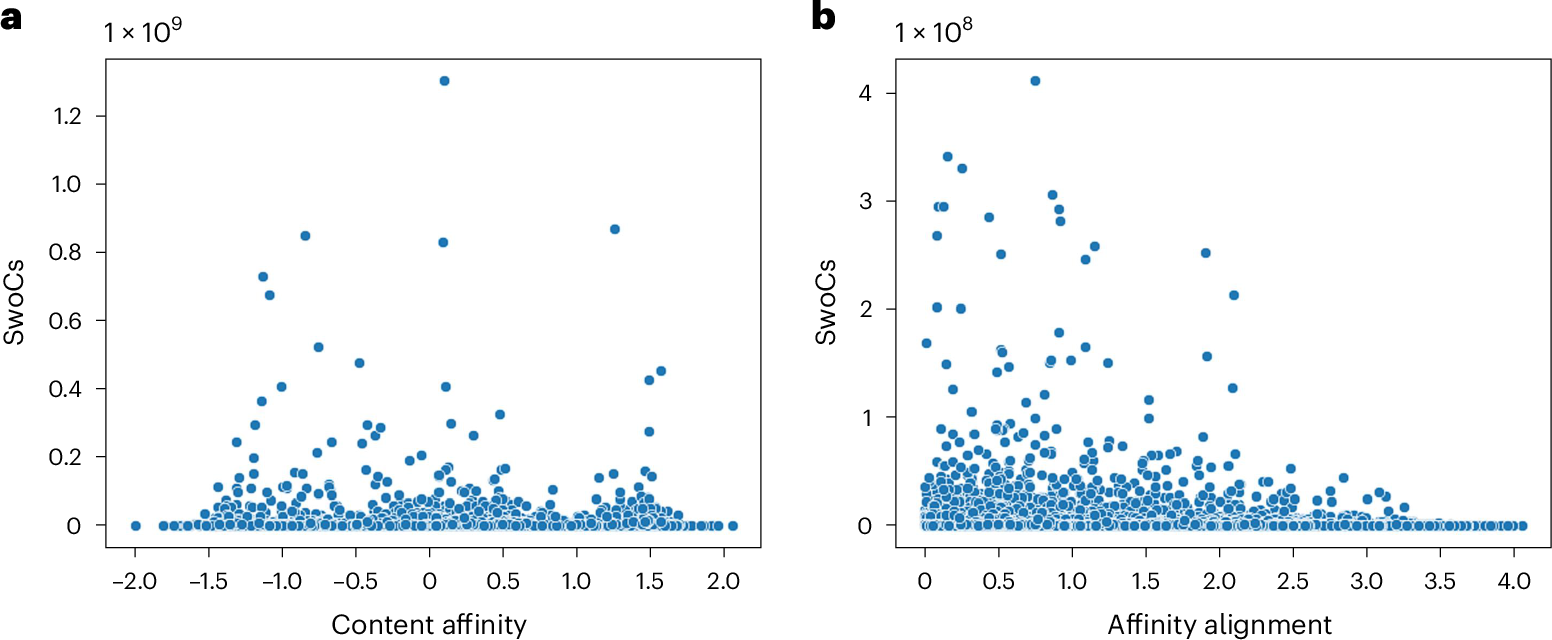
Social media have enabled laypersons to disseminate, at scale, links to news and public affairs information. Many individuals share such links without first reading the linked information. Here we analysed over 35 million public Facebook posts with uniform resource locators shared between 2017 and 2020, and discovered that such ‘shares without clicks’ (SwoCs) constitute around 75% of forwarded links. Extreme and user-aligned political content received more SwoCs, with partisans engaging in it more than politically neutral users. In addition, analyses with 2,969 false uniform resource locators revealed higher shares and, hence, SwoCs by conservatives (76.94%) than liberals (14.25%), probably because, in our dataset, the vast majority (76–82%) of them originated from conservative news domains. Findings suggest that the virality of political content on social media (including misinformation) is driven by superficial processing of headlines and blurbs rather than systematic processing of core content, which has design implications for promoting deliberate discourse in the online public sphere.
I am a 15-year-old girl. Let me show you the vile misogyny that confronts me on social media every day | Anonymous
Objectification, hate, rape threats: the politicians debating online abuse mean well, but to truly understand, they need to see what I see
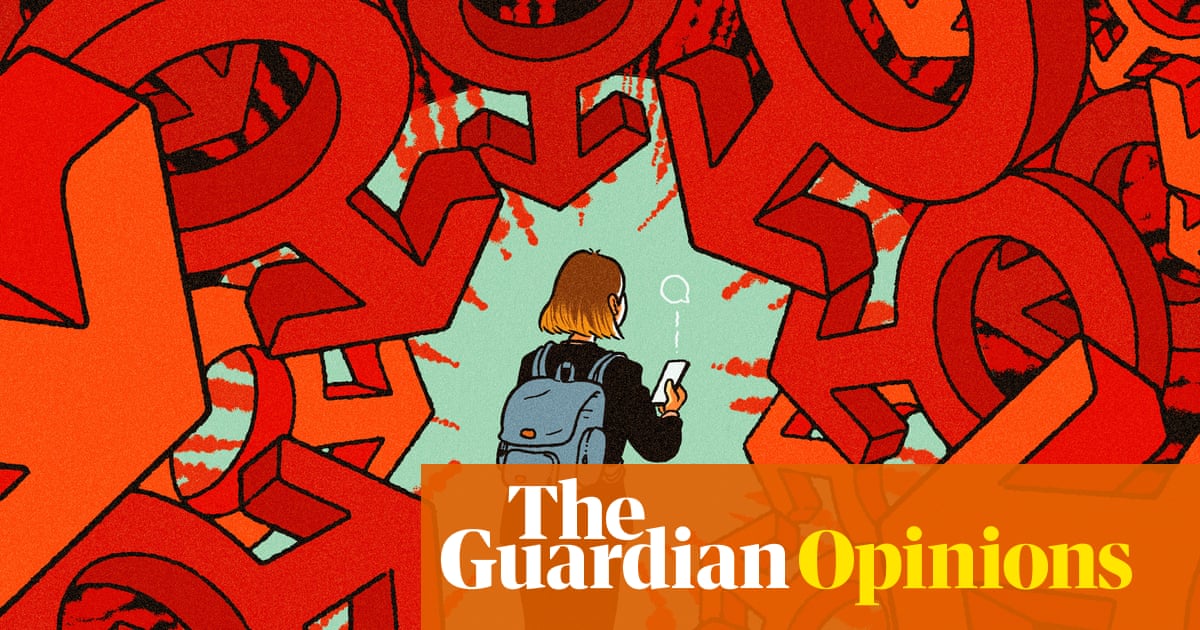
Two Parties, Two Internets
Republicans and Democrats aren’t just messaging differently, they’re talking in entirely different places

The New York Times helped fuel an anti-trans panic in 2022. Will 2023 be any better?
Perhaps no mainstream publication did more in 2022 than the New York Times to shift the mainstream conversation around transgender equality away from obstacles to access in housing, employment, and health care and toward the idea that the most pressing issue facing the trans community is actually too much medical care. The paper’s venerable pages featured profile after profile that platformed anti-trans extremists, fearmongered about the price of transgender acceptance, and framed rising trans identification as a social contagion. A recent article that centers the concerns of parents calling for the forced outing of transgender students shows why in 2023, the Times must improve its coverage.
Shifts in U.S. Social Media Use, 2020–2024: Decline, Fragmentation, and Enduring Polarization
Using nationally representative data from the 2020 and 2024 American National Election Studies (ANES), this paper describes how U.S. social media use has shifted across platforms, demographics, and politics. Overall platform reach declined, driven by growth in the share of Americans — especially the youngest and oldest cohorts — who report using no social media. Visiting and posting activity on Twitter/X and Facebook have fallen by nearly 50% since 2020, with the decline on Twitter/X driven primarily by reduced participation among Democratic users. While Facebook, YouTube, and Twitter/X lost ground, TikTok and Reddit grew modestly, consistent with a more fragmented digital public sphere. Platform audiences aged and became slightly more educated and racially diverse. Politically, most platforms shifted toward Republican users while remaining, on balance, Democratic-leaning. Twitter/X experienced the largest change: among posters, the partisan balance swung over 70 percentage points from Democrats to Republicans. Across platforms, political posting remains closely tied to affective polarization, as the most partisan respondents are also the most active. As casual users disengage while polarized partisans remain vocal, online discourse becomes narrower and more ideologically extreme.
The New York Times has always been anti-gay and anti-queer. The few years they pretended to support us around 2015 were an aberration, not the norm. (Source x.com/mynameisjro/status/1395017304…)

Corinne Green
these things are perfectly equivalent in every way thank you the new york times
