


So what on earth is a <section> element actually for? The answer isn’t as obvious as you might have hoped, but it’s definitely straightforward.
element() CSS function - CSS | MDN
The element() CSS function defines an <image> value generated from an arbitrary HTML element. This image is live, meaning that if the HTML element is changed, the CSS properties using the resulting value are automatically updated.


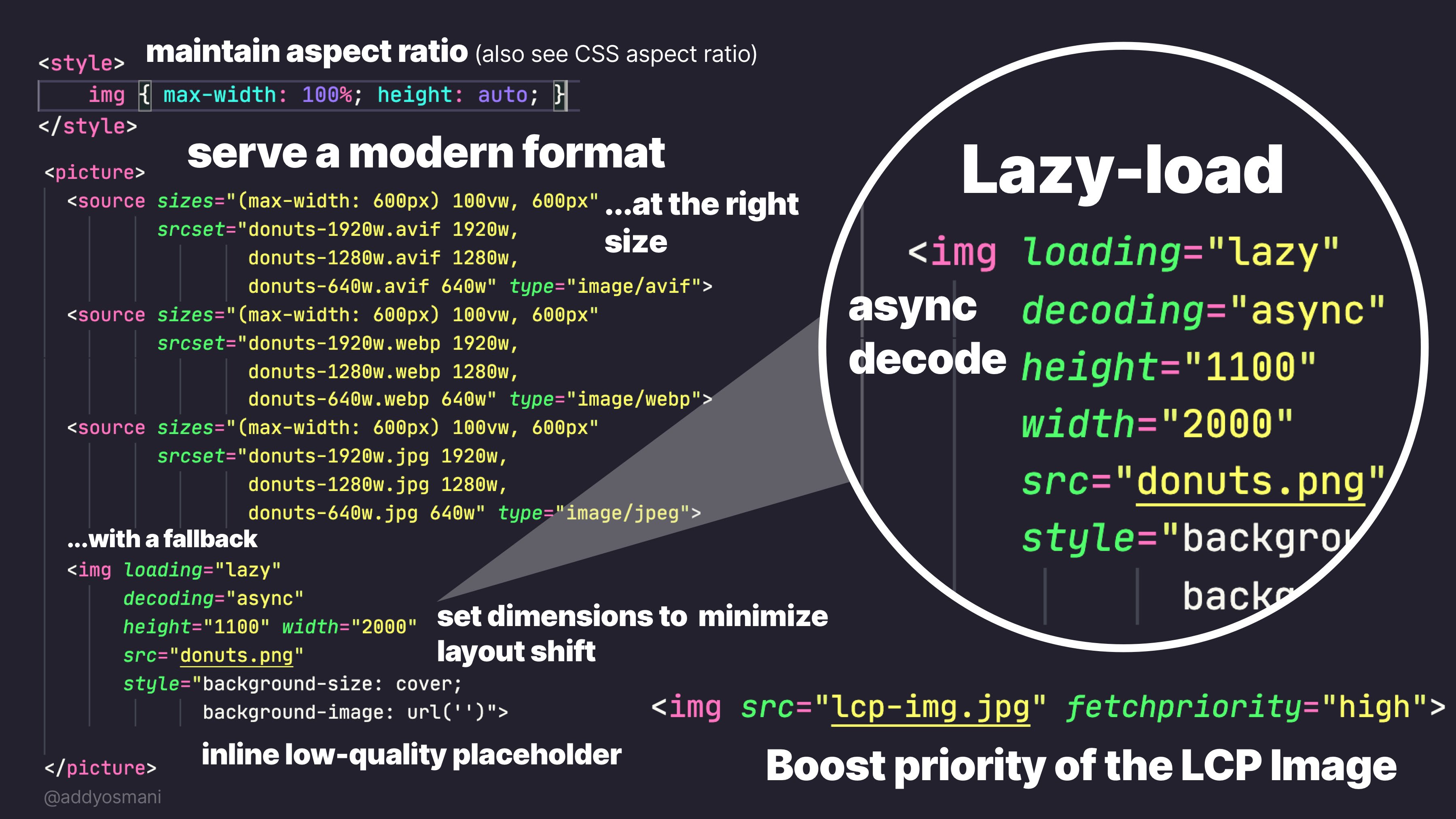
Practical guide to the <img> element: from the basics to LCP | Joan León
The <img> element has attributes that make a real difference in performance: loading, decoding, fetchpriority, srcset and sizes. A practical guide to using them well.
My HTML boilerplate in 2026 - Manuel Matuzović
Every element I use for the basic structure of a HTML document, with explanations why.

My HTML boilerplate in 2026 - Manuel Matuzović
Every element I use for the basic structure of a HTML document, with explanations why.
Pseudo-classes - CSS | MDN
A CSS pseudo-class is a keyword added to a selector that lets you select elements based on information that lies outside of the document tree, such as a specific state of the selected element(s). For example, the pseudo-class :hover can be used to style a button when a user's pointer hovers over it.
HTML Standard
The src attribute gives the URL of a page that the element's content navigable is to contain. The attribute, if present, must be a valid non-empty URL potentially surrounded by spaces. If the itemprop attribute is specified on an iframe element, then the src attribute must also be specified.
CSS Anchor Positioning Guide | CSS-Tricks
Learn about CSS Anchor Positioning, including its syntax, properties, how it is used to position one element next to another, and even how it's used to resize elements relative to other elements.

<dialog> HTML dialog element - HTML | MDN
The <dialog> HTML element represents a modal or non-modal dialog box or other interactive component, such as a dismissible alert, inspector, or subwindow.
The lost art of XML — mmagueta
There exists a peculiar amnesia in software engineering regarding XML. Mention it in most circles and you will receive knowing smiles, dismissive waves, the sort of patronizing acknowledgment reserved for technologies deemed passé. "Oh, XML," they say, as if the very syllables carry the weight of obsolescence. "We use JSON now. Much cleaner."
Element: pointerrawupdate event - Web APIs | MDN
The pointerrawupdate event is fired when a pointer changes any properties that don't fire pointerdown or pointerup events. See pointermove for a list of these properties.

The big missing piece is a first class feed lexicon that specifies the logic for how it selects content, the nature of its ordering/rendering options, and the lexicons it selects from and is capable of rendering... and then the ability for clients to choose orders and lexicons to select from
Semble Integrations

Keeping track of all of the places that Semble has been integrated into.

Automations | Airglow
treethought/obsidian-atmosphere
Mobile Setup | Semble Docs | Cosmik
Bookmarklet | Semble Docs | Cosmik
ronentk/notion-semble-integration
Lab Notes #005: Semble <-> Margin Interop - Cosmik Labs

